Plant Care
Will a Privacy Hedge Survive a Florida Hurricane?
What South Florida hurricane wind actually does to a privacy hedge, which species handle storms best, what's true about the first install year, and how to set the hedge up to come through clean.
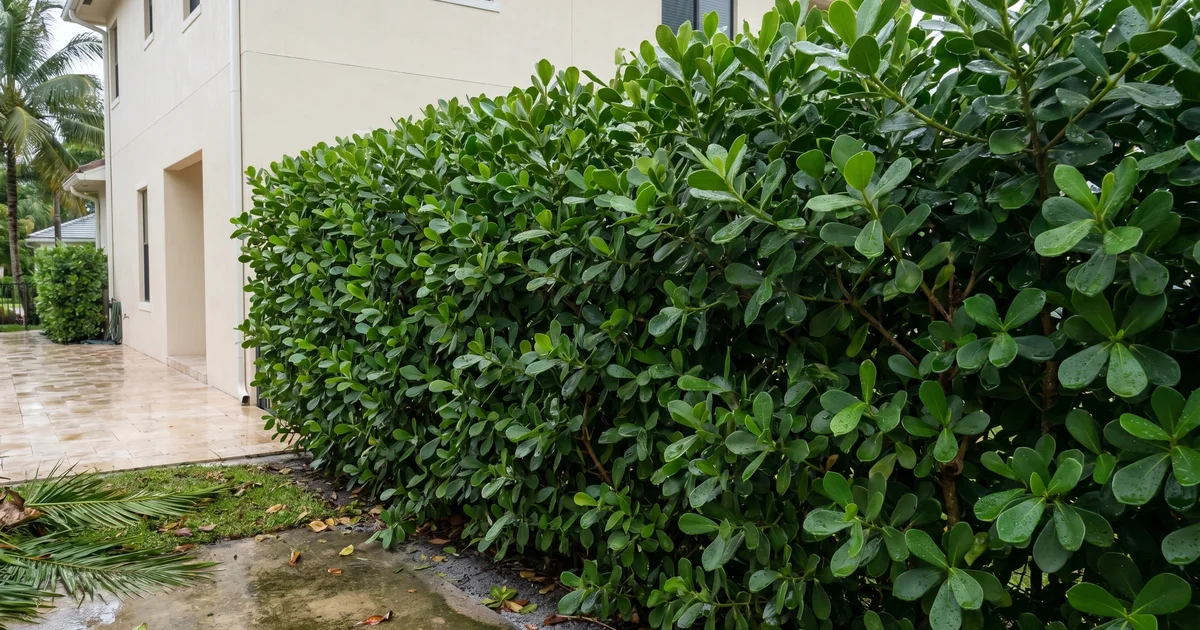
Hurricane season runs June 1 through November 30, and the question we get more than any other in May and early June is some version of “will my new privacy hedge survive a hurricane?” The honest answer is yes, almost always, but there are real differences between an established hedge and a hedge in its first install year, between species, and between hedges that were installed properly and hedges that weren’t. This is the field-tested view from an installer who’s walked hundreds of South Florida yards before and after named storms.
Planning a hedge before hurricane season? This post is the storm-survival deep dive. For the broader seasonal plan, see our pillar on Hurricane-Season Privacy Hedges.
The Short Answer
A mature, properly installed privacy hedge in South Florida almost always survives a hurricane. The wind that breaks fences, lifts shingles, and topples palms typically passes through a healthy Clusia or Podocarpus hedge with cosmetic damage at worst, torn outer leaves, some thinning on the windward face, occasionally a snapped twig. The hedge stays vertical and recovers within one to two growing seasons.
The vulnerable window is the first 60 to 90 days after install. Brand-new plants haven’t anchored their root systems into native soil yet, so a major storm during that window can lean, shift, or pull plants out of the ground. After that establishment period, the hedge is in dramatically better shape.
The species-by-species story is below, along with what to do before a storm if you have a new install, and what to expect after.
What Hurricane Wind Actually Does to a Hedge
A privacy hedge handles wind very differently than the rigid structures around it. Three things work in its favor:
It bends, doesn’t snap. Healthy Clusia, Podocarpus, cocoplum, and Walter’s viburnum all have flexible woody stems that move with wind rather than resisting it. A 70-mph gust hits a hedge and the canopy ripples; the same gust hits a wooden fence and the fence flexes against its posts until something fails.
It diffuses pressure across the surface area. Wind hits the hedge canopy and breaks into a thousand small currents through the foliage. The pressure that would knock a solid wall over passes through the hedge in pieces. This is the same principle behind windbreak hedgerows in agriculture.
It’s anchored by hundreds of plants, not a few posts. A 100-foot hedge has 30 to 50 individual plants in the ground, each with its own root system. A fence the same length has maybe 10 to 12 posts. Wind that pulls one root system harder than expected doesn’t take the rest of the hedge with it. Wind that pulls one fence post over often takes the whole panel.
What hurricane wind does break on a hedge: outer leaves and tips of new growth on the windward face. The hedge looks rough for two to four weeks after a major storm. Cosmetic, not structural. A spring shaping pass usually erases the visible damage.
Year One vs Years Two and Beyond
This is the single most important distinction. A privacy hedge in its first 60 to 90 days post-install is fundamentally different from an established hedge in storm performance.
In the first season:
- Roots have not yet penetrated native soil. The plant is still rooted primarily in its container-shape root ball.
- Stems and canopies are smaller than the mature plant, but the root system hasn’t caught up yet.
- The plant’s “anchor” is essentially the weight of the root ball pressing against the planting hole’s walls.
In a major storm during this window, brand-new plants can shift sideways, lean past vertical, or in extreme cases pull free entirely. We’ve seen it after several named storms over the years. The fix is straightforward, replant the leaning plant, water through the rest of the establishment window, and the hedge generally recovers, but it’s an avoidable headache if you plan around the calendar.
After 90 days:
- Roots have extended into native soil and begun the lateral spread that anchors the plant against wind.
- The plant has rebuilt some of the canopy mass lost during transplant stress.
- Storm survival becomes statistically indistinguishable from a five-year-old hedge.
After three years:
- The root system has fully knit into the soil and crossed underneath adjacent plants.
- The hedge functions more like a single connected organism than 30 individual plants.
- A direct hit from a major hurricane is genuinely difficult to imagine pulling the hedge down.
The implication for install timing is in our when to plant a privacy hedge in South Florida guide, broadly, planting in the cool dry stretch from October through March gives the new hedge a long establishment window before the next peak storm season.
Species-by-Species Storm Performance
Not every privacy hedge handles wind the same way. Here’s the field-tested ranking based on what we’ve seen after named storms across Miami-Dade, Broward, and Palm Beach.
Clusia (best overall storm performer)
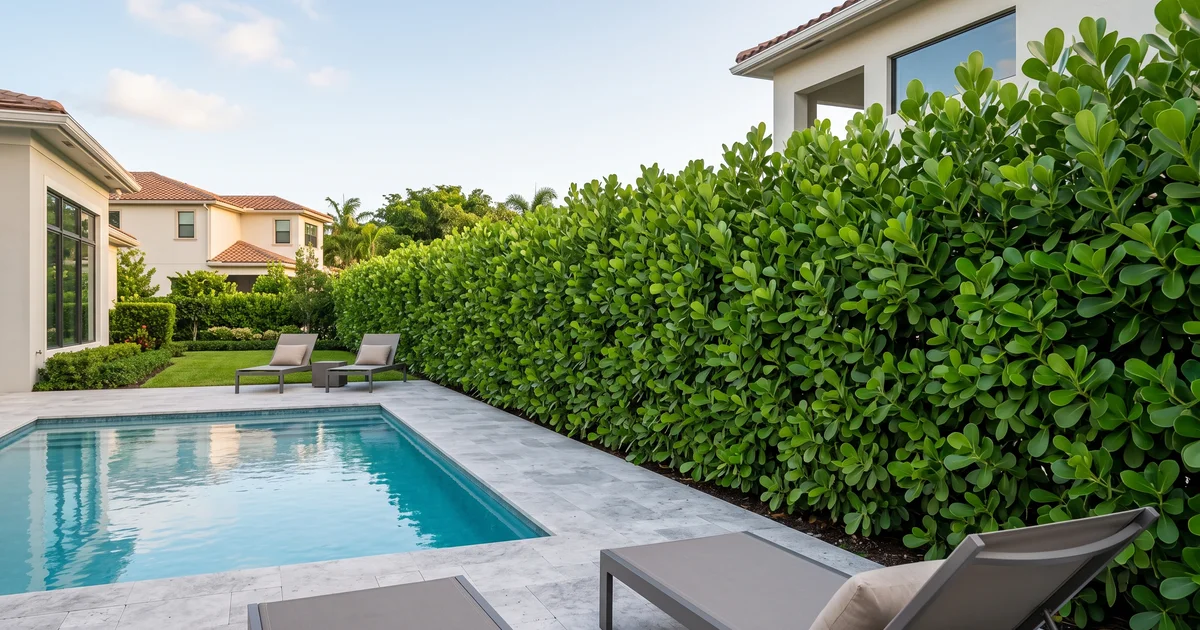
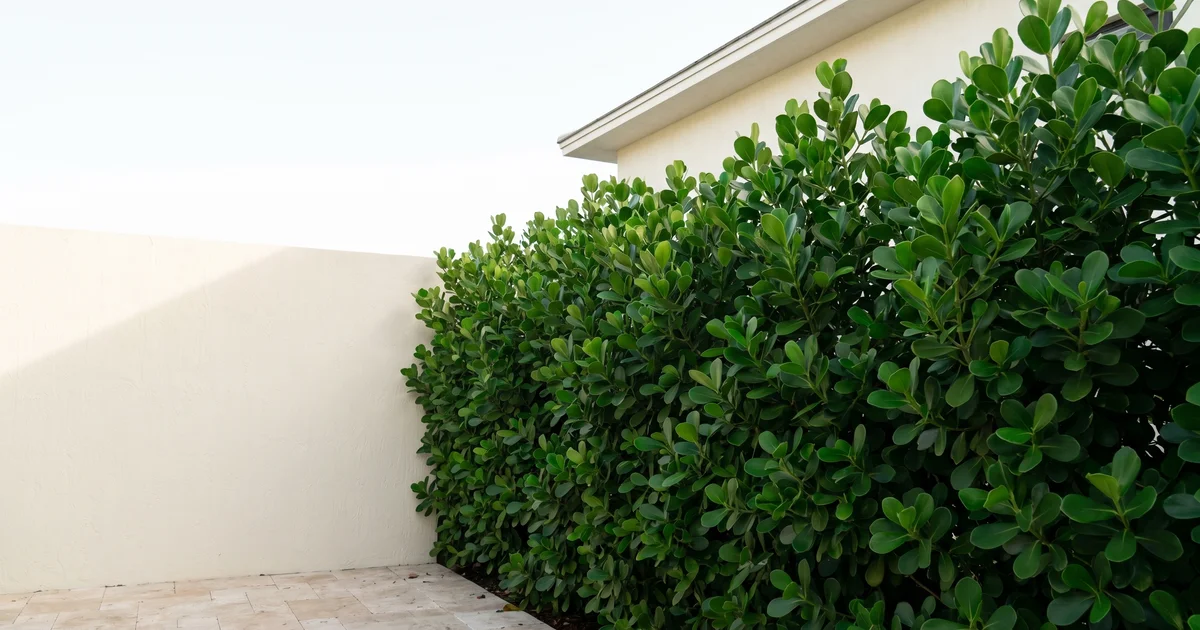
Clusia, the small-leaf ‘Princess’ or ‘Nana’ cultivars, is the species we install most often, and it’s also the one we worry about least when hurricane forecasts go up. Three things make it a strong storm performer:
- Broad, slightly waxy leaves shed water rather than catching wind like sails.
- Dense rounded canopy distributes pressure across the surface uniformly.
- Flexible woody stems that bend with gusts.
We’ve walked Clusia hedges after major storms and found minor leaf burn, some thinning on the windward face, and occasional broken twigs. Structural damage is rare.
Podocarpus (excellent for tall formal hedges)
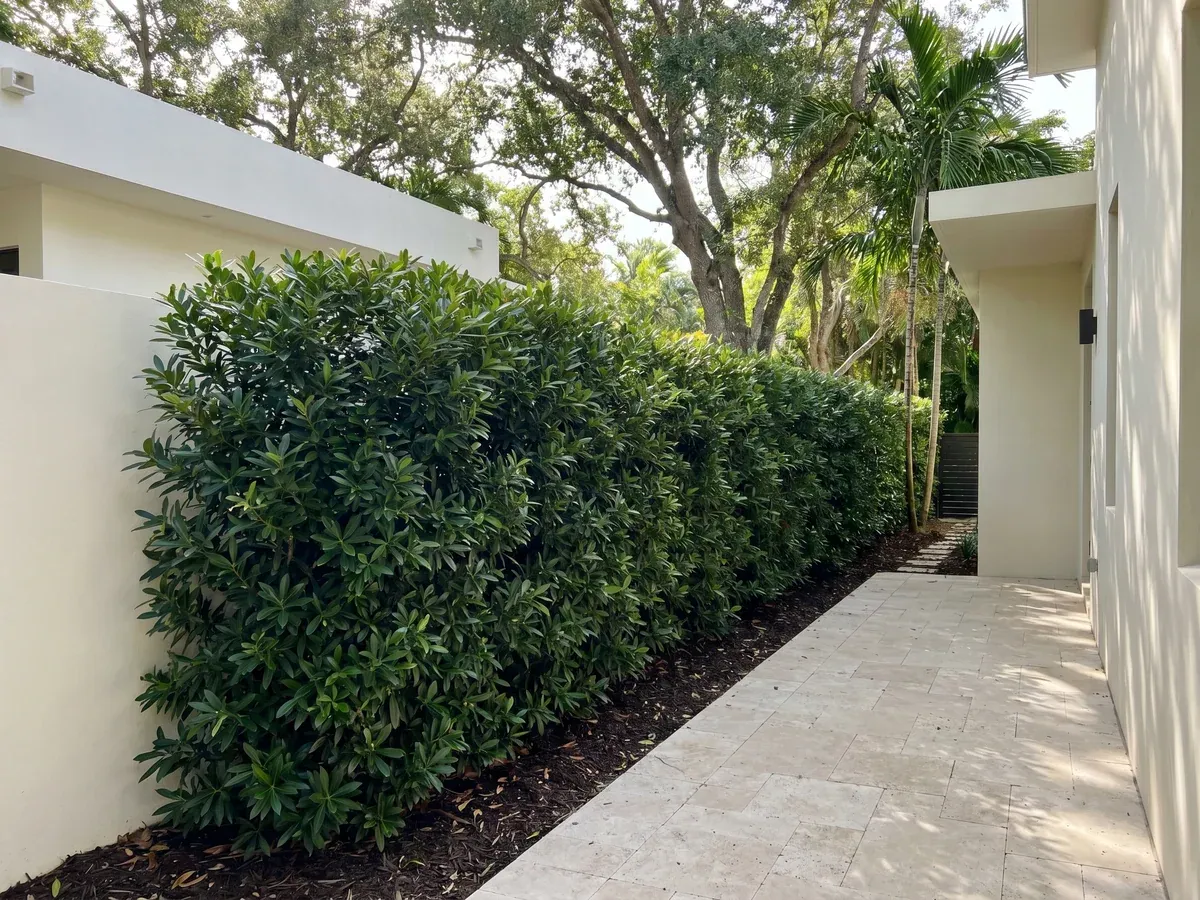
Podocarpus has fine needle-like foliage and an upright vertical form. The narrow profile means less wind catches the canopy in the first place, and the dense small-leaf surface diffuses what does hit. Tall formal Podocarpus hedges (10+ feet) come through storms well as long as the install was professional and the spacing was tight.
What we sometimes see on Podocarpus: heavy storms can cause the very top inch or two of new growth to dehydrate and brown. This is cosmetic and trims out cleanly. Not a structural issue.
Cocoplum (best for direct coastal exposure)
Cocoplum, especially red-tip, is the species we install most often on direct beachfront and canal-front yards specifically because of its storm-and-salt resilience. The waxy leaf, dense rounded form, and salt immunity make it the strongest pick for coastal lots that take direct hits.
Walter’s viburnum, Simpson’s stopper, yaupon holly
All three Florida natives (covered in our native hedges pillar) handle storms well once established. Walter’s viburnum and Simpson’s stopper hedges tend to come through wind cleanly because they evolved on Florida’s coastal hammocks and floodplains, they’re literally built for the conditions. Yaupon holly is more cold-hardy than the others and performs well on inland and northern South Florida lots.
Areca palm and ficus (avoid)
Areca palm hedges suffer more storm damage than any of the dense privacy-hedge species above. The palm fronds catch wind, the trunks are tall and slender, and storms can crack or topple individual specimens. After a major storm, areca palm hedges often look worse than the hedge directly next to them made of a different species.
Ficus is also storm-vulnerable, not because the plant fails (it doesn’t), but because mature ficus hedges develop massive root systems that can buckle walkways, driveways, and pool decks under storm-load. Combined with whitefly issues, ficus is the species we typically recommend replacing.
Before a Storm: What to Do (and Not Do)
The wrong instinct is to “secure” the hedge before a storm. Don’t. The hedge handles itself better than any improvisation can.
What’s actually worth doing in the 24 to 72 hours before a forecasted major storm:
Hold off on planting if you can. If a hedge install is scheduled and a named storm is forecast within 72 hours, we’ll usually call you to reschedule. New plants are at peak vulnerability in their first 14 days; a storm in that window is more risk than the timeline savings warrant.
Don’t trim the hedge right before a storm. Pre-storm trimming exposes fresh cut tissue that loses moisture faster in storm winds and can produce a stressed plant that recovers more slowly. A light shaping a few weeks before storm season opens is fine; a panic-cut the day before a forecasted hit is counterproductive.
Skip the staking. Mature hedges don’t need it. New hedges (under 90 days) we sometimes stake at install when we know peak storm season is approaching, but homeowner-added stakes after the fact often create more rub and chafe injury than they prevent.
Walk the hedge line. Look for visible weak spots: leaning plants, gaps where adjacent plants haven’t quite closed, areas where mulch has eroded. These are the spots where a major storm is most likely to cause local damage. If you see something concerning a week before peak storm season, that’s the right time to call your installer, not the day before a forecasted hit.
Don’t water heavily right before the storm. Saturated soil reduces root grip and makes plants more likely to lean. Normal watering up to 48 hours before the storm is fine; deep soaking the day of is counterproductive.
After a Storm: What to Expect and When to Worry
A South Florida privacy hedge after a major storm typically looks rough but functions fine. What we tell homeowners to expect:
Outer leaf damage, torn, browned, or stripped leaves on the windward face. This is the most common cosmetic effect. The plant produces new leaves within four to six weeks; the hedge looks normal again by the next dry-season month.
Some thinning visible from inside the yard, looking through the hedge from the side that took the wind, you may see more daylight through the canopy than before. This fills in over two to three months as the plant rebuilds.
Occasional snapped twigs and stems, visible inside the canopy on inspection. We typically trim these off during a post-storm shaping pass.
Mulch displacement, major storms move mulch around. Re-distribute and top up.
No worry signs: the hedge is leaning, slightly thinner, or has lost some leaves. These are normal.
Worry signs: plants pulled partially out of the ground, plants leaning more than 30 degrees, large branches snapped at the base, a section of hedge visibly uprooted. These need quick intervention, call your installer within a week of the storm passing so we can either replant or replace as needed before the root system dries out.
The standard fix for storm-tilted plants is straightforward: re-stand the plant, firm the soil around the root ball, water deeply, and let the plant resume root development. Most leaners recover fully without permanent damage.
Insurance, HOA, and Warranty Notes
A few practical points homeowners sometimes ask about after major storms:
Homeowner insurance. Most policies cover storm damage to landscaping under specific conditions, typically when a named storm causes damage to a section of the property. Limits vary by policy. If a major storm causes a section of hedge to fail and the homeowner files a claim, the documentation we provide on the original install (plant species, install date, container size) is often what the adjuster wants to see.
HOA architectural review. If a storm requires replacing a section of hedge with new plants, most HOAs accept like-for-like replacement without a fresh architectural review. The original approval covers the species. If the replacement is for a different species, sometimes the case when the original species turned out to be storm-vulnerable, a quick re-approval is usually straightforward.
Our warranty. We stand behind plants we install. If a Clusia, Podocarpus, cocoplum, or any species we delivered fails due to plant defect within 90 days of install, we replace it. Storm damage is a separate category, we work with homeowners case-by-case to assess what’s plant-defect vs. weather event, and we’ll always be transparent about which one we think it is.
Frequently Asked Questions
Will my privacy hedge survive a hurricane? A mature, properly installed privacy hedge in South Florida almost always survives a hurricane with at most cosmetic damage, torn outer leaves and some windward-face thinning. Brand-new hedges in their first 60 to 90 days are more vulnerable because root systems haven’t anchored yet. After three years, hedge storm survival is essentially indistinguishable from much older hedges.
What’s the best privacy hedge for hurricane resistance? Clusia and Podocarpus both perform very well in storms once established. Cocoplum is the strongest choice for direct coastal exposure because it combines storm resilience with salt immunity. Native species (Walter’s viburnum, Simpson’s stopper, yaupon holly) also handle storms well, they evolved on Florida’s coast and floodplains. Areca palm and ficus are species we typically recommend avoiding for storm-prone yards.
What if I just planted my hedge a few weeks ago and a storm is coming? First-season hedges are at peak vulnerability. If a major named storm is forecast within the first 60 to 90 days post-install, the install can shift sideways or lean in extreme cases. Light staking can help on tall exposed runs; soaking the soil right before the storm is counterproductive. Call your installer if you see plants leaning past vertical after the storm passes, early replant usually saves the plant.
Should I trim my hedge before a hurricane? No. Pre-storm trimming exposes fresh cut tissue that loses moisture faster in wind and produces a stressed plant that recovers more slowly. A light shaping a few weeks before hurricane season opens (May or early June) is the right timing. A panic-cut the day before a forecasted hit is counterproductive.
Should I water the hedge heavily before a storm? No. Saturated soil reduces root grip and makes plants more likely to lean. Normal watering up to 48 hours before the storm is fine; deep soaking the day of is counterproductive.
What does a hedge look like the day after a major hurricane? Rough but functional. Expect torn or browned outer leaves on the windward face, some visible thinning when you look through the canopy, occasional snapped twigs, and displaced mulch. The hedge looks normal again within two to four months as new growth replaces the storm-damaged foliage.
When should I call my installer after a storm? Within a week of the storm passing, sooner if plants are leaning more than 30 degrees, partially uprooted, or have large branches snapped at the base. Cosmetic damage doesn’t need urgent attention; structural concerns do. The earlier we can replant a leaning plant, the higher the chance it fully recovers.
Will my insurance cover hedge damage from a hurricane? Most homeowner policies cover storm damage to landscaping under specific conditions, typically when a named storm causes the damage. Limits vary. If you file a claim, the documentation we provide on the original install (plant species, install date, container size) is often what the adjuster wants to see.
Should I stake my new hedge before storm season? For most residential installs, no. Mature hedges don’t need it, and stakes added after the fact often create more rub and chafe injury than they prevent. We sometimes stake brand-new installs at planting when we know peak storm season is approaching, but that’s a planning decision at install time, not something to add later.
Are Florida-native hedges more hurricane-resistant than imported ones? Marginally, but the difference is smaller than people expect. Walter’s viburnum, Simpson’s stopper, and yaupon holly evolved in Florida’s coastal and floodplain conditions and are well-adapted to wind events. Clusia and Podocarpus, while not native, are also excellent storm performers, both have flexible stems, dense canopies, and well-developed root systems once established. Species choice for storm resilience matters less than install quality and plant maturity.
How does my hedge compare to a fence in a hurricane? Privacy hedges almost always outperform wooden and vinyl fences in hurricane wind. Fences flex against rigid posts until something fails; hedges bend with the wind and recover. After a major South Florida storm, hedges are typically still standing while fences in the same neighborhood are stacked on lawns waiting for cleanup.
Can I plant a privacy hedge during hurricane season? Yes, with planning. Install timing in early June carries low risk because peak storm activity historically falls in August through October. Installing in those peak months works fine as long as the forecast is clear in the 14 days following install. We watch the tropics during install scheduling and will reschedule when needed. The cool dry stretch (October-March) carries the lowest risk.
See also: Hurricane-Season Privacy Hedges for the broader seasonal pillar. When to Plant a Privacy Hedge in South Florida for install-timing context.
Plan a Storm-Ready Hedge
If you’re thinking about a privacy hedge before peak hurricane season opens, the most useful next step is a walk of the property, we can talk through species choice, planting timeline, and install considerations specific to your yard’s exposure.
Request a free quote or call us at 305-222-7171. We serve Miami, Fort Lauderdale, West Palm Beach, Boca Raton, and Delray Beach.
Tagged
- hurricane privacy hedge
- hurricane hedge survival
- florida hurricane plants
- clusia hurricane
- south florida hedges
Ready for a privacy hedge that looks finished from day one?
Get a free estimate from a South Florida specialist who handles delivery, installation, and the result you actually want.