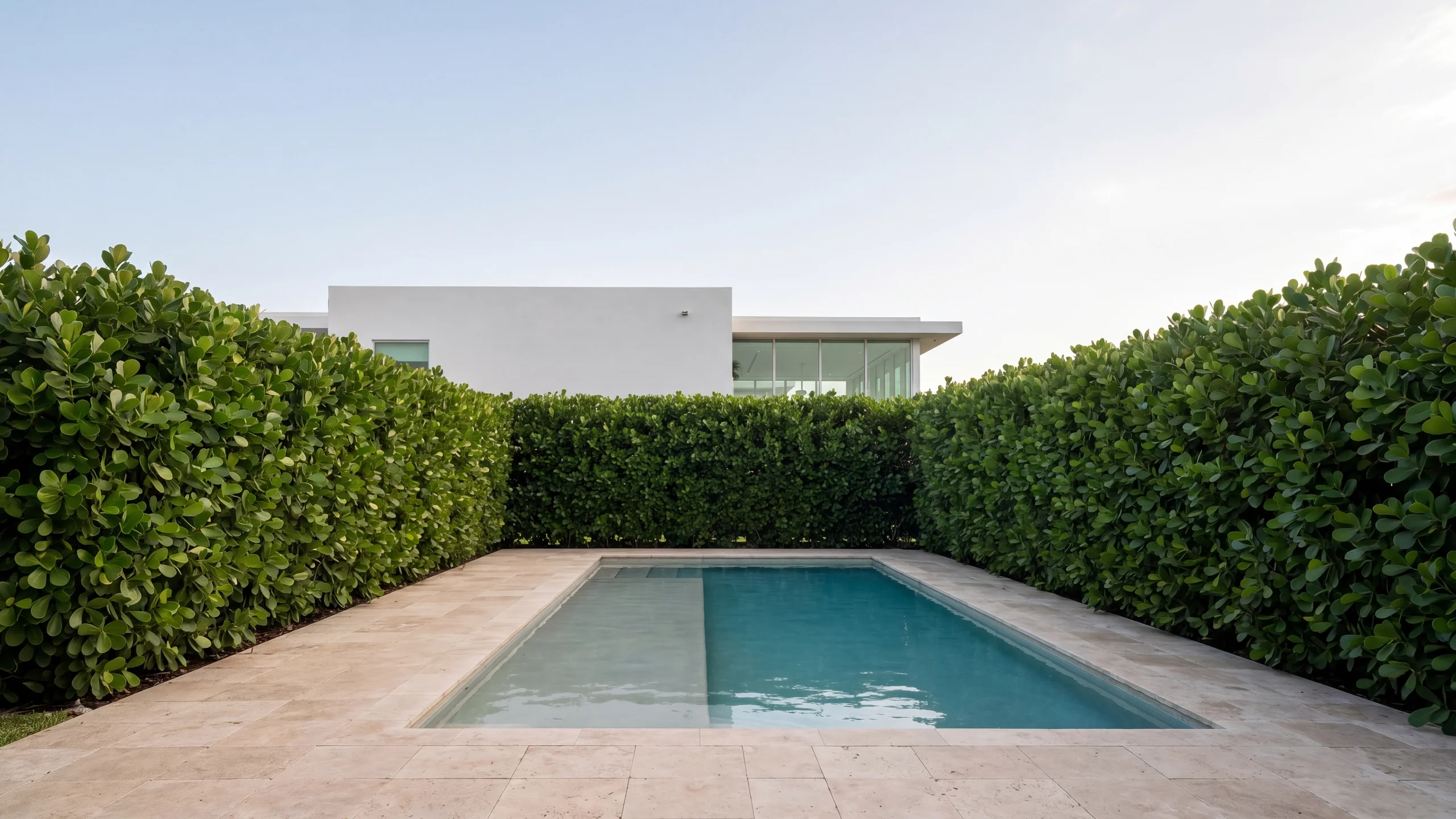
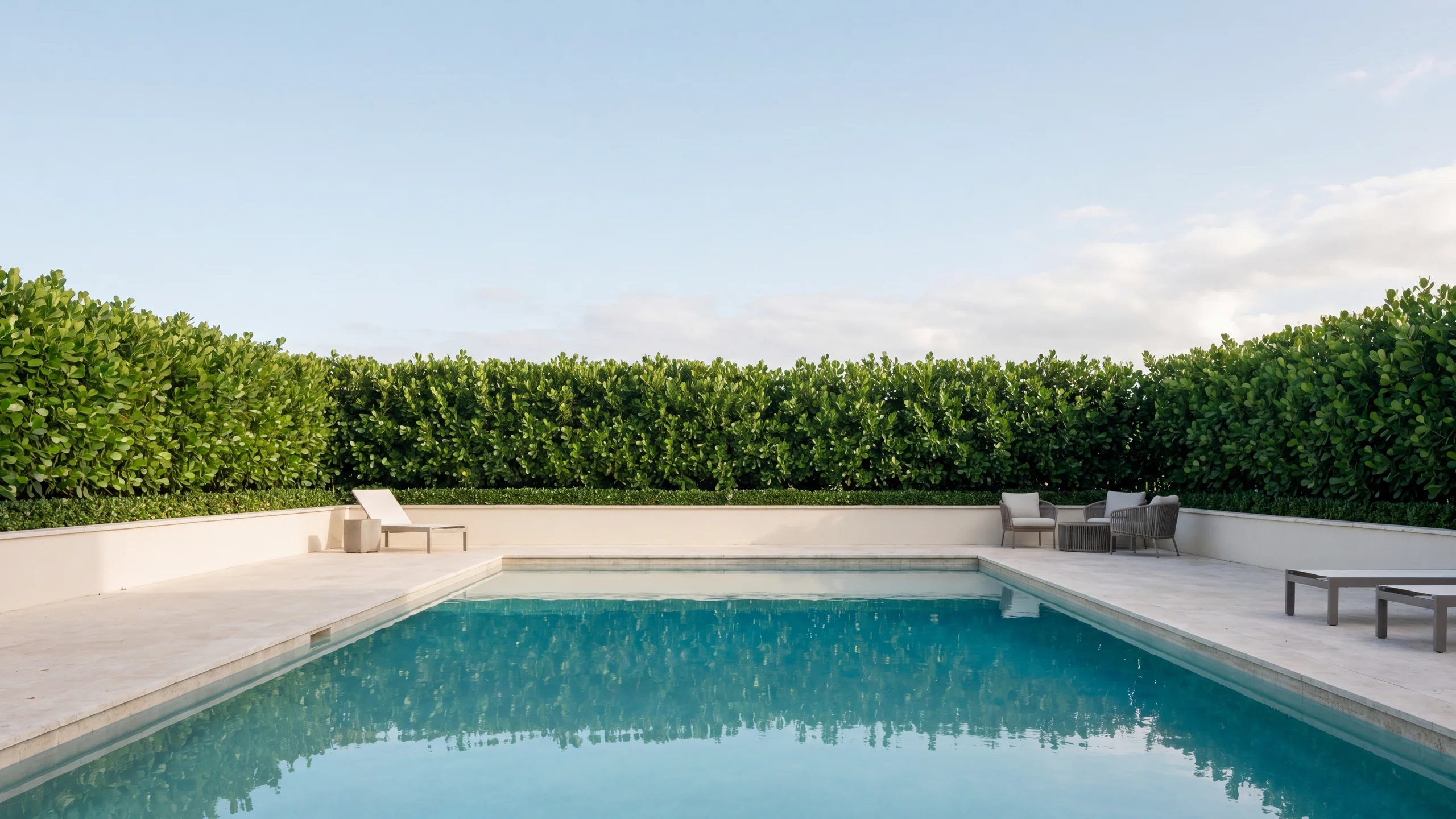
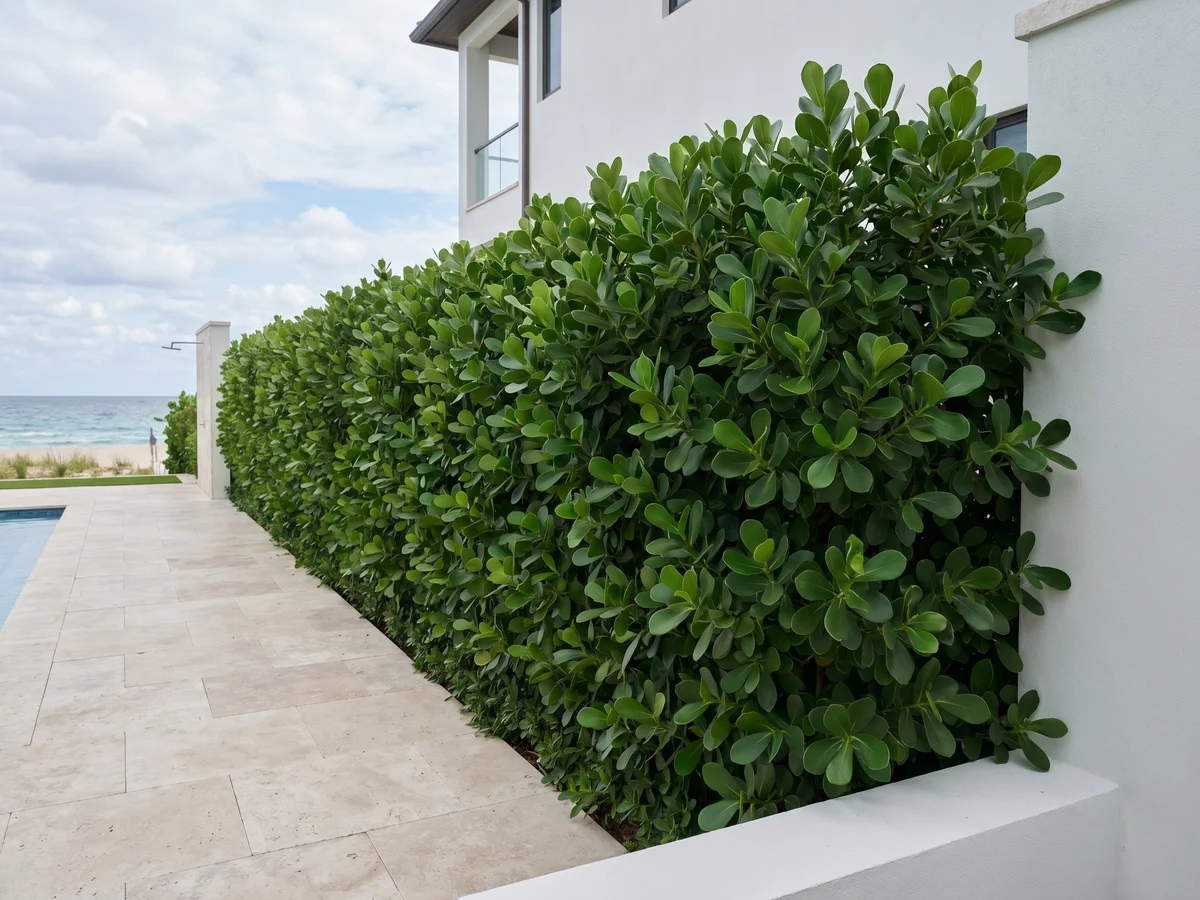
Natural privacy in South Florida, in detail
Most homeowners do not set out to choose between natural privacy and hard privacy. They choose a fence because that is what they have seen, or they choose a hedge because they saw one they liked. What gets missed is that these are very different products that solve the same surface-level problem in very different ways. This section goes deeper into what the natural version actually does for a home.
Why a hedge feels different from a fence
Stand in a yard enclosed by a hedge and then stand in a yard enclosed by a fence. Even without looking at the boundary, the two feel different. A hedge yard is usually quieter, cooler, softer in sightlines, and less visually enclosed despite the plants being at least as tall as a fence would be. The plants absorb and diffuse where hard surfaces reflect and amplify.
This is not an aesthetic opinion. It is measurable in sound, temperature, and perceived enclosure. The difference does not show up in photos the way it shows up when you are in the yard, which is part of why natural privacy often looks understated in marketing but reads as premium in person.
How natural privacy handles sound
A solid hedge absorbs part of the sound energy that hits it and scatters the rest in multiple directions. A fence panel reflects most of it back into the yard. For homes near busy streets, schools, canals with boat traffic, or neighboring pool equipment, the difference is audible from the first week after a mature hedge goes in.
Dense species matter. The best natural privacy hedges for noise in South Florida are the same ones that make the best visual hedges: Clusia, Podocarpus, and other broadleaf or needle-leaf evergreens with thick continuous foliage. Loose, gappy plantings do not deliver the same acoustic effect.
How natural privacy handles heat
South Florida afternoons are hot. A west-facing or south-facing fence panel stores solar energy and re-radiates it into the yard for hours after sunset. A hedge does the opposite. Leaves transpire, shed heat, and create a cooler microclimate at the plant and in the air just inside the hedge line.
The temperature difference in the yard around a mature hedge is not huge, but it is real. Over a summer, it shows up as a yard that stays comfortable later in the evening, less radiated heat reaching patio furniture, and lower pool-area temperatures on the hottest days.
How natural privacy handles storms
In a hurricane region, this is not a minor factor. Fence sections can fail under gust pressure, act as projectiles, and damage other property. PVC privacy fences tend to come down as whole panels. Wood fences lose boards and sections. Even well-installed fences age badly in repeated storm cycles.
A rooted, mature hedge performs differently. Foliage flexes, gust force spills around the plants, and the root system is already tied into the soil. Hedges occasionally lose branches or damaged foliage in a big storm, but full structural failure is rare. The long-term cost of storm replacement is one of the quiet advantages of natural privacy that owners do not think about until they have lived through a few seasons.
How natural privacy affects property value
Real estate professionals in South Florida routinely cite mature privacy landscaping as one of the strongest curb-appeal drivers for a home. A well-established hedge line reads as a property that has been cared for, designed, and invested in over time. That perception shows up in how a home photographs, how it shows, and how buyers respond during a tour.
A fence, especially an aging fence, rarely contributes the same way. In some cases it actively drags value down, because buyers see deferred replacement cost. A mature hedge, by contrast, is almost always read as an asset on the property rather than a cost waiting to happen.
What natural privacy asks in return
A hedge is not free to maintain. It wants a seasonal trim, some water attention in the first year, and occasional shaping. Most South Florida homeowners describe the ongoing effort as modest, especially compared to the ongoing work of keeping a fence looking new. Still, it is not zero. Natural privacy is a living system and behaves like one.
The plants also take a season or two to fully mature if they are installed at smaller starter sizes. This is why premium installs often use larger starter plants at tight centers, so the hedge reads as a finished privacy wall from the day the crew leaves rather than becoming one a year later.
Where natural privacy is not the right answer
There are real cases where a hedge is not the right solution on its own:
- Pool safety code requires a physical barrier the hedge cannot satisfy.
- Active dogs that will push through a maturing hedge need a fence for containment.
- Extremely narrow runs may not have width for even a compact hedge plant.
- Immediate enclosure deadlines, like rental turnovers, are often faster with a fence.
In most of those cases, the right answer is still a hedge plus a minimum fence behind it. The fence handles code or containment. The hedge handles privacy, look, and the reasons you actually wanted a boundary in the first place. Many South Florida properties that look entirely hedged have a simple fence hidden in the foliage doing the functional work.
How to design for natural privacy on a real property
Good natural privacy is a design decision, not a plant purchase. The plants are one ingredient. The rest is where the hedge goes, how tall it is allowed to get under local code, how it reads against the home, and how it interacts with the existing landscape. A Clusia or Podocarpus hedge installed without that context can end up looking right in isolation and wrong against the house.
On premium yards, we typically start with the architecture. How does the home want to be framed? Where do sightlines matter and where do they not? Are there specific pressures, like a tall neighbor, a busy street, or a harsh afternoon sun angle, that the hedge needs to solve for? Those answers shape where the hedge goes, how tall it sits, and which species fits best. Without those decisions, natural privacy is just a row of plants. With them, it becomes part of the property.