A plain-English guide to planning a Podocarpus hedge in South Florida
Most of what makes a Podocarpus hedge turn out right happens in the planning, not the planting. This section covers the decisions worth understanding before a quote, written for homeowners rather than horticulturists.
What Podocarpus actually looks like in the ground
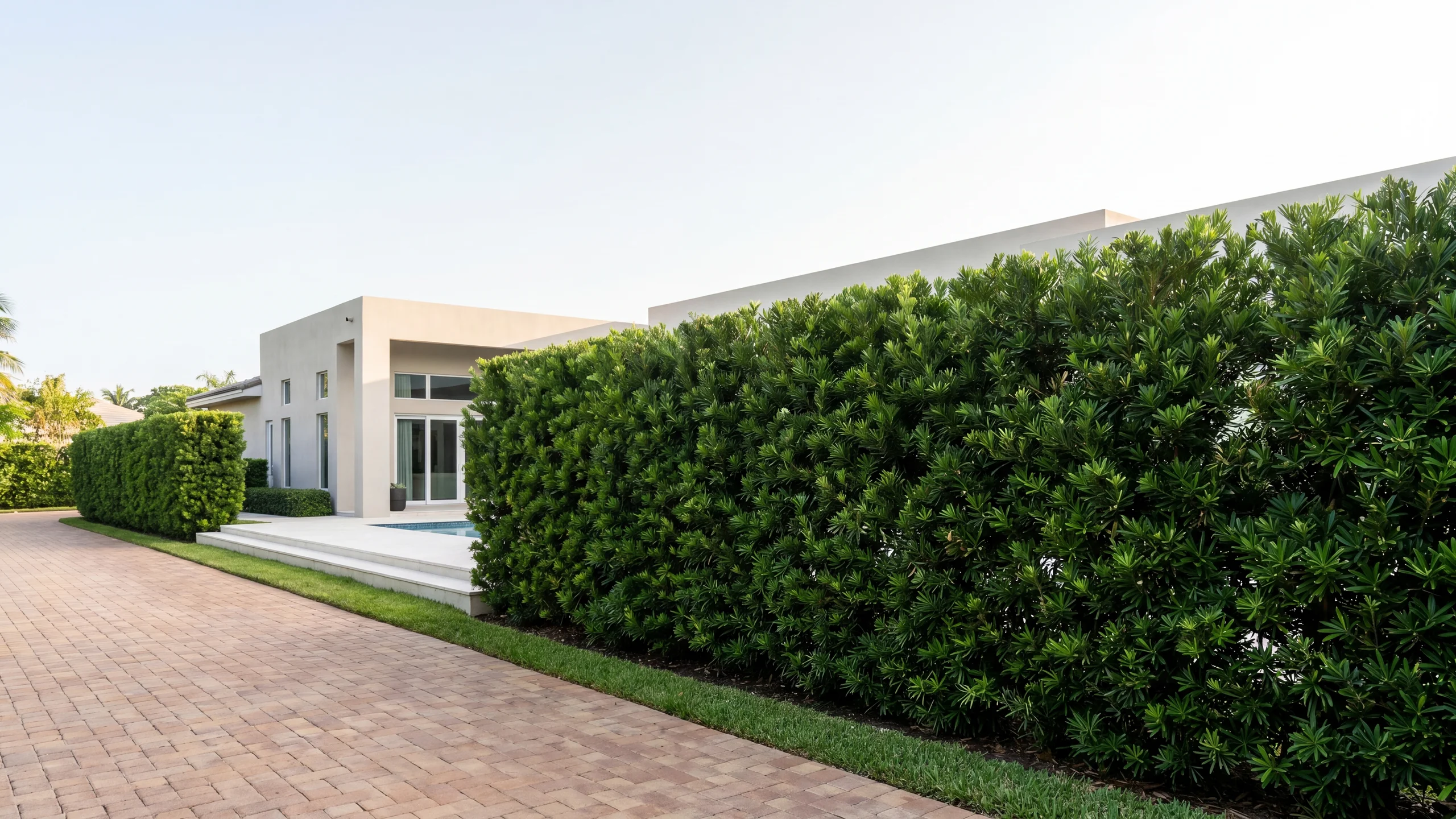
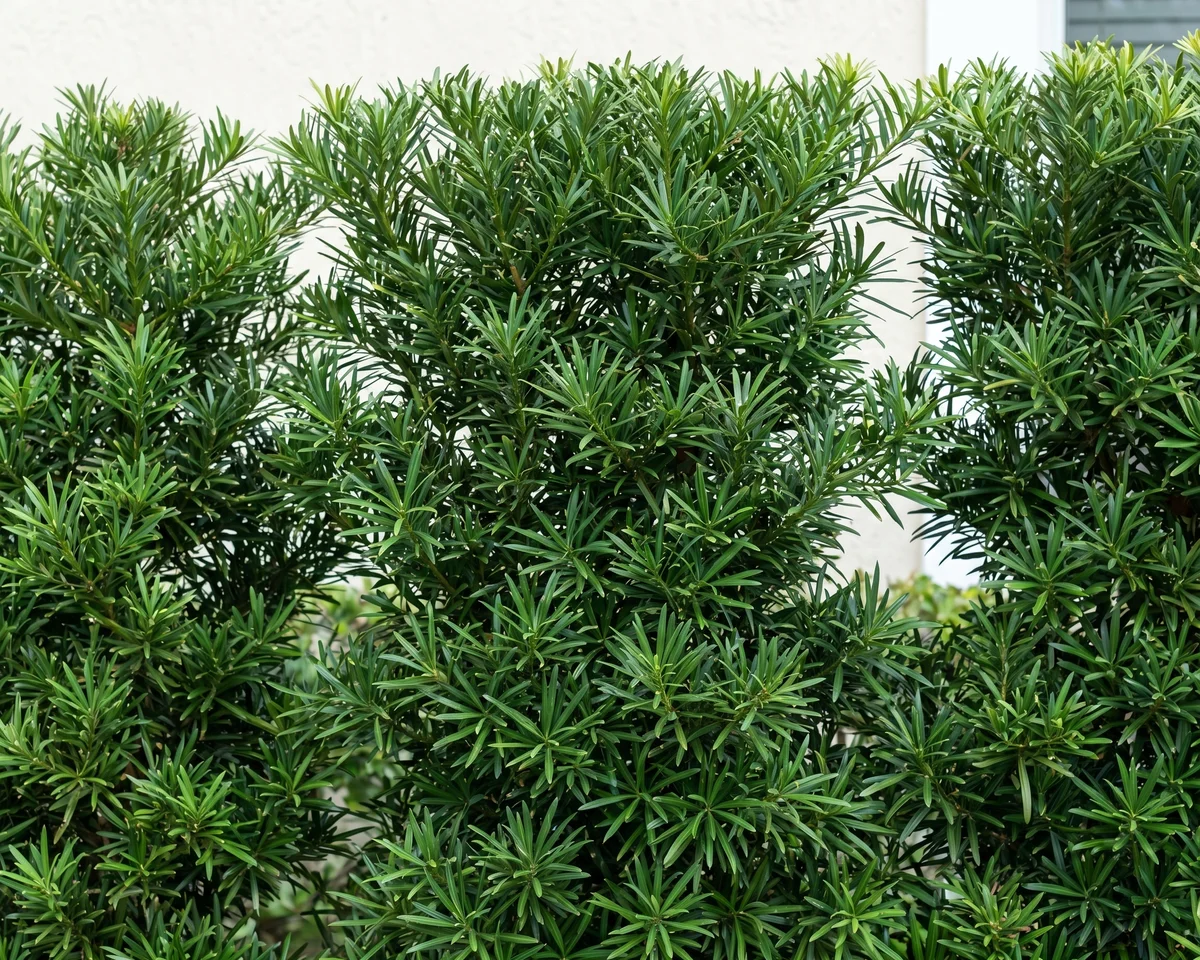
Podocarpus has fine, dark green, needle-like foliage on a naturally upright habit. When it is maintained, the hedge reads as a single clean vertical wall that feels closer to a conifer than a shrub. It is a formal plant. That is the point of it.
Podocarpus macrophyllus is the standard species used for South Florida hedge work. The compact cultivar often sold as 'Maki' is popular for hedges because it holds a tighter, more controlled habit. Both fit into a Mr. Clusia install depending on the finished height and style you want.
Where Podocarpus performs best
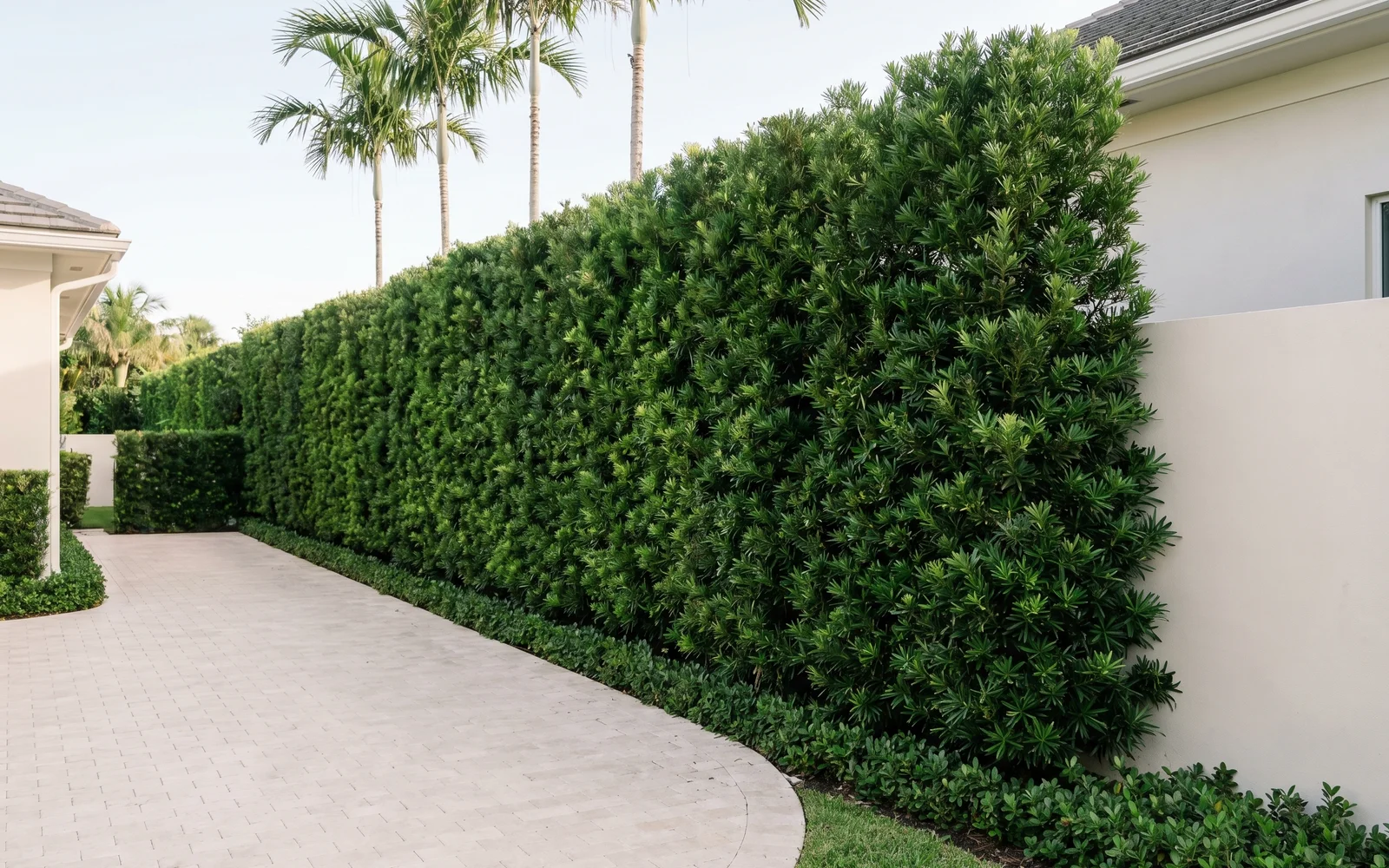
Narrow property lines, driveway edges, side yards, and formal front elevations are where Podocarpus is at its strongest. Anywhere you want a tall, tight, controlled hedge, this is the plant. It is also the better pick for hedge lines that sit in partial shade from tree canopy or adjacent structures, because it holds density where a more tropical hedge would thin out. Our guide on whether Podocarpus can grow in shade covers how much light it needs.
Podocarpus is less ideal directly on a beachfront with constant salt spray, or on very wide open lots where a lush, rounded, tropical look fits the property better. In those cases Clusia is usually the stronger match, and we will say so during the quote rather than sell you the wrong hedge.
Starter size and spacing
Because Podocarpus is naturally upright and narrow, it can be set on tighter centers than most privacy hedges. The exact spacing follows the starter size: roughly 1 to 1.5 feet on center for 7-gallon plants, 1.5 to 2 feet for 15-gallon, and 2 to 2.5 feet for 25-gallon. Smaller plants go tighter so the line closes; larger plants sit a little wider and still meet. Finished height and how solid you want the hedge on install day fine-tune it from there. Our Podocarpus spacing guide breaks down plant count per foot by container size.
For tall runs meant to block second-story windows or match the scale of an estate home, a staggered double row is sometimes the cleaner answer so the hedge base stays solid. You do not need to figure any of this out on your own. It belongs in the quote.
What a Podocarpus hedge asks for once it is in
Early on, a new Podocarpus hedge wants consistent water while the root system sets. That window is the most important one. After the hedge is established, Podocarpus is drought tolerant and only needs supplemental water through long dry stretches.
Once mature, Podocarpus rewards a steady shaping rhythm. This is the only hedge on our site where shaping is part of the product, not a chore on top of it. Most owners run a trim once or twice a year to hold a clean architectural line. Light fertilizing in the growing season helps, especially on sandy coastal soil. Otherwise, the plant is low-drama.
Choosing the right Podocarpus hedge height for your property
One of the first decisions on any Podocarpus hedge in South Florida is finished height, because it drives starter size, spacing, and cost. A few common targets we plan around:
- 4 to 6 feet for a low front-yard or pool-deck screen that keeps sightlines open above the hedge. Fast to a finished look and easy to maintain.
- 6 to 8 feet, the most common residential Podocarpus hedge height, enough to fully screen a single-story neighbor, a fence line, or a patio.
- 8 to 12 feet for blocking a two-story window, a raised adjacent lot, or matching the scale of a larger home. This is where starting with taller stock matters most.
- 12 feet and up for estate driveway walls and long formal property-line runs, usually with a staggered double row so the base stays solid at height.
Podocarpus can hold any of these cleanly, which is a big part of why it is the go-to formal privacy hedge across Miami-Dade, Broward, and Palm Beach. We plan the starter size and spacing backward from the height you want so the hedge reads finished on install day rather than years later. We also keep neighborhood pages for Podocarpus in Coral Gables, Pinecrest, and Palm Beach, each written for that area's lots and landscape standards.
Common Podocarpus planning mistakes, and how to avoid them
When a Podocarpus hedge does not look right, the root cause is almost always planning, not plant quality.
- Starting with plants that are too short for the finished height you want. Podocarpus grows steadily, not quickly. For a tall formal line you usually want a tall starter.
- Spacing too loose. A Podocarpus line needs tight consistent centers to read as one sharp vertical wall. Wider spacing produces a gappy screen that never closes cleanly.
- Letting the shaping fall off. The formal read is maintained, not accidental. If nobody shapes the hedge, the silhouette drifts and the architectural effect softens.
- Planting in deep, all-day shade. Partial shade is fine for Podocarpus. Deep canopy shade is too much for any privacy hedge to hold density through.
- Mixing cultivars along one run. Standard Podocarpus and the compact 'Maki' form look different enough that a blended hedge line will never settle into a single clean visual.
When Podocarpus is the right call, and when it is not
Podocarpus is the right call when you want a tall, clean, architectural privacy wall, when your hedge line is narrow or partially shaded, or when the home's design leans formal, modern, or Mediterranean. It is also the right call when you specifically want a hedge that gets better with shaping instead of one that simply fills in over time.
It is not the right call when you want a wide, rounded, tropical privacy screen on a sunny open lot, or the most coastal-tolerant hedge for direct beachfront exposure. In those cases Clusia is the better match. We would rather route you to the right hedge the first time than sell you the wrong one.
What you're buying when you buy Podocarpus
Almost everyone who calls us about "Podocarpus" is really calling about a hedge. That is what we install. But Podocarpus is also a plant with its own botanical identity, its own quirks, and a small set of varieties worth understanding before you commit a long hedge line to it. The rest of this page treats the plant itself, what it is, what it asks for, and what to expect over time.
Botanical identity
The species used for South Florida privacy hedges is Podocarpus macrophyllus. It is native to southern Japan and parts of eastern China and is a conifer relative, not a true yew despite a couple of misleading common names. The needle-like foliage and the cone-bearing reproductive structure both point to its evergreen-conifer lineage.
Common names you will see in nurseries, plant guides, and HOA approved-species lists for the same plant: Yew Pine, Japanese Yew, Buddhist Pine, and simply Podocarpus. They all refer to Podocarpus macrophyllus. If a quote, plant tag, or HOA document uses any of those terms, it is the same plant we install.
Varieties: Standard, 'Maki', and 'Pringles'
Three forms turn up in the South Florida hedge trade:
- Standard Podocarpus macrophyllus. The species form. Reaches 20 feet or more if left alone. Useful when the goal is a very tall property-line screen or a long-term canopy-height hedge.
- 'Maki' (Podocarpus macrophyllus var. maki). The compact cultivar most commonly used for residential hedge work. Tighter habit, denser fill, and easier to hold at standard hedge heights of 6 to 12 feet. This is the variety we plant most often.
- 'Pringles'. A slower-growing dwarf form sometimes used for low borders and short formal hedges under 6 feet. Not a tall privacy hedge plant. Mentioned here because the name sometimes confuses buyers comparing plant tags.
For comparing Podocarpus against other shade-tolerant evergreen hedges, our breakdown of Walter's viburnum vs Podocarpus covers when a Florida native makes more sense than the imported standard.
Is Podocarpus low maintenance?
Yes, once established. After the first season, Podocarpus needs less supplemental water than Clusia and only one to three light shapings per year to hold a clean residential hedge line. Formal estate-grade hedges ask for more frequent shaping because the look depends on the trim rhythm, not the plant. Fertilizing twice a year on lean coastal soil keeps growth steady; beyond that, the plant is genuinely undemanding.
Is Podocarpus fast growing?
Moderate is the honest answer. In healthy South Florida conditions, Podocarpus puts on roughly six inches to a foot of vertical growth a year. It is slower than Clusia in the first two seasons. Because we install larger starter plants at tight on-center spacing, the hedge still reads as a finished vertical screen on install day, the "speed" question matters less than the "starter size" question.
For the detailed timeline with starter-size-by-starter-size expectations and the factors that move growth up or down, our how fast do Podocarpus hedges grow guide is the deeper read.
What is the problem with Podocarpus?
Three issues account for almost every Podocarpus complaint we have seen. Each one is preventable.
- Yellowing from iron chlorosis. Alkaline soil locks up iron and produces pale, yellow-tinged new growth. Common in heavily limestone-influenced parts of Miami-Dade. Corrected with a chelated iron application; a soil test catches it cleanly.
- Root rot in over-irrigated beds. Podocarpus prefers well-drained soil. A run that sits inside a daily irrigation zone meant for turf can struggle. We zone-out the hedge bed during install when this risk is present.
- Occasional scale insects on stressed plants. Mostly a sign the plant is unhappy with something else, water, light, or soil. A healthy Podocarpus is rarely targeted, and treatment when needed is straightforward.
None of these are common on well-installed Podocarpus hedges. If you see any of them after a few seasons, they are signals worth checking, not death sentences for the hedge.