Hedge vs fence: the full comparison for South Florida homes
The question is rarely which one works. Both work. The question is which one is right for this yard, this house, this neighborhood, and this budget over the long run. This section goes through the honest factors that matter when you are deciding.
Day-one privacy and speed
Fences win on speed. A fence crew can enclose a yard in a day or two. A hedge installed at privacy height on day one takes a short install window, but the finish depends on the plants being in the ground. This is the only category where a fence is clearly ahead on short time horizons.
For homeowners who install a finished-height hedge, with larger starter plants at tight spacing, the gap is smaller than it looks. A well-planned Clusia or Podocarpus hedge at install reads as a real privacy screen immediately, not a row of stakes.
Permits, HOA, and city rules
Across South Florida, fences almost always require a permit. The permit involves city review, setback checks, height limits, and sometimes HOA architectural approval on top of that. Many cities also require a hedge alongside a fence, especially on street-facing edges, so the fence alone rarely covers the full rule.
Hedges, as plantings, generally do not require a permit. Height rules still apply in some cities, and some HOAs have their own plant lists, but the process is almost always simpler. For homeowners who want privacy with the least regulatory friction, a hedge is usually the faster path once you account for permitting.
Real privacy, from sightline to sound
Both options block direct sightlines. The difference is in how the boundary feels inside the yard. A fence is a flat vertical surface that reflects noise, sun, and reflected light. Yards with a hard fence line can feel warmer and louder than yards with a hedge line.
A hedge absorbs. Leaves scatter sound and reduce the reflected echo you get off a wall or panel fence. Mature hedges along busy streets produce a measurable drop in perceived noise inside the yard, which is why some South Florida homeowners describe the difference as getting the yard back after years of street intrusion.
Hurricane and wind performance
This matters more in South Florida than almost anywhere else in the country. Wood and PVC privacy fences catch wind like a sail. Sections fail, panels launch into other properties, and fence debris is one of the most common post-storm cleanup items in Miami-Dade, Broward, and Palm Beach.
A healthy hedge behaves differently. Foliage flexes and spills the wind around the plant, and the root system is already tied into the soil. A mature hedge usually rides out a storm without significant damage. That performance difference is a real long-term cost you pay in fence replacement that you do not pay in hedge replacement.
Cost over time
On day one, a standard fence is usually cheaper than a mature installed hedge. Over a ten- to fifteen-year horizon, the math flips. Fences degrade, pickets warp, panels loosen, and replacement is expected somewhere in that window. A well-planned and properly installed hedge continues to grow into the home and rarely needs replacement.
The long-term cost of a hedge is a seasonal trim and the occasional light shaping. The long-term cost of a fence is eventual full replacement, plus any damage from storms, vehicles, or normal wear. When homeowners build the spreadsheet honestly, the hedge usually wins past the first few years.
Home value and curb appeal
Mature privacy landscaping is a documented curb-appeal upgrade. A clean, finished hedge line in front of a South Florida home reads as intentional and well-kept, and it tends to influence how the home shows during a sale. A fence rarely adds that kind of value, and an aging fence can actively drag the look of the property down. If you are an agent getting a listing ready, our pre-listing privacy hedges for realtors page covers how we schedule installs around a close.
This is why higher-end homes in Pinecrest, Coral Gables, Palmetto Bay, Coral Ridge, and Palm Beach lean heavily on hedges for their front and street-facing edges. The look compounds with age. Fences do not.
Pool safety and pet containment
This is where a fence is the correct answer, not a hedge. Florida law requires a physical safety barrier around residential pools. A hedge does not meet pool barrier code on its own. For pet containment, especially for dogs that can push through a gap in a young hedge, a fence is also the practical choice.
The common solution is simple. Install the required fence at code height for safety and containment, and install a hedge in front of it for privacy and curb appeal. The fence handles the code, the hedge handles the look and the sound, and the yard gets both.
Aesthetic fit with the home
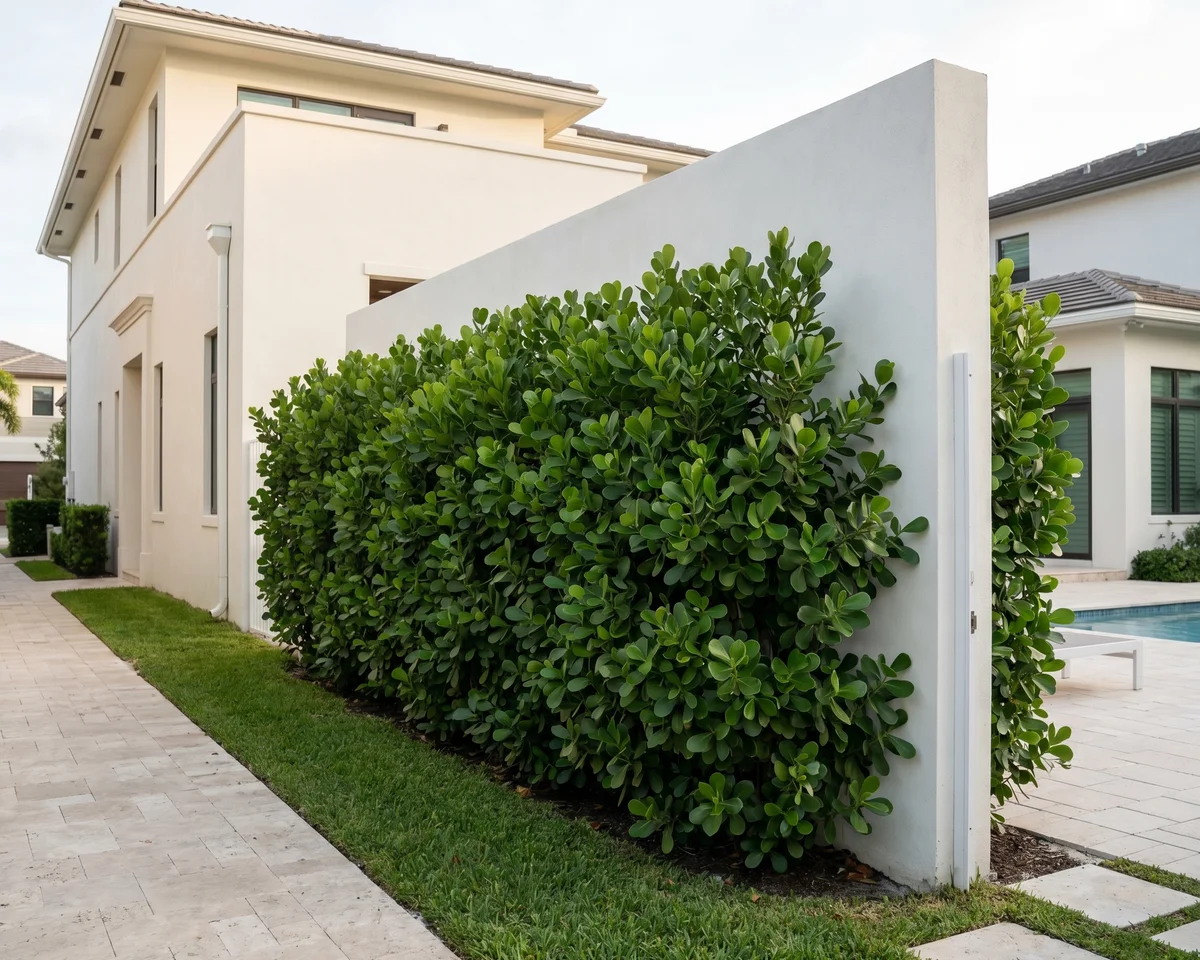
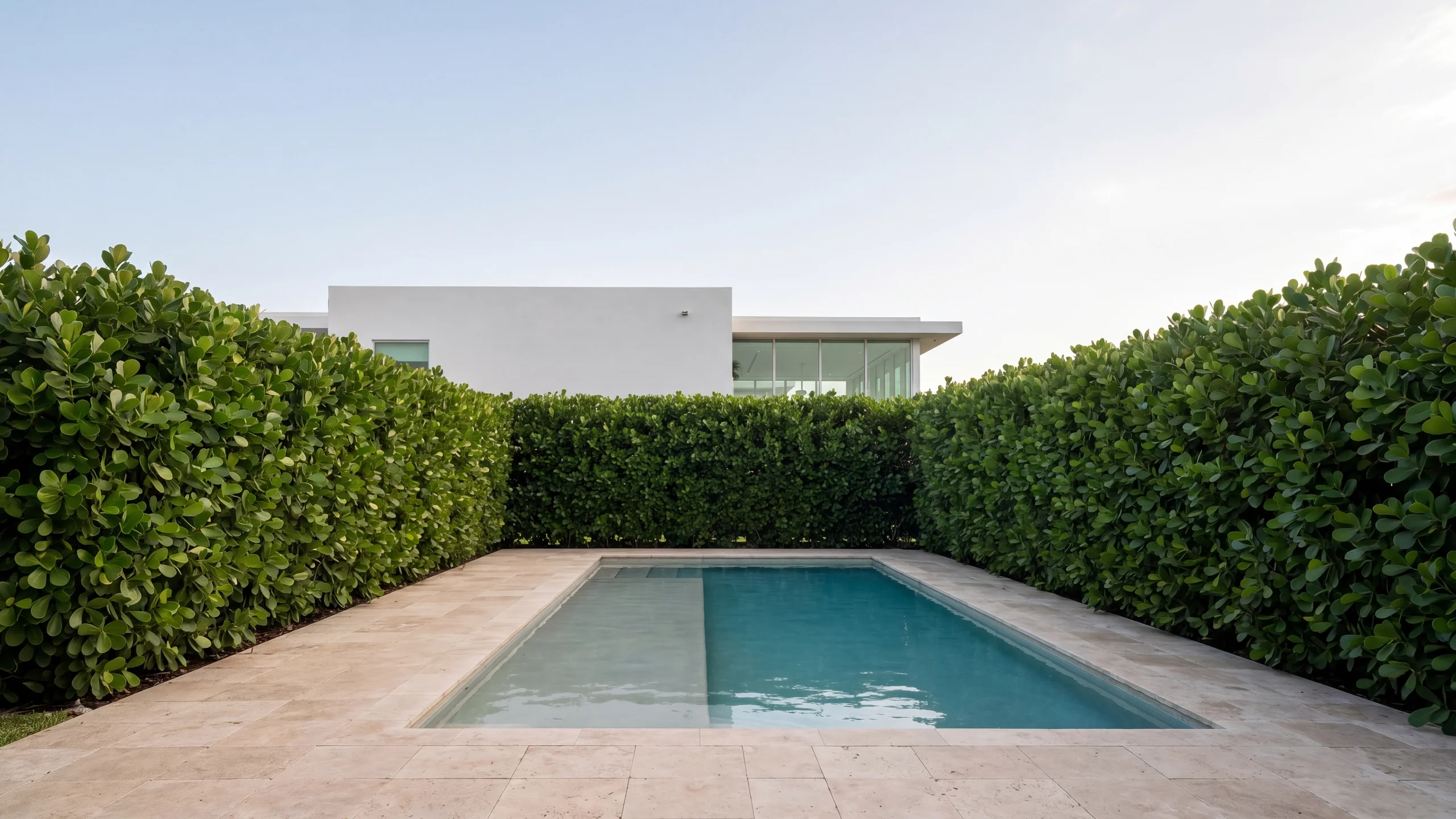
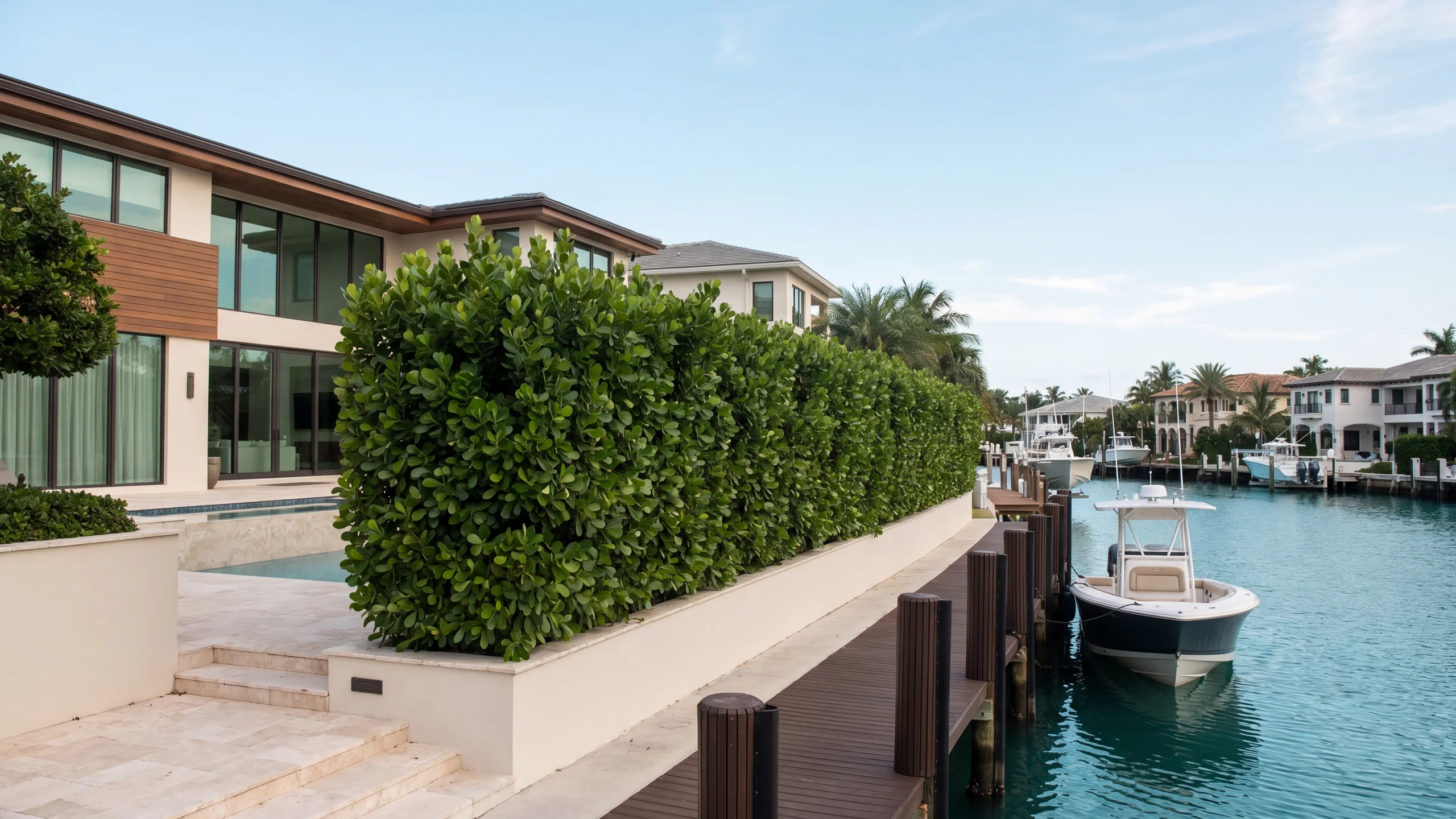
A hedge adapts to almost any architectural style. Clusia reads tropical and modern. Podocarpus reads formal and estate-style. A thoughtful landscape designer can make the hedge feel like part of the home's architecture.
A fence is harder to make disappear. Even premium fences tend to read as infrastructure. On homes where architecture matters and the look of the property is part of the value, the hedge almost always belongs in front.
Maintenance and the upkeep story
A fence is advertised as zero-maintenance and is actually low-maintenance, but not zero. Panels sag, hardware corrodes in salt air, and coatings fade in South Florida sun. PVC fences hold up well visually but are not immune to storm and UV damage over time.
A hedge needs a seasonal trim and an occasional light shaping. Most South Florida homeowners describe the upkeep as manageable. For comparison, a fence is lower-effort weekly but higher-effort over the lifetime of the install once replacement is in the picture.
When a fence is still the right call
There are real cases where a fence is not just acceptable, it is the correct choice. These are the main ones:
- Pool safety code where a physical barrier is required and a hedge cannot meet the rule on its own.
- Immediate enclosure on a tight timeline, especially for rentals or construction staging.
- Pet containment for larger or more active dogs that will push through a maturing hedge.
- Security-driven perimeters where the goal is intentional deterrent, not privacy.
- Extremely narrow runs where there is no width for a living hedge of any kind.
When the hedge wins for good
Outside of those cases, on most South Florida residential yards, a hedge is the better long-term privacy solution. It looks better as the home ages, absorbs noise, holds up in storms, appreciates in value, and does not need replacement on a fence schedule. Homeowners who go hedge-first almost never describe it as a compromise. They usually describe it as the upgrade they wish they had made sooner.
The combined answer: fence behind, hedge in front
When a property needs the code-compliant function of a fence and the look and privacy of a hedge, the combined answer is usually the cleanest. Run the fence on the line, at the minimum height the code or HOA requires, and install a Clusia or Podocarpus hedge in front of it along the viewing side.
The fence disappears behind the hedge. The yard reads as green and finished. You get code compliance, pet safety, and a privacy wall that grows into the home. This is the quiet reason so many premium yards that appear to be all-hedge actually have a simple fence hidden inside the green.