
South Florida Privacy Hedge Specialists

Ficus whitefly, explained.

What the pest actually does, why ficus hedges across South Florida keep failing, and the privacy hedge plants that do not have the problem in the first place.

Same-day replies Miami · Fort Lauderdale · West Palm Beach Never sold or shared
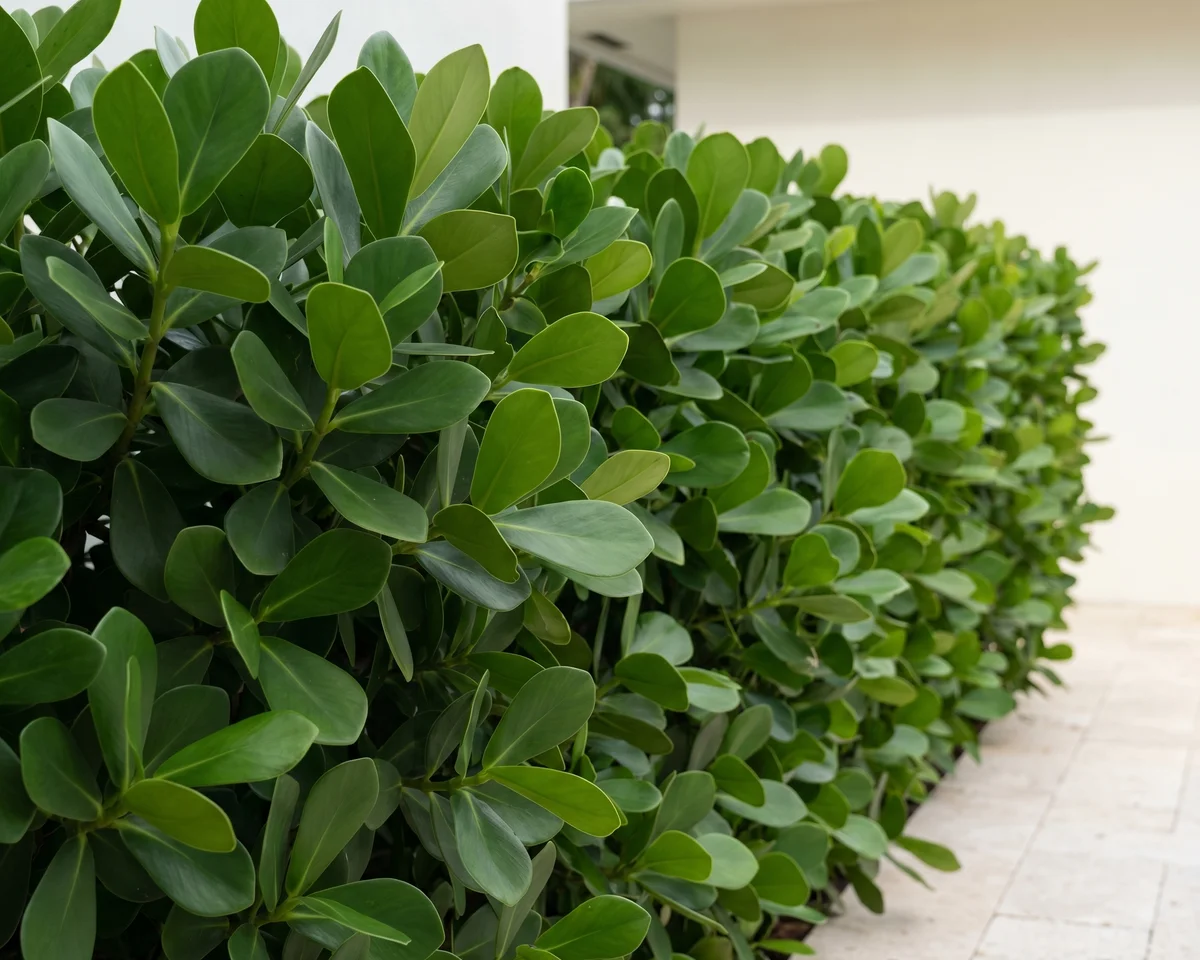
A mature Clusia privacy hedge along a luxury Miami home, shown as the kind of pest-reliable hedge homeowners replace failed ficus runs with.

The short version.

Treat if you must. Replace if you can.

The ficus whitefly is a small sap-sucking insect that has been damaging ficus hedges across Miami-Dade, Broward, and Palm Beach counties for years. Left untreated, a healthy ficus hedge can lose most of its leaves within weeks. Even treated hedges usually need ongoing, professional intervention to stay healthy.

Treatment works. Systemic insecticides applied to the root zone give several months of protection, foliar sprays knock back active populations, and some homeowners successfully manage ficus hedges this way for years. It is a real cost, repeated indefinitely, and one missed treatment window can set the hedge back months.

For new installs and for homeowners tired of fighting the same pest every year, the more reliable answer is to plant a hedge that is not a whitefly host in the first place. Clusia and Podocarpus are both strong South Florida privacy hedges that do not carry the ficus whitefly problem.

How to know whitefly is on your hedge.

The signs that point to whitefly pressure rather than a water or nutrition problem.

Tiny white flies under leaves

Turn a leaf over and look. Whitefly adults cluster on the underside of ficus leaves and scatter when disturbed. If you shake a branch and a small cloud of white lifts off, you have an active infestation.

Sticky residue on leaves and below the hedge

Whitefly excrete honeydew as they feed. Leaves, hardscape, cars, and patios near an infested hedge develop a sticky film. It is one of the most obvious and consistent signs that something more than a normal pest is active.

Black sooty mold coating

Sooty mold grows on the honeydew. Affected leaves and surfaces take on a dark, dirty coating that does not wipe off cleanly. It is cosmetic, but it is a reliable indicator that whitefly or a similar pest is present.

Rapid leaf loss

A healthy ficus hedge that suddenly starts dropping leaves across its length, without a hurricane, a freeze, or any obvious trigger, is almost certainly dealing with whitefly. Severe infestations can defoliate a mature ficus within a matter of weeks.

Thinning from the inside out

Whitefly damage often shows up first as thinning in the interior canopy, with the outside of the hedge still looking deceptively normal. By the time the outside is clearly sick, the problem is well advanced.

Recovery that never fully holds

Hedges that have been treated repeatedly often look okay for a few months and then decline again. Repeated cycles of treatment and partial recovery are a signal that the long-term fight is already expensive and may not be winnable.

How professional whitefly treatment actually works.

The realistic steps of treating a ficus whitefly infestation in South Florida.

1

Confirm the pest

Good treatment starts with confirming whitefly specifically, not guessing. Several pests produce similar symptoms, and each responds to different chemistry. A licensed crew identifies what is present before applying anything.

2

Knock down the active population

Foliar insecticide applications reduce the live adult and nymph population quickly. This is short-term relief. It stops damage from getting worse while the longer-term systemic treatment gets absorbed into the plant.

3

Apply systemic root treatment

Systemic insecticides applied to the root zone are taken up into the plant and provide several months of residual protection. This is the backbone of any real ficus whitefly program and is what keeps hedges from defoliating between treatments.

4

Monitor and repeat on schedule

Ongoing monitoring catches new infestations before they do damage. Systemic treatments are typically repeated on a roughly semiannual schedule. Skipping a window is how most hedges that were doing fine quietly slide back into trouble.

Keep the ficus, or replace it?

The honest trade-off between committing to indefinite whitefly treatment and moving to a hedge that does not have the problem.

Replace with Clusia or Podocarpus

  • No ongoing whitefly treatment program to manage
  • Stronger long-term value for money spent on the hedge
  • Full replant with matched starter sizes for a finished line
  • Clusia handles full sun, coastal, and pool yards cleanly
  • Podocarpus fits shaded, tall, and formal hedge needs
  • Most common choice for homeowners tired of ficus trouble

Keep treating the ficus

  • Preserves an established, mature hedge line
  • Makes sense when the hedge is still mostly healthy
  • Requires semiannual professional treatment
  • Foliar and systemic chemistry used in combination
  • One missed treatment window can cost months of recovery
  • Right choice only for hedges that are still structurally sound

Project Highlight

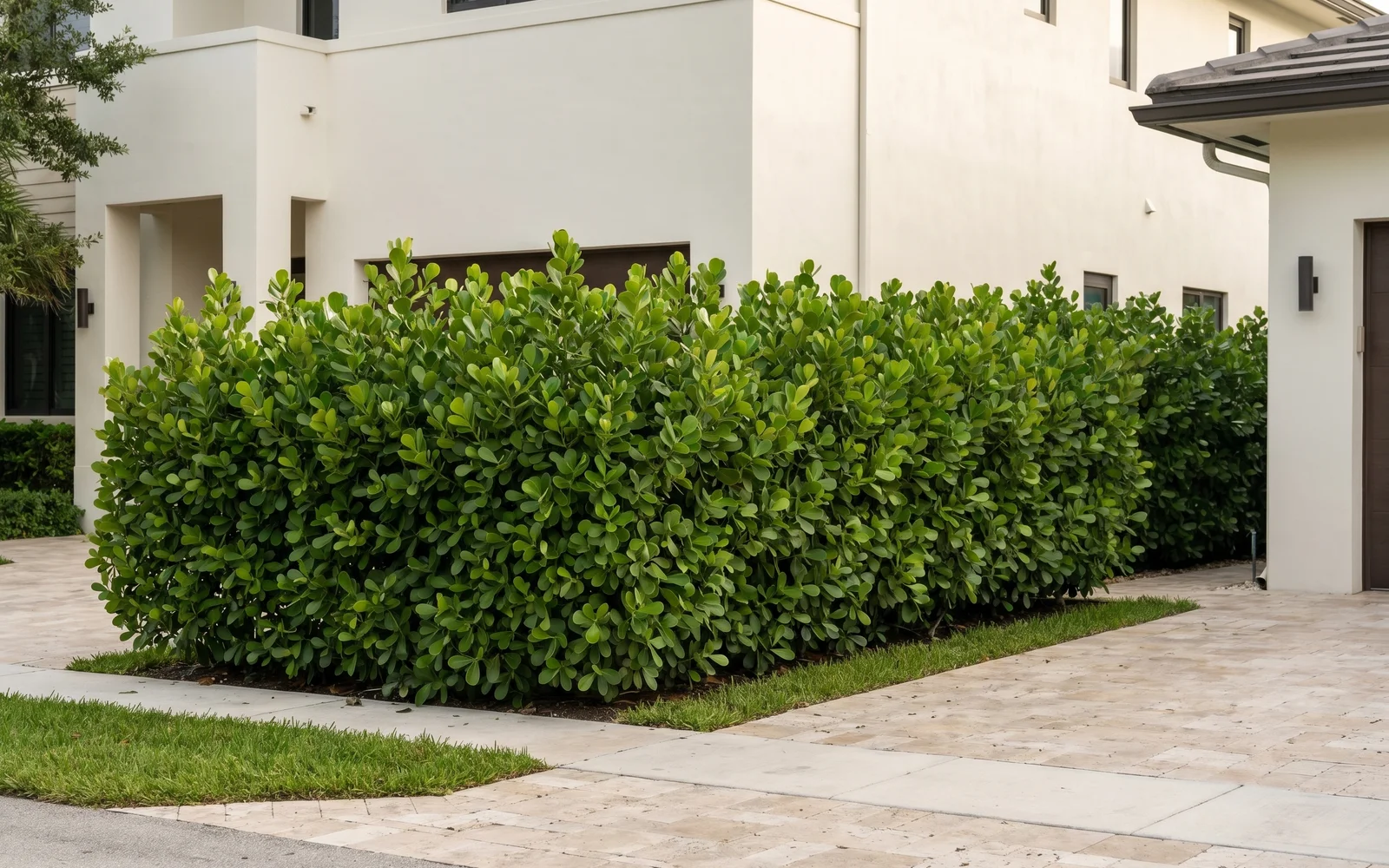
A finished Clusia privacy hedge along a Coral Gables street edge, installed as a long-term replacement for a ficus hedge lost to whitefly damage.

A Coral Gables ficus hedge that had lost the fight.

Why four rounds of treatment still ended with a full replacement.

The Challenge

A Coral Gables homeowner had been treating an 80-foot ficus privacy hedge for whitefly for nearly three years. Four rounds of systemic treatment from a licensed pest crew had kept the hedge alive, but the damage cycles had hollowed the interior of the canopy, and the outside was beginning to show thin spots along the full run. The owner was frustrated and spending real money to preserve a hedge that kept sliding backward.

Our Solution

We walked the yard and recommended full replacement with Clusia guttifera. The ficus came out with full root-ball removal so the new hedge would not be fighting old roots. The site conditions favored Clusia, and we installed large-size starter plants at tight consistent centers along the full length of the run.

The Outcome

The hedge read as a finished privacy wall on install day. More importantly, the homeowner has not scheduled a single whitefly treatment since. What had been an expensive ongoing pest management program is now simply a hedge, and the yard looks better than it has in years.

Ficus whitefly in detail

Ficus whitefly in South Florida, explained

Ficus whitefly has changed what it means to own a ficus hedge in Miami, Fort Lauderdale, and West Palm Beach. Before the pest arrived, ficus was a default premium privacy hedge across the region. Today, healthy ficus hedges are the ones being actively defended by professional treatment. That shift is worth understanding before you invest in treatment or in replacement.

What ficus whitefly actually is

The ficus whitefly is a small, white, moth-like insect that feeds on the sap of ficus leaves. Adults lay eggs on the underside of leaves, nymphs emerge and feed as they develop, and the cycle repeats rapidly in warm South Florida weather. Populations can build fast, especially on a hedge that has not been treated proactively.

Damage comes from feeding pressure. Leaves yellow, drop, and fail to replace themselves at the rate the plant needs to stay dense. Severe infestations can defoliate a mature ficus hedge within weeks. In untreated cases, hedges can die back to bare stems in a single season.

Why ficus is uniquely vulnerable

Ficus whitefly has specific hosts. Ficus, and particularly Ficus benjamina, Ficus microcarpa, and related species, are the primary targets. Other landscape plants, including Clusia and Podocarpus, are not primary hosts and do not face the same pressure from this pest.

This is why replacement is often the right answer. The problem is not a general pest issue you fix and move on from. It is a species-specific pressure that does not go away as long as the host plant is in the ground. Treatment manages the pest. Replacing the host plant removes the problem.

How professional treatment works

Effective ficus whitefly treatment is a combination of foliar and systemic chemistry, applied on schedule by a licensed pest control crew. Foliar applications knock down the active population quickly. Systemic insecticides, applied to the root zone and absorbed through the plant, provide several months of residual protection that keeps new populations from establishing.

Neonicotinoid-class chemistry is commonly used for the systemic side, with rotation across products to avoid resistance. Treatment windows are typically semiannual, though some hedges with heavy pressure benefit from tighter schedules. A well-run program keeps a ficus hedge looking healthy year over year.

The real cost of ongoing treatment

Homeowners often compare treatment cost to replacement cost on a single-year basis and decide treatment is cheaper. Over a five- or ten-year horizon, the math is less clear. Ongoing semiannual treatments, plus occasional spot replacements of damaged plants, plus the periodic year where the hedge needs an intensive recovery push, add up. And unlike a replacement, the spend never ends.

For hedges that are still mostly healthy and aesthetically important, the ongoing cost can be worth it. For hedges that are already compromised, the spend tends to produce diminishing returns. We help homeowners think clearly about that trade-off before committing to either path.

Why Clusia and Podocarpus are the common replacements

When homeowners decide to step off the treatment cycle, the replacement question becomes which hedge actually fits the site. Clusia and Podocarpus are the two most common answers in South Florida for a reason. Both produce dense, premium privacy hedges. Neither carries the ficus whitefly problem.

Clusia is the default pick for sunny, coastal, and pool-adjacent yards. It reads tropical, fills in fast, and handles the salt and wind that ficus once handled but without the pest baggage. Podocarpus is the stronger pick for shaded runs, narrow side yards, and tall formal hedges. Together, they cover nearly every residential privacy hedge use case that a ficus hedge used to cover.

What a proper ficus-to-Clusia replacement looks like

A correct replacement is not just planting new plants where old ones used to be. Old ficus roots and root balls should be removed rather than surface ground, because root mass left in the soil competes with new plantings for space and can host residual pest issues. Soil should be conditioned before planting, especially in sites where the ficus was under long-term treatment.

Starter plants should be matched in size and installed at tight consistent centers so the replacement hedge reads as one continuous wall on install day. Done right, a ficus replacement ends up as a better-looking hedge than the one that came out, with no ongoing pest program to run alongside it.

When whitefly treatment is still the right call

There are cases where keeping the ficus and treating is the right answer:

  • The ficus hedge is still mostly healthy and dense.
  • It has significant sentimental or design value that a replacement could not replicate.
  • The homeowner is comfortable with ongoing professional treatment and its cost.
  • A licensed pest control crew can run a consistent program without missed windows.
  • The property has no other site-related reasons to swap the plant.

Outside of those conditions, replacement almost always wins long term. The key is being honest about which situation you are actually in, rather than defaulting to treatment because the hedge is already there.

What to do if your hedge is showing symptoms right now

Do not wait. Whitefly damage compounds quickly once it is visible. Homeowners who call within the first month of noticing symptoms usually have more options, including treatment that preserves the hedge. Homeowners who wait a season often end up with a hedge that is past the point where treatment alone will hold.

The first step is a diagnosis. Confirm that the pest is actually ficus whitefly, understand how far the damage has progressed, and decide whether to treat, partially replace, or fully replace. We can walk the hedge, tell you honestly where it sits, and help you decide which path actually fits your yard and your plans for the property.

Whitefly questions, answered.

Common homeowner questions about ficus whitefly and the hedges that avoid the problem.

The ficus whitefly primarily attacks ficus species, especially Ficus benjamina, Ficus microcarpa, and closely related plants. It is not a broad-host pest the way some whiteflies are, which is why replacing a ficus hedge with Clusia or Podocarpus effectively removes the problem rather than just managing it.

Done fighting whitefly? Let us price the alternative.

A quick site visit tells you whether your ficus is worth saving or whether a Clusia or Podocarpus replacement is the smarter long-term move.