Buying Guide
Privacy Hedge Cost in South Florida
Why every privacy hedge quote is different, what actually moves the price up or down, and how to read a quote so the lowest number isn't the most expensive answer over time.
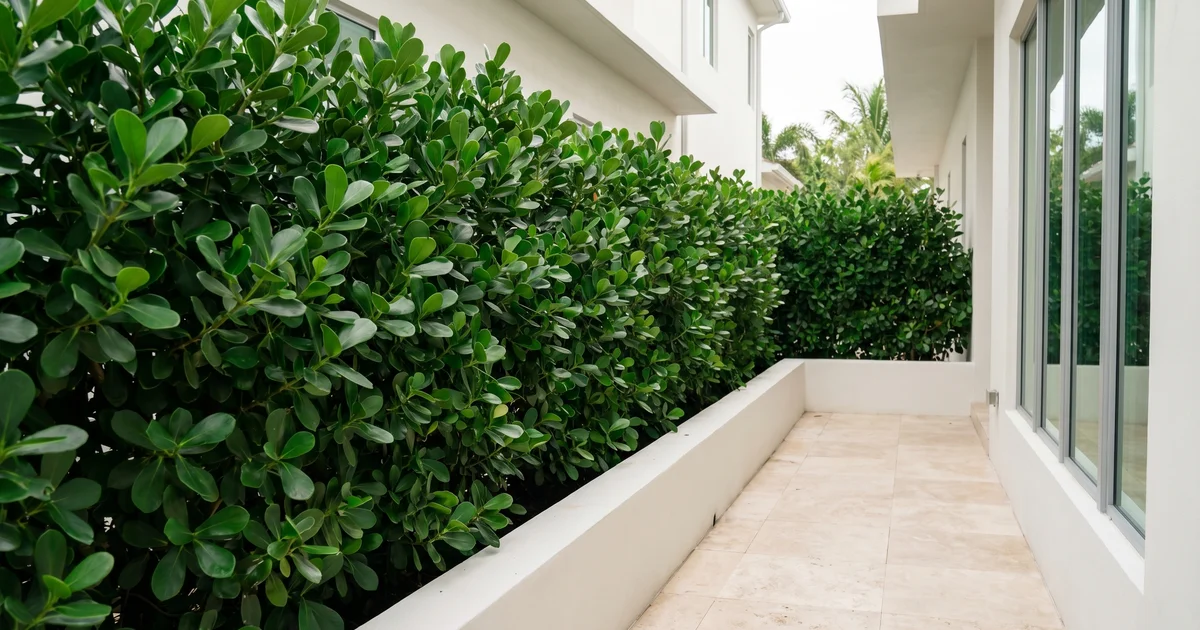
“How much does a privacy hedge cost?” is the question we get more than any other, and the honest answer is harder than a single number. Every install is genuinely different, the variables that move the price are the same across South Florida, but the way they stack on any specific yard isn’t. This post is the framework for understanding what moves the cost, why cheap quotes can be the most expensive option, and how to read a hedge quote so you can compare apples to apples.
Planning a privacy hedge install? This post is the cost framework. For the broader installation overview, see Hedge Installation Cost. For delivery-only orders, see Clusia Plants for Sale.
The Short Answer
There isn’t one. Every privacy hedge install in South Florida is priced from the same six variables, but the combination on any specific property is unique, and so is the quote.
What the right approach looks like:
- A site visit (in person or by photo) before quoting, not a phone estimate.
- Line-item pricing so you can see plants, delivery, prep, install labor, and any add-ons separately.
- An honest conversation about container size vs. timeline rather than a single number on a slip of paper.
If a quote arrives without a site visit and itemized lines, you don’t have a quote, you have a guess. The rest of this post explains the six variables and why the cheapest answer often isn’t the best one.
Six Variables That Move the Price
Every privacy hedge quote in South Florida is shaped by these six. Most of the price difference between competing quotes is one or more of them landing differently.
1. Run length
Shorter hedge runs cost more per foot than longer ones. The mobilization, setup, and minimum-crew costs spread over fewer plants. A 20-foot hedge isn’t a fifth of the cost of a 100-foot hedge, it’s closer to a third. Longer runs (200+ feet) see modest per-foot efficiencies as the crew works through.
2. Container size
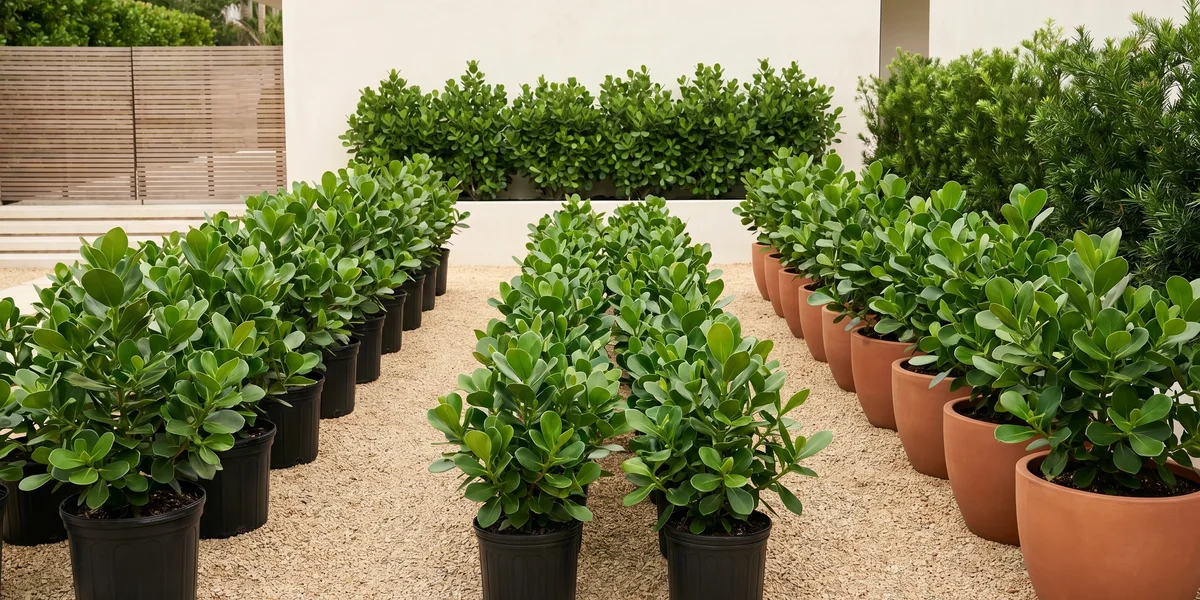
This is the single biggest cost driver across most installs. Container size (3-gallon, 7-gallon, 15-gallon, 25-gallon, field-dug) decides how finished the hedge looks on install day. Bigger plants cost more per plant, that’s obvious. The less obvious part: bigger plants don’t change the labor time meaningfully on a per-plant basis, so the price spread between container sizes is mostly the plants themselves, not the install.
3. Species choice
Clusia is the residential default. Podocarpus runs higher per plant because nursery growth is slower and supply is tighter. Cocoplum is comparable to Clusia at hedge-grade sizes and slightly more in larger formats. Florida natives (Walter’s viburnum, Simpson’s stopper, yaupon holly) run roughly comparable to imported standards once you’re at hedge-grade volume. The species decision should be driven by what fits the yard, not by which species is cheapest in isolation.
4. Site conditions
Yards vary enormously. Hard-to-access properties, no truck access, long carry distances, steep grades, soft turf, add real labor time. Sandy native soil installs cleanly; limestone-influenced or compacted clay sites need amendment. Coastal beds with salt exposure need different prep than inland beds. We see the site before quoting so the line item for prep reflects your yard, not a generic average.
5. Existing hedge removal
If a failing ficus, areca palm, or generic shrub is in the way of the new hedge, removal is its own job, and it’s a much bigger one than most homeowners expect. Ficus is the worst offender because of aggressive taproot systems that need full extraction. Areca palm is lighter. Generic shrub removal is lighter still. The removal line is always quoted separately so it’s transparent.
6. Add-ons
Drip irrigation, premium mulch upgrades beyond the basic finish, soil amendment for difficult sites, staggered double-row planting for tall runs, and post-install care plans all stack on top of the base hedge install. None are required; all add real value depending on the project. We surface every add-on as its own line so you decide what’s worth the additional cost.
Per-Foot, Not Total: The Right Way to Compare Quotes
The most common mistake homeowners make when comparing hedge quotes is comparing total dollar amounts. That comparison is misleading because the run lengths and container sizes usually differ between quotes.
The cleaner comparison is per-foot of finished hedge at the same container size. If quote A is for 80 feet of 7-gallon and quote B is for 100 feet of 15-gallon, the totals tell you almost nothing about which installer is more competitive. The per-foot-by-container-size view tells you everything.
When you’re comparing, ask each installer to itemize:
- Container size and on-center spacing
- Number of plants
- Per-foot cost at that container size
- Prep and labor as a separate line
- Delivery as a separate line
- Add-ons (irrigation, removal, premium mulch) as separate lines
A clear quote lays this out automatically. A quote that gives you only a total to compare is hiding something, usually one of the variables above.
How Container Size Shapes Cost (Without the Math)
We won’t put specific numbers in this post because every install is different. But the relationship across container sizes is the same on every quote we write:
- Going from 3-gallon to 7-gallon roughly doubles the per-plant cost but compresses the “feels finished” timeline from 12-18 months to 6-12 months. For most residential installs, the doubled cost is worth the time saved.
- Going from 7-gallon to 15-gallon roughly doubles again but compresses the timeline to “near-finished on install day.” This is the most common premium-residential pick because the hedge looks done immediately at a defensible per-foot price.
- Going from 15-gallon to 25-gallon raises the cost meaningfully, not quite doubling, and produces a hedge that’s truly closed at install. The right pick for highly visible runs where finished privacy from day one is non-negotiable.
- Field-dug specimens (45-gallon and up) are a different category. Pricing scales sharply because of growing time, sourcing logistics, and the specialty equipment required. The right answer for estate features and instant-impact installations where the project must look mature on opening day.
If you’re trying to decide between sizes, the question worth asking your installer is “what does each step up actually buy me on timeline?” Then trade off cost vs. how long you can wait.
Real Installs: Three Stories
The price on any quote depends on the choices made. Three real installs from across South Florida, same six variables, different combinations.
Case 1: Pinecrest backyard, 80 feet, 7-gallon Clusia
A homeowner wanted to screen the back of a Pinecrest property line. The yard had open truck access, decent existing soil, and no removal work. We picked 7-gallon Clusia at 1.5 to 2-foot centers because the homeowner was willing to wait a season for the hedge to fully close, in exchange for a more budget-friendly total. Plants matched by height across the order; basic mulch finish; no irrigation needed because existing turf zones already covered the bed.
Outcome: A finished-looking hedge by the start of the next dry season. The homeowner valued the budget-conscious approach and was happy to give the hedge a year to fully close.
Case 2: Coral Gables pool yard, 120 feet, 15-gallon Clusia + ficus removal
An aging ficus hedge had to come out before the new hedge could go in. The pool was being used through the install, so the project needed to be quick and clean. We pulled the ficus first (root grinding included), then installed 15-gallon Clusia at 2 to 2.5-foot centers for finished privacy from day one. Premium mulch upgrade because the bed was visible from the pool deck. Drip irrigation install on a dedicated zone so the new hedge wouldn’t share with the surrounding turf.
Outcome: Closed hedge on install day. The pool yard felt private the same evening. Total project cost was meaningfully higher than the Pinecrest case because of removal + irrigation + larger plants, but every line was driven by a clear customer decision.
Case 3: Aventura coastal estate, 200 feet, 25-gallon cocoplum
Beachfront property with direct salt spray. The previous hedge had burned twice before. We specified 25-gallon cocoplum for the salt immunity, matched plant height across the full 200 feet, and ran a two-day install with a four-person crew. Soil amendment for the sandy coastal beds. Estate-scale visible run from the front road, so the budget could absorb the larger plants.
Outcome: A coastal hedge that has held through three storm seasons. The total was the highest of these three jobs, but the trade-off was instant maturity and guaranteed performance in conditions that had defeated cheaper installs.
What these three cases share: the price was driven by visible choices the homeowner could see in the quote and could defend later. Container size, removal, irrigation, species choice, all explicitly trade-offs, not hidden assumptions.
Where DIY Can Save (And Where It Often Doesn’t)
The biggest legitimate saving opportunity is delivery-only plant orders with self-install. The path is well-trodden, landscape contractors, DIY homeowners, and small-scale buyers all order this way. The Clusia Plants for Sale page covers the container-size lineup and how the order process works.
Where DIY actually saves money:
- You handle the soil prep and planting yourself instead of paying labor.
- You can schedule install on your own timeline rather than coordinating with a crew.
- You skip the install labor line entirely.
Where DIY can quietly cost more than it saves:
- Equipment rental. A skid-steer for soil prep, a hand truck for moving plants, irrigation tools, these can eat a meaningful slice of the savings if you don’t already own them.
- Time underestimate. A 100-foot hedge means dozens of holes, hauling each plant from delivery point to bed, prepping each hole, and back-filling. That’s a real Saturday of labor at minimum.
- Grading plants on delivery day. Matching plant heights across the run is a skill. Random installation produces a hedge that never quite reads continuous, and the cost of fixing it later (interplanting, replacement plants, shaping) can exceed what you saved.
For smaller container sizes (3-gallon and 7-gallon), DIY is realistic for hands-on homeowners. For 15-gallon and larger, the weight and lift requirements often push buyers back to install service. Either path can be the right one, it depends on what your time is worth and what equipment you already have.
What Cheap Quotes Often Leave Out
This is the most important section for anyone comparing prices. A hedge quote that comes in well below other quotes is rarely the bargain it looks like. Three things are usually happening when a quote is dramatically cheaper than the rest of the market:
1. Plants sourced from out of region. Plants trucked in from Georgia, Alabama, or central Florida cost less to source than nursery-grown South Florida stock. They look identical in the container. They struggle in the conditions here, heat, humidity, salt exposure, alkaline soil, and year-one mortality runs significantly higher. The “saved” money becomes replacement cost over the first 12 to 18 months, often delivered as warranty claims that get denied because the install agreement excluded the actual cause of failure.
2. Random plant grading instead of matched heights. Matched-height plants cost a small premium to grade at the nursery but produce a hedge that reads clean from day one. Random pulls produce a gappy hedge no matter how skilled the installer is. The shorter plants don’t catch up to the taller ones for years, sometimes never. The hedge looks unfinished, and the fix is interplanting more plants in the gaps, which costs more than the original “savings.”
3. Dig-and-drop installation without proper soil prep. Skipping the soil amendment, bed forming, and matched-spacing checks saves the installer real time (and therefore real money on labor). The hedge goes in faster and cheaper. It also grows in unevenly, fills laterally over a much longer timeline, and often requires shaping intervention by year two that wouldn’t have been needed with proper prep.
These three corner-cuts can stack. A quote that comes in well below other comparable quotes in South Florida is almost certainly cutting at least two of them. The upfront discount looks like a win, but the total cost over 3-5 years, including replacements, interplanting, slow-fill remediation, and the visual penalty of an underperforming hedge, typically exceeds what an honest premium install would have cost from the start.
This dynamic is covered in more depth in our dangers of cheap hedges post. The short version: in privacy hedge work, the cheapest quote is almost never the cheapest outcome.
Volume Pricing for Landscape Contractors
Landscape contractors and large-project buyers operate on different cost dynamics than residential homeowners. The structure is project-by-project, every project has different access, timeline, container-size availability, and grade requirements that change the math. Volume discounts apply, contractor pricing is meaningfully better than retail, and quotes are quoted against the specific scope rather than against a published wholesale list.
If you’re a landscape contractor pricing a job that involves Clusia, Podocarpus, or any of the native species we install, reach out with the volume, container size, and delivery window. We’ll quote against your project.
Frequently Asked Questions
How much does a Clusia hedge cost in South Florida? There isn’t one number, every install is priced from six variables: run length, container size, species choice, site conditions, existing hedge removal, and add-ons. Container size is the biggest single driver. We give specific numbers in writing only after a site visit because every yard’s combination of variables is different.
What’s the cheapest way to install a privacy hedge? Smaller container sizes at wider acceptable spacing, with delivery-only orders for self-install, produce the lowest upfront cost. The trade-off is a longer wait for the hedge to look finished. The cheapest path is realistic for hands-on homeowners with the equipment and time to handle install themselves.
Why are some hedge quotes dramatically cheaper than others? A quote that’s well below comparable quotes is usually cutting one of three corners: plants sourced from out of region, random plant grading instead of matched heights, or dig-and-drop installation without proper soil prep. Each of these can be invisible on install day and expensive over the following years. See the “What Cheap Quotes Often Leave Out” section above.
Should I always pick the cheapest quote? No. The cheapest privacy hedge quote is rarely the cheapest outcome over 3-5 years. The total cost includes year-one mortality (replacement plants), interplanting to close gaps from random grading, and the visual penalty of a hedge that takes much longer to look finished. A defensible mid-range quote with full line-item transparency is usually the better choice.
Does Clusia or Podocarpus cost more? Podocarpus runs higher per plant at equivalent container sizes because nursery growth is slower and supply is tighter. The exact difference depends on the container size and the project. We can quote both species head-to-head on your yard.
Is cocoplum more expensive than Clusia? Cocoplum is comparable to Clusia at hedge-grade container sizes (7-gallon and 15-gallon) and slightly more in larger formats. The species has narrower nursery production volumes, which adds a small premium on bigger plants. We can compare cocoplum and Clusia for your specific project in the same quote.
What’s included in a privacy hedge install quote? Our quotes are itemized: plants (sized and graded), delivery to the property, site preparation (soil work, bed forming), professional planting with matched on-center spacing, basic mulch finish, and a post-install walkthrough. Items priced separately: existing hedge removal, drip irrigation, premium mulch upgrades, soil amendment for difficult sites, and ongoing care plans. Each is a line you can include or exclude.
How much extra does ficus removal cost? Ficus removal varies a lot by run length and root depth. Ficus has aggressive taproot systems that need root grinding for full extraction. We quote removal as a separate line item so it’s transparent. See our ficus hedge removal post for more on what’s involved.
How much can I save by doing the install myself? Real DIY savings depend on whether you own the equipment, can grade plants on delivery day, and have a Saturday available for labor. For smaller container sizes (3- and 7-gallon), DIY can save meaningfully. For 15-gallon and larger, the weight and lift requirements often narrow the savings significantly. The right path depends on what your time is worth and what equipment you already have.
Do you offer financing for hedge installation? We do not directly finance, but most install costs can be covered with home equity lines, general home-improvement financing, or contractor financing programs through your bank. Hedge installation is rarely a stand-alone financed purchase, most clients pay outright.
Why do hedge quotes vary so much between installers? The biggest differences are plant sourcing (nursery-grown in Florida vs. trucked in from out of state), plant grading (matched-height vs. random pulls), and site prep depth (soil amendment vs. dig-and-drop). Two installers can quote the same hedge with the same total dollar amount but deliver radically different long-term outcomes based on which corners they cut. The questions in the “Per-Foot, Not Total” section above are how to spot the difference.
Do you charge for a quote? No. Quotes are free, and we walk the property in person or by photo before quoting so we can give you a real number rather than a phone estimate. Most homeowners get 2-3 quotes; we’d rather be picked on accuracy and transparency than be the cheapest.
Are HOA-approved hedges more expensive? The hedge itself is the same price. What can add cost is the architectural-review process if the HOA requires species documentation, height/setback drawings, or back-and-forth with the architectural review committee. For most South Florida HOAs that already approve Clusia and Podocarpus, the additional process cost is zero. See our HOA-approved privacy hedges page.
How long is a quote valid? Our quotes are valid for 60 days from issue. Plant prices fluctuate slightly with nursery supply and seasonal demand, so prices outside that window may shift modestly. The labor and process components remain stable.
See also: Hedge Installation Cost for the cost-driver framework. Clusia Plants for Sale for delivery-only buying. Dangers of Cheap Hedges for what corner-cutting really costs.
Get a Real Quote on Your Yard
Every install is different, and the only honest way to give you a price is to see the yard. We walk every property in person or by photo, surface every line in the quote, and put the trade-offs in front of you. The lowest number isn’t the win, the right number for your project is.
Request a free quote or call us at 305-222-7171. We serve Miami, Fort Lauderdale, West Palm Beach, Boca Raton, and Delray Beach.
Tagged
- privacy hedge cost
- clusia hedge cost
- hedge installation
- south florida hedges
- buying a hedge
Ready for a privacy hedge that looks finished from day one?
Get a free estimate from a South Florida specialist who handles delivery, installation, and the result you actually want.