South Florida Privacy Hedge Specialists

Cocoplum hedges for South Florida homes.

Florida-native, salt-immune, drought-hardy privacy hedges. Cocoplum gives you a mature tropical screen with the resilience of a coastal native — nursery-grown, delivered, and installed by our own crew.

Same-day replies Miami · Fort Lauderdale · West Palm Beach Never sold or shared
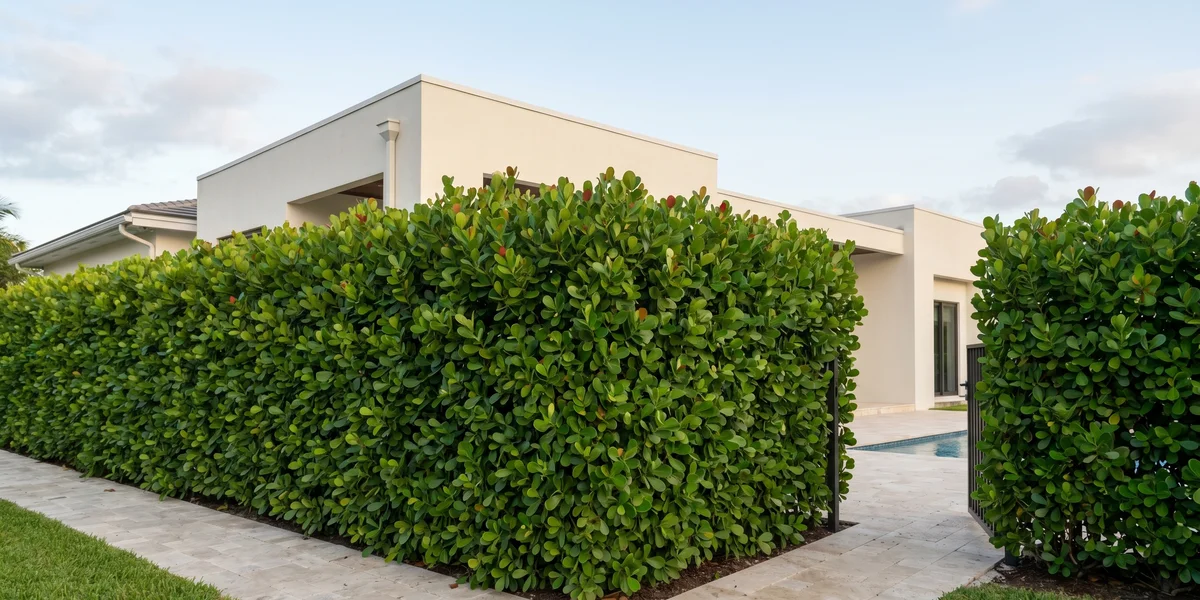
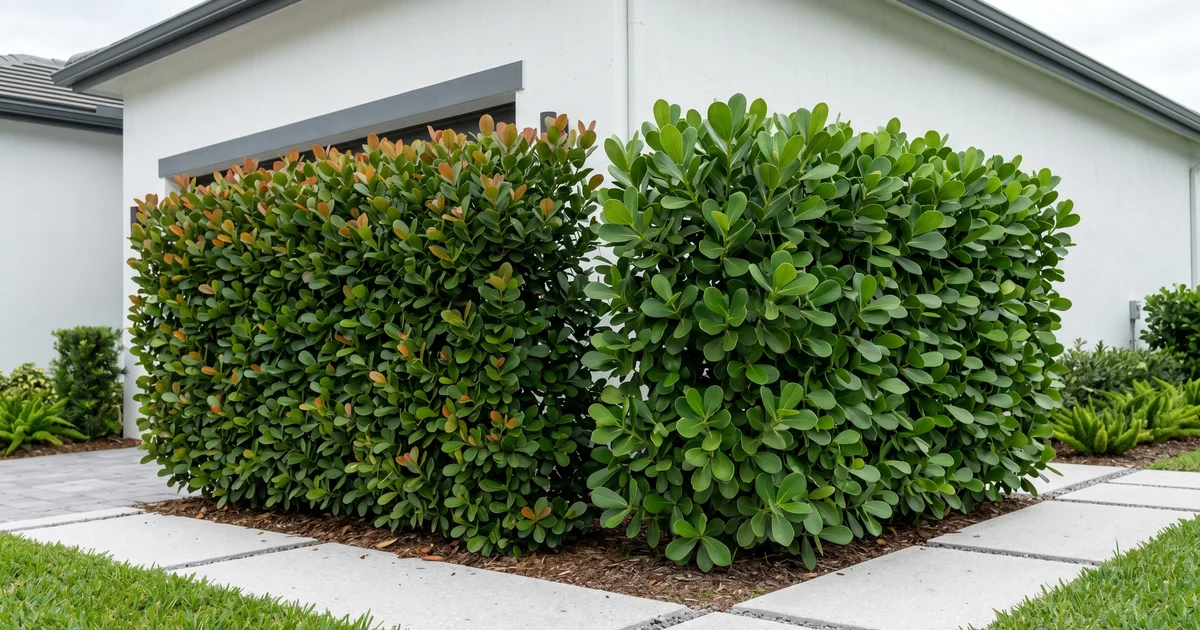
Side-by-side reference of cocoplum and Clusia privacy hedges in a South Florida yard, used to illustrate the resemblance and the key differences.

The Florida native built for coastal South Florida yards.

Cocoplum is the hedge you reach for when the property is on the water, the soil is sandy, or the design leans naturalistic.

Cocoplum (Chrysobalanus icaco) is a true Florida native evergreen that grows naturally along coastal hammocks, mangrove edges, and inland swamp margins. The leaves are broad, glossy, and oval. The form is dense and rounded. In a hedge line it reads like a tropical Clusia until you look closer — then the difference shows.

Where Clusia is the default tropical privacy hedge, cocoplum is the upgrade for specific situations: direct ocean spray, drought-prone sandy lots, Florida-Friendly Landscaping communities, and yards where wildlife value is part of the brief. It is also the most coastal-tolerant privacy hedge we plant — period.

We grow our own cocoplum, deliver it to your property, and install it as one continuous hedge line. You get a finished, native-aligned yard the day we finish planting, not a row of starter shrubs waiting to fill in.

Why homeowners pick cocoplum

The reasons cocoplum is the right South Florida privacy hedge when Clusia is not.

A true Florida native

Cocoplum (Chrysobalanus icaco) is on every Florida-Friendly Landscaping plant list and HOA native-species approved list we have seen. It is the easiest path through architectural review in eco-aligned communities.

Exceptional salt tolerance

Cocoplum handles direct ocean spray with no leaf burn. For beachfront, canal-front, and Intracoastal-adjacent yards in Miami-Dade, Broward, and Palm Beach, it is the most bulletproof privacy hedge available.

Drought-hardy once established

After the first 60 to 90 days, cocoplum needs roughly 20 to 35 percent less supplemental irrigation than Clusia. On drought-prone or sandy lots without consistent irrigation, that gap is real.

Wildlife value

Small dark fruit feed native birds and the dense canopy provides nesting cover. If you want a privacy hedge that also pulls songbirds and pollinators into the yard, cocoplum delivers what Clusia does not.

Three varieties, three use cases

Red-tip cocoplum carries warm coppery new growth for tropical and modern homes. Green-tip is the all-green form for cleaner formal looks. Horizontal cocoplum is the low spreading form for borders, not hedges.

Low long-term maintenance

Once established, cocoplum needs less water, less fertilizer, and minimal pest intervention. On a ten-year horizon it is one of the lowest-input privacy hedges we plant in South Florida.

What's included with a cocoplum hedge from Mr. Clusia

One team, one quote, one finished hedge line. No coordinating a nursery, a driver, and a separate installer.

Nursery-Grown Cocoplum

Hedge-grade Chrysobalanus icaco raised in our own nursery, sized and selected for South Florida residential and estate hedge work.

On-Property Consultation

We walk the yard, read sun and salt exposure, talk through red-tip vs green-tip, and scope the run before we commit to a plan.

Variety Matching

Red-tip for warm naturalistic looks, green-tip for formal estate lines, horizontal cocoplum for low borders. We pair the variety to the role on your property.

Careful Delivery

Root balls stay protected and plants arrive ready to go in the ground. The install day is not the day we start solving problems.

Professional Planting

Soil prep, tight consistent centers, and a straight clean hedge line laid by our own crew. We are responsible for the finished result, start to finish.

Care Handover

Before we leave, we walk the new hedge with you and cover establishment watering, FFL-aligned mulch depth, and the light shaping rhythm cocoplum prefers.

Is cocoplum the right pick for your yard?

Cocoplum and Clusia look similar in a finished hedge. The right choice depends on exposure, timeline, and how Florida-native you want the planting to be.

Cocoplum: the Florida-native, coastal-strong pick

  • True Florida native, on every FFL plant list
  • Direct ocean-spray salt tolerance, no leaf burn
  • Drought-hardy once established
  • Active wildlife value: birds, pollinators, nesting cover
  • Comfortable at 6 to 10 feet of maintained height
  • Reads naturalistic, modern coastal, or eco-aligned

Clusia: the fast-fill, tropical pick

  • Non-native but well-adapted to South Florida
  • Fills laterally about a season faster than cocoplum
  • Slightly more density per linear foot at install age
  • Lighter leaf drop near pool decks
  • Comfortable at 6 to 12 feet of maintained height
  • Reads lush, bold, resort-style tropical

How a cocoplum install works

Four steps from your first call to a finished hedge line.

1

Tell us about the yard

Share the city, the length of hedge you want, whether the run is coastal or inland, and roughly how tall you want the finished screen. A few details are enough to start shaping the plan.

2

We match variety to property

We walk the site in person or by photo, check sun, salt exposure, and soil, recommend red-tip or green-tip, and put a clean itemized quote in front of you.

3

Delivery and install

Nursery-grown cocoplum arrives on a scheduled day. Our crew preps the soil, sets tight consistent centers, and installs the hedge as one continuous line.

4

Finished hedge, simple care

We walk the hedge with you, cover establishment watering and the FFL-aligned mulch standard, and leave you with a private yard that reads native and intentional.

Project Highlight

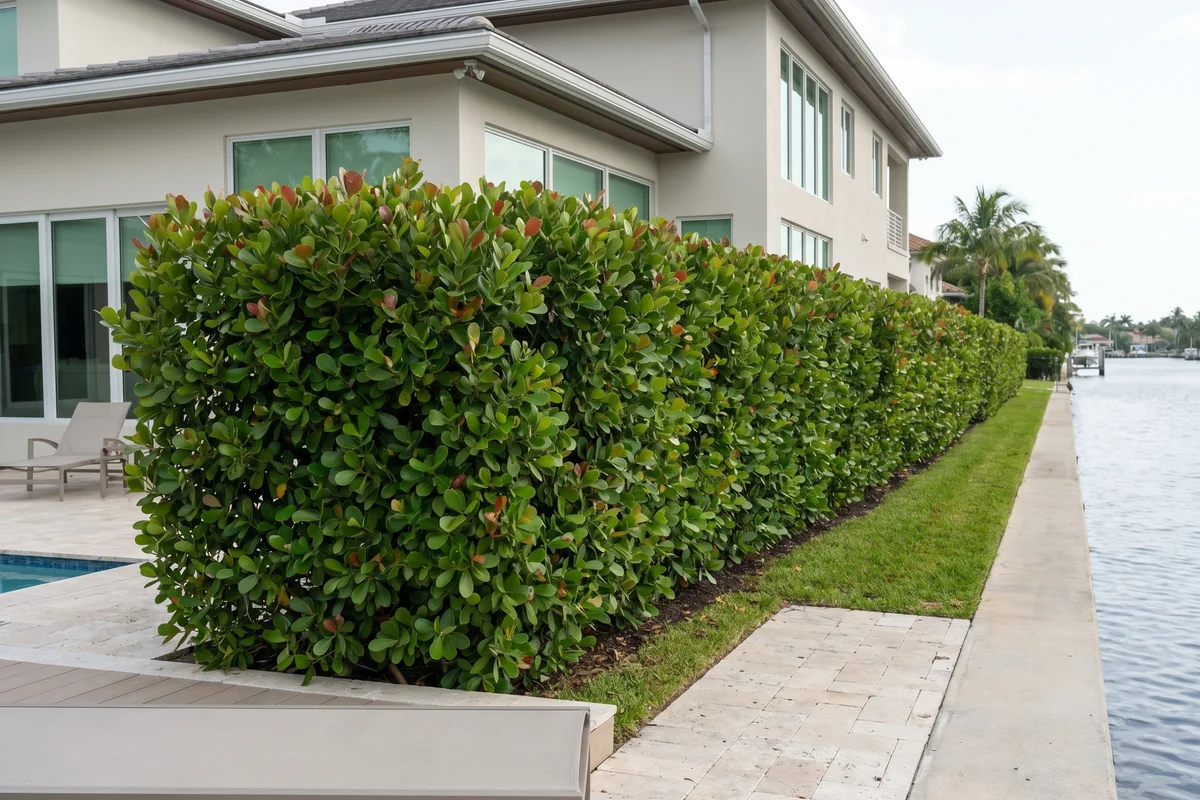
A completed red-tip cocoplum privacy hedge along a Fort Lauderdale canal-front yard, holding up to direct salt spray and forming a continuous green line.

A canal-front cocoplum hedge for a Fort Lauderdale waterfront home

A waterfront property had failed twice with non-native hedges burned by salt spray off the Intracoastal. The owners wanted a screen that could actually live on the lot.

The Challenge

Two previous hedge attempts on the canal-facing edge had thinned and burned within their first storm season. Constant salt spray, full coastal exposure, and sandy fast-draining soil were too much for the species the prior installer had used.

Our Solution

We installed red-tip cocoplum along the full canal-side run at a starter size that already cleared deck eyeline. Plants were matched by height across the line, set on tight consistent centers, and seated in beds prepped with light compost amendment over the native sand. FFL-aligned mulch went down at two to three inches.

The Outcome

The hedge came through its first storm season without leaf burn or thinning. The waterfront side of the property now reads as a finished green wall, and the homeowners have stopped re-planting failed sections every spring.

Homeowners who chose cocoplum

Real feedback from South Florida properties that put in a cocoplum hedge with Mr. Clusia.

"We had burned through two hedges before. The cocoplum is two seasons in and it has not flinched. We finally have privacy on the water side of the yard and it actually looks like it belongs."

D

Daniel & Priya R.

Homeowners, Fort Lauderdale

"FFL approval was the gating issue for us. They walked us through why cocoplum sails through architectural review and our community signed off without a single revision. The install was clean and the hedge is filling in beautifully."

M

Marisol G.

Homeowner, Coconut Grove

"We picked red-tip for the warm color and it pays off every spring. The coppery new growth on top of the hedge looks intentional, not accidental. The birds love the berries too — that part was a bonus we did not expect."

A

Andrew T.

Homeowner, Palmetto Bay

Planning a cocoplum hedge for a South Florida yard

A plain-English guide to planning a cocoplum hedge in South Florida

Cocoplum is one of the most under-specified privacy hedges in South Florida residential work. Most homeowners hear "Florida native" and picture a wild, shaggy plant. The reality is the opposite — installed properly, cocoplum produces one of the cleanest dense privacy walls available in the region. The trick is matching the variety to the use case and getting the install right on day one.

What cocoplum actually looks like in the ground

Cocoplum produces broad, oval, glossy leaves about two inches long, small white flowers, and dark red to purple fruit eaten by native birds. The natural form is dense and rounded. On a maintained hedge, the line reads as a continuous mounded green wall — closer in look to Clusia than to most other Florida natives. The single biggest visual difference from Clusia is leaf size; cocoplum reads slightly more refined and slightly less aggressively tropical.

Cocoplum varieties — Red-Tip, Green-Tip, Horizontal

Three forms turn up in the South Florida hedge trade, and the difference between them shapes the entire install:

  • Red-tip cocoplum is the standard residential privacy hedge variety. New growth flushes coppery red and matures to glossy green over four to six weeks. Multiple flushes per year keep the warm color visible on the upper third of the hedge most of the time. This is the variety we plant on roughly seven out of ten cocoplum installs.
  • Green-tip cocoplum is the all-green form. New growth emerges green and matures green. The hedge reads as more uniformly green-on-green throughout the year with a slightly denser branching pattern. Designers working on Mediterranean estate landscapes often specify it for the cleaner uniform look.
  • Horizontal cocoplum is a different beast — it is a low spreading form that tops out at 3 to 5 feet. It is not a privacy hedge variety. It belongs in low borders, ground covers, and short coastal-tolerant edging, not in a screening line. Despite the shared species name, it cannot deliver privacy at any height a real hedge needs to hit.

For the full side-by-side, see our blog on red-tip vs green-tip vs horizontal cocoplum. The choice between red-tip and green-tip is mostly aesthetic; the choice not to use horizontal for a privacy run is a structural one.

Where cocoplum performs best

Cocoplum thrives in full sun on coastal and near-coastal lots. Direct ocean spray, sandy soil, drought stretches, and lean nutrient profiles do not slow it down. It is the species we recommend most often for true beachfront and canal-front yards across Miami-Dade, Broward, and Palm Beach.

It also performs strongly on inland lots that lean toward drought or that operate under Florida-Friendly Landscaping principles. Communities that favor or require native species accept cocoplum cleanly, often with less architectural-review friction than non-native alternatives.

Cocoplum is less ideal under deep continuous shade. For shaded hedge lines we usually recommend a different native (Walter's viburnum or wild coffee) and explain why on site.

Starter size and spacing

Two levers decide how finished a cocoplum hedge looks on day one: starter container size and on-center spacing. The same logic that applies to Clusia applies here, with slightly tighter centers because cocoplum reaches mature width on a different timeline.

  • 3-gallon at 3-foot centers — longer-runway install, lower upfront cost, reads as a finished hedge in 18 to 30 months.
  • 7-gallon at 2.5 to 3-foot centers — most common residential install. Near-finished in 12 to 18 months.
  • 15-gallon at 2 to 2.5-foot centers — finished privacy on install day. Standard premium residential.
  • 25-gallon at 2-foot centers — estate finish for long property-line runs with immediate density.

Plants are matched by height across the run so adjacent specimens nearly touch on install day. We do not space residential cocoplum wider than 3 feet on center because the line stops reading as a single continuous hedge.

What a cocoplum hedge asks for once it is in

Early on, a new cocoplum hedge needs consistent water through the first 60 to 90 days of establishment. After that window, water requirements drop sharply. Established cocoplum can hold its color and density on roughly one to two waterings per week during normal South Florida dry stretches, and on minimal supplemental water through most of the rainy season.

Shaping is light. Most owners run one to two trims per year to hold a tidy form, and the hedge continues to thicken between trims. FFL-aligned mulch at two to three inches under the dripline, kept off the trunk, is the simple standard we recommend. Fertilizing once a year is plenty for most cocoplum runs.

Common cocoplum planning mistakes, and how to avoid them

When a cocoplum hedge does not turn out right, the cause is almost always planning, not the plant.

  • Installing horizontal cocoplum in a privacy line. The most common mistake we walk into. The plant simply does not grow tall enough to function as a screen. If a previous landscaper installed horizontal cocoplum along a 100-foot run, the right move is usually to pull it and replant with red-tip or green-tip.
  • Mixing red-tip and green-tip in the same continuous line. The color contrast between the new-growth flushes reads as inconsistent, even though both varieties grow at similar rates. Pick one and stay with it for any single run.
  • Underestablishment watering. Cocoplum is drought-tolerant after establishment, not during. Skipping the first 60 to 90 days of consistent water is the most preventable cause of failed installs.
  • Over-irrigating mature cocoplum on heavy lawn schedules. The opposite mistake. Established cocoplum does not want to live inside a daily turf-irrigation zone. We zone the hedge bed separately when the existing irrigation would otherwise drown it.
  • Treating it as a "wild" native that does not need shape. Cocoplum is dense and looks intentional, but it does benefit from one or two trims per year. Letting the shaping fall off produces a softer, less defined hedge silhouette.

When cocoplum is the right call, and when it is not

Cocoplum is the right call on coastal and canal-front yards, on drought-prone sandy lots, in FFL-aligned communities, on properties that value wildlife, and on homes whose design leans naturalistic, modern coastal, or eco-aware. It is also the right call for any South Florida hedge line where Florida-native status is a stated priority.

It is not the right call when you need a finished hedge inside one growing season at minimum cost — Clusia closes laterally about a season faster — or when the design specifically wants a bolder, larger-leaf tropical look. In those cases Clusia is the better match, and we will say so during the quote. The full side-by-side framework lives in our cocoplum vs Clusia comparison.

Cocoplum hedge questions, answered

The cocoplum-specific questions South Florida homeowners ask most often before a project.

Cocoplum is comfortable as a privacy hedge in the 6 to 10 foot range. With consistent shaping it can be held a bit taller, but this is the sweet spot for residential walls. For taller formal screens above 10 feet, Podocarpus is usually a better match.

Plant a cocoplum hedge built for South Florida.

Share a few details about your property and we will put an honest cocoplum plan in front of you, priced clearly, with no pressure.