A plain-English guide to buying Clusia plants in South Florida
Buying Clusia is a different decision than hiring a hedge installer. The plant choices, the cost drivers, and the questions worth asking before you spend money are all slightly different. This section walks through the ones that matter.
Why container size matters more than plant count
Most buyers fixate on price per plant. The more useful number is price per running foot of finished hedge, and that number is dominated by container size, not plant count. Doubling the container size roughly doubles the price per plant, but a larger plant is wider and sits on wider centers, so fewer plants cover the same run. A 7-gallon install at 1.5 to 2-foot centers uses more plants than a 15-gallon install at 2 to 2.5-foot centers, but each plant costs less. Both can reach a similar finished look on different timelines and different upfront costs.
If the question is "what is the cheapest way to a finished hedge in six months," the answer is usually 15-gallon at tight spacing. If the question is "what is the cheapest way to a finished hedge in eighteen months," the answer is usually 7-gallon at slightly wider spacing. The right answer depends on your timeline more than your budget.
What drives the price of a 3, 7, 15, or 25-gallon Clusia
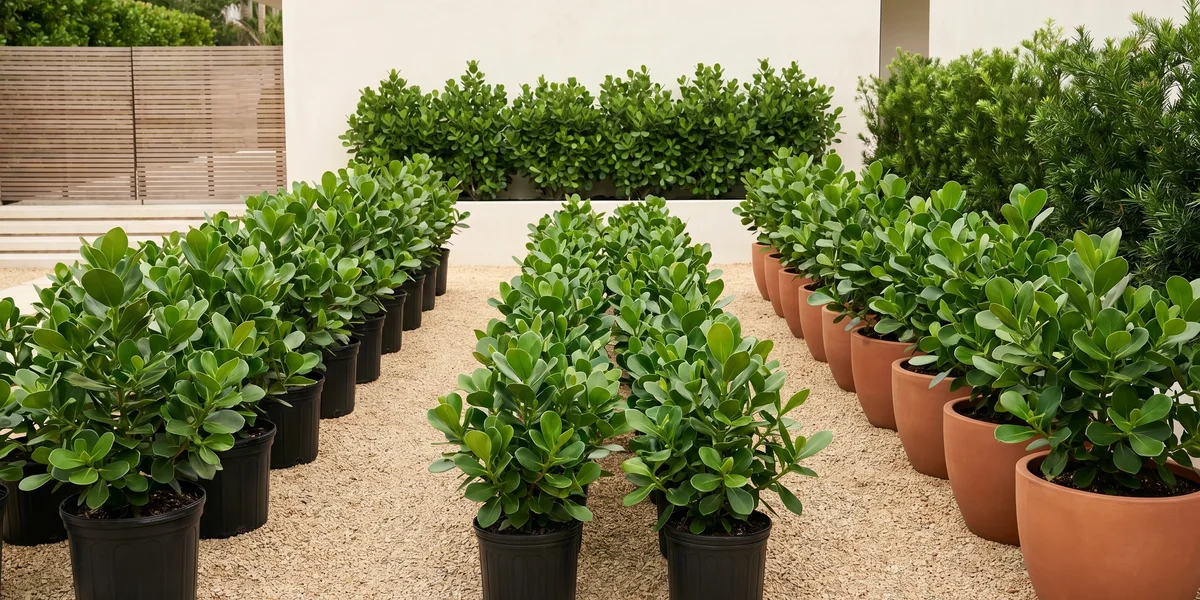
Our guide to Clusia by container size shows what each pot size looks like in the ground. The container size is shorthand for how many growing seasons went into the plant before it reaches your driveway. That is the main thing you are paying for at every size, and it is why a scoped quote is the only honest way to give you a real number.
3-gallon Clusia price is driven mostly by volume. These move in high counts, so the per-plant figure is the lowest of any size, but a run needs the most plants and waits the longest for the line to close.
7-gallon Clusia price sits where per-plant cost and plant count balance out. It is the size most residential runs land on once we have walked the yard.
15-gallon Clusia price reflects a plant that is already hedge-grade on delivery day. You pay more per plant, need fewer of them, and skip most of the waiting.
25-gallon Clusia price carries handling on top of the plant. These need equipment to move and place, so how easily a truck reaches the hedge line affects the number as much as the stock does.
At every size, four things move the final figure: how many plants the run needs at correct spacing, how far the delivery travels, whether you want install or delivery only, and how reachable the hedge line is. We put all four on one itemized quote rather than publishing a list price that would be wrong for most yards.
Plant grade is real, even if it is invisible at the curb
Two 7-gallon Clusia plants from two suppliers can look the same in their containers and perform very differently in the ground. The difference shows up in root development, top-to-root balance, and whether the plant was grown in container conditions or air-pruned in a field bed. Nursery-grown stock that has been raised for hedge installs is built to put on lateral growth fast after planting. Stock pulled from generic retail rotation is built to look good in the container, which is not the same goal.
We grow our Clusia for what comes after planting. The first six months on the ground are where the difference becomes visible.
Delivery logistics buyers underestimate
Three things commonly trip up a Clusia plant delivery:
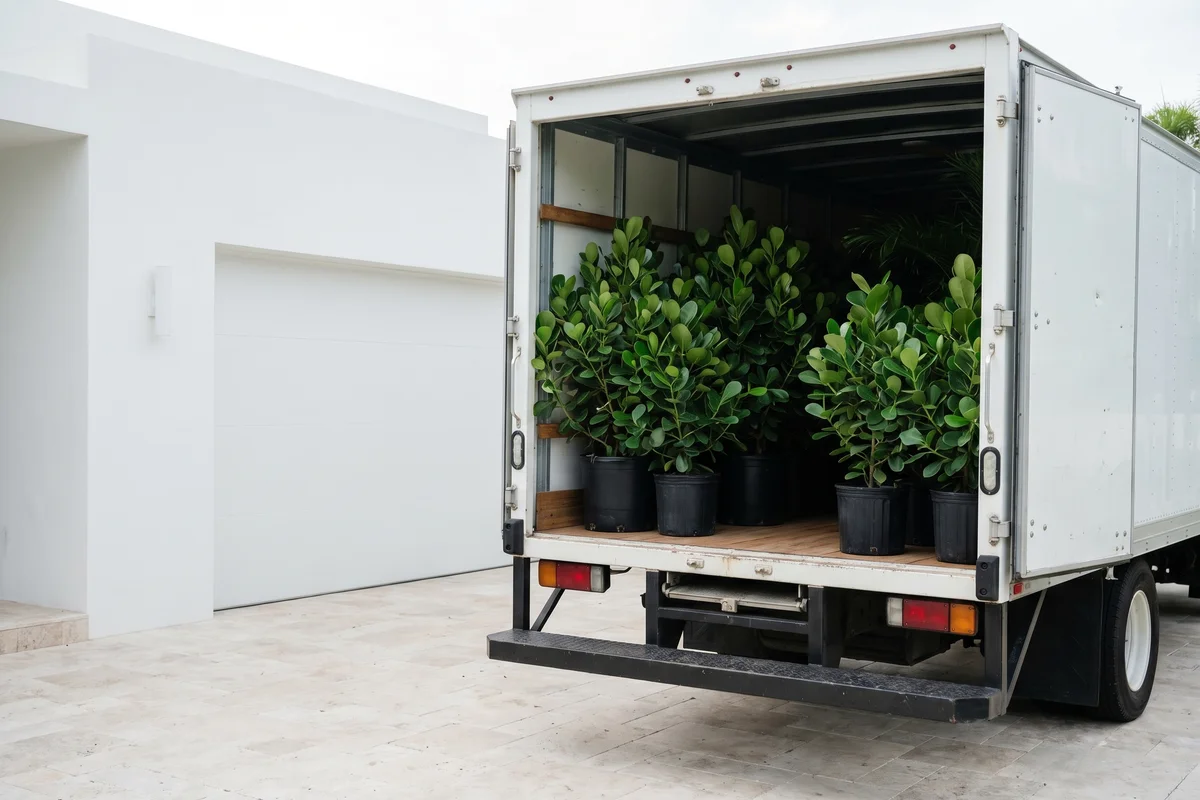
- Access. Will a truck and trailer fit in the driveway, or does the order need staging on the street? We confirm before the truck leaves.
- Storage between delivery and planting. Container plants can sit in a shaded area for a few days without trouble, but full sun on container roots in August is rough. We help you plan a holding spot if the install date is not the same as the delivery date.
- Volume that exceeds the order assumption. A 30-plant Clusia order takes more space than most buyers picture. We send dimensions in advance so the driveway can be cleared.
Buying for a hedge vs buying for feature planting
Most Clusia orders are for hedge lines, long continuous runs with consistent sizing. Some buyers want a smaller order for featured plantings: a single specimen at an entry, a small cluster on a corner, or a privacy buffer at a specific window. The buying advice differs:
- Hedge orders need plants matched by height across the order; spacing is critical; sizing is uniform.
- Feature orders can accept more variation, even benefit from it, since clustered Clusia of slightly different sizes reads more naturalistic than a perfect row.
Tell us which one you are buying for. The quote shape changes.
Care basics after the plants arrive
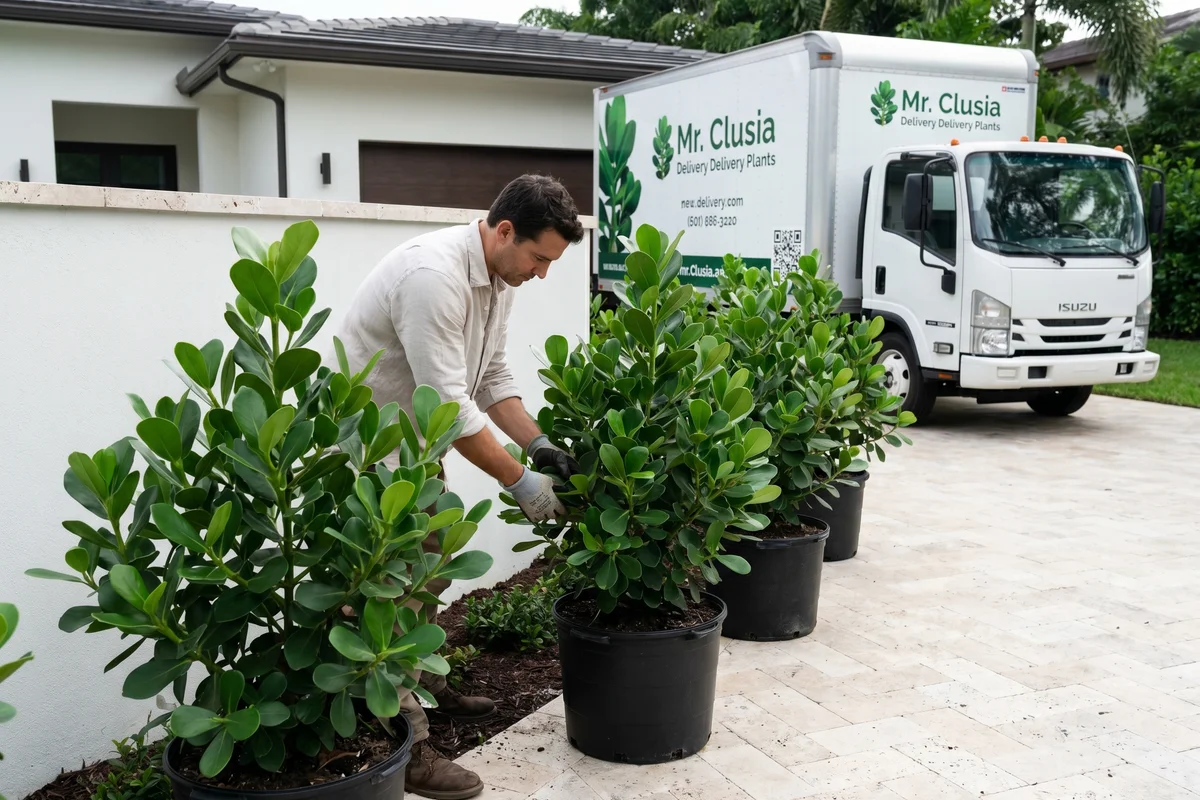
For homeowners installing delivery-only orders, the first 60 to 90 days set the long-term performance of the plants. The short version:
- Water consistently during establishment. Soak deep, then let the top inch of soil dry between waterings. Daily for the first one to two weeks; tapered after that. Sparse early watering is the most common cause of a slow-fill hedge.
- Mulch but keep it off the trunk. Two to three inches of natural mulch out to the dripline. Cypress is generally discouraged; pine bark and melaleuca are fine.
- Hold off on heavy fertilizer the first season. One light slow-release application a few weeks after planting is plenty. Push too hard and you get weak top growth instead of root establishment.
- Light shaping starts in year two. Resist the urge to trim a brand-new Clusia hedge. Year one is for the plant to settle in.
If anything looks off in the first month, call us. We answer questions on plants you bought from us at no cost, indefinitely. It is part of buying direct.
For landscape contractors and bulk buyers
Contractors and large-project buyers get volume pricing across all container sizes, typical breaks start around 25 plants and improve from there. We work directly with landscape contractors across South Florida who want consistent hedge-grade Clusia without the broker markup. Delivery scheduling, container availability windows, and large-format specimens (45-gallon+) are all on the table; we will quote based on the project. The shape of the conversation is closer to a quote-by-quote relationship than a wholesale catalog, that is on purpose, because every job has different access, timeline, and volume constraints.