Clusia vs Areca palm: the full comparison
Clusia and Areca palms are both popular privacy plants in South Florida, but they are doing different jobs. Picking between them starts with being honest about what kind of privacy you actually need, and what the yard is going to ask the plant to do for the next ten years.
What each plant actually is
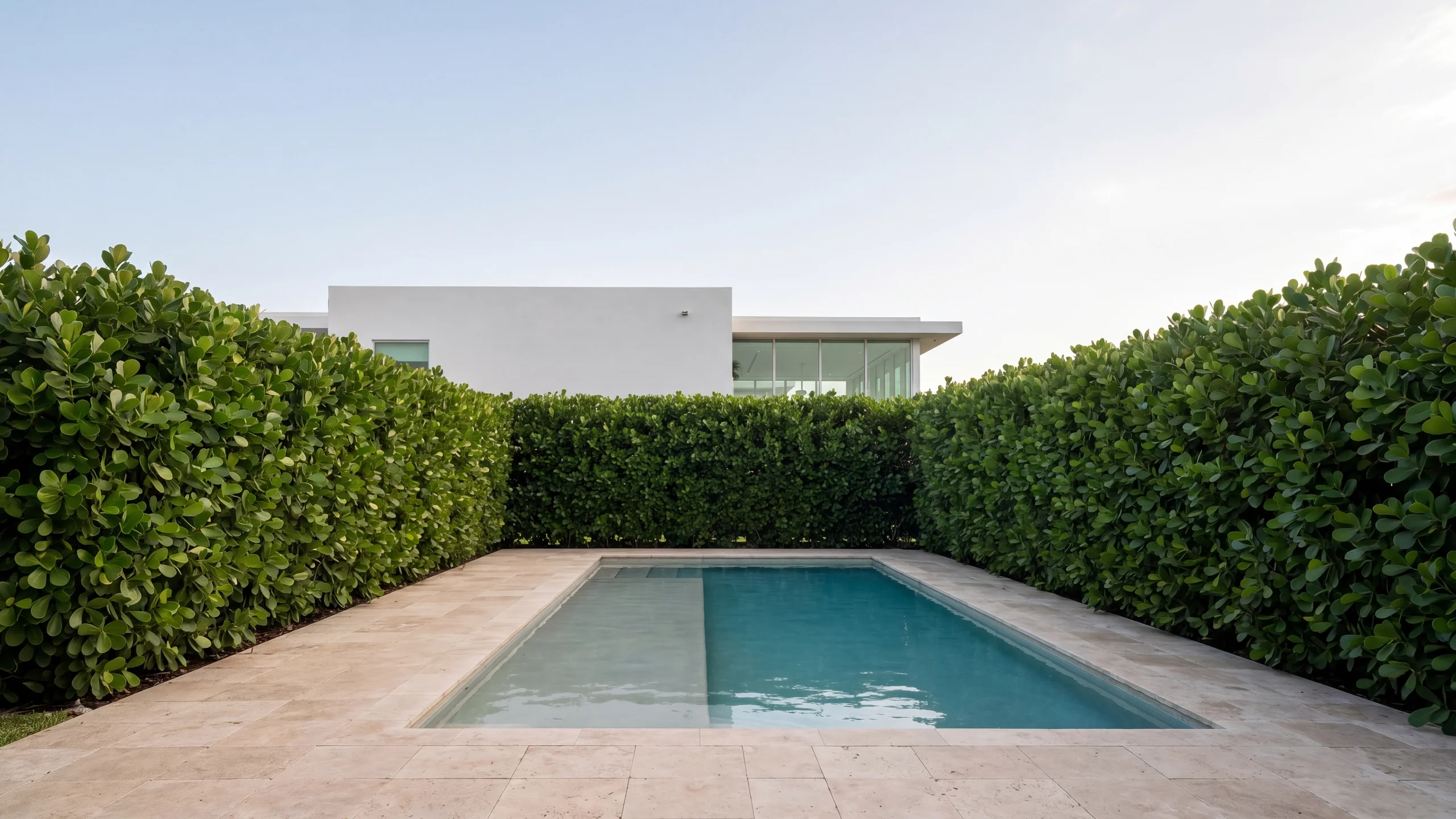
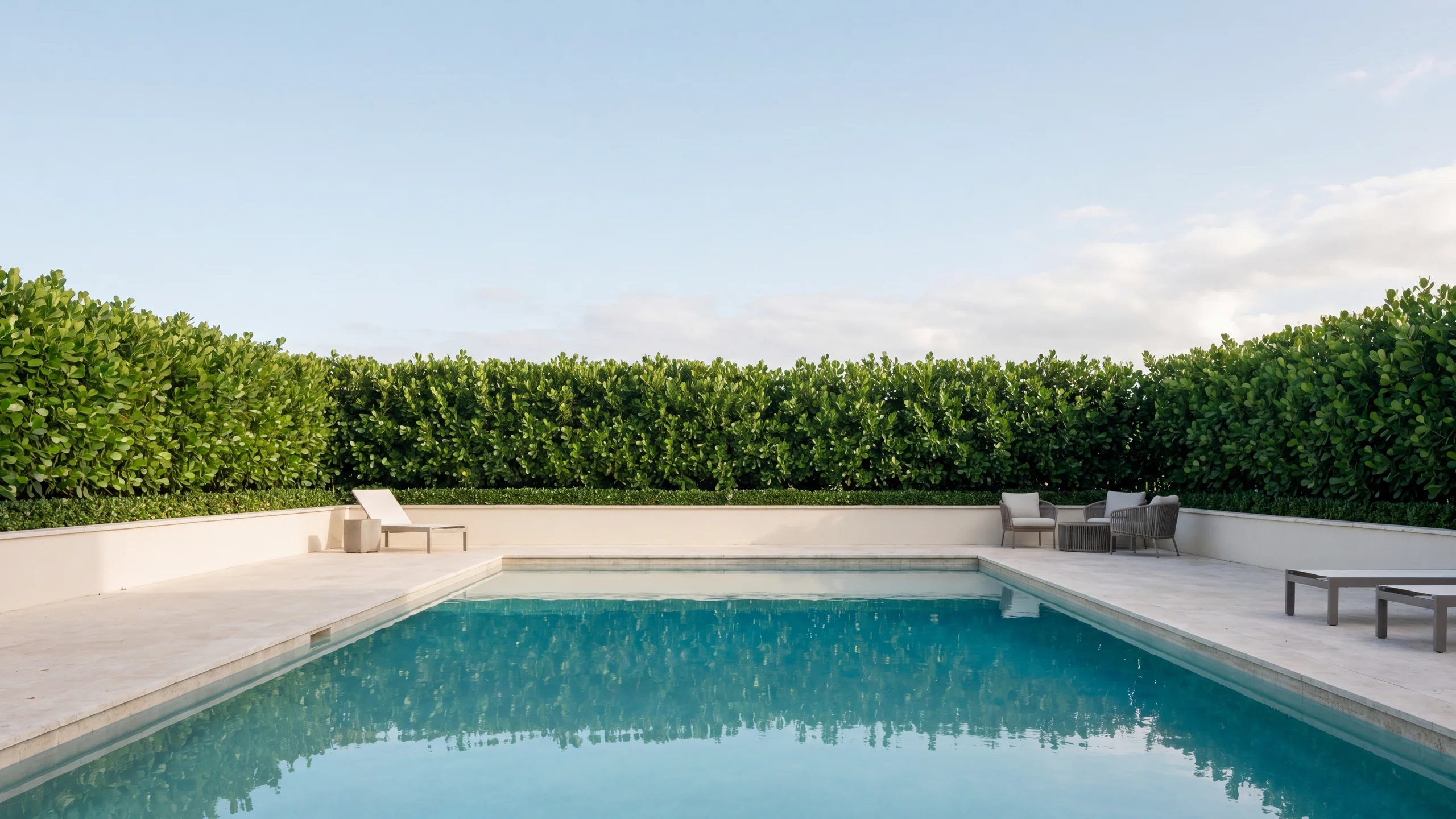
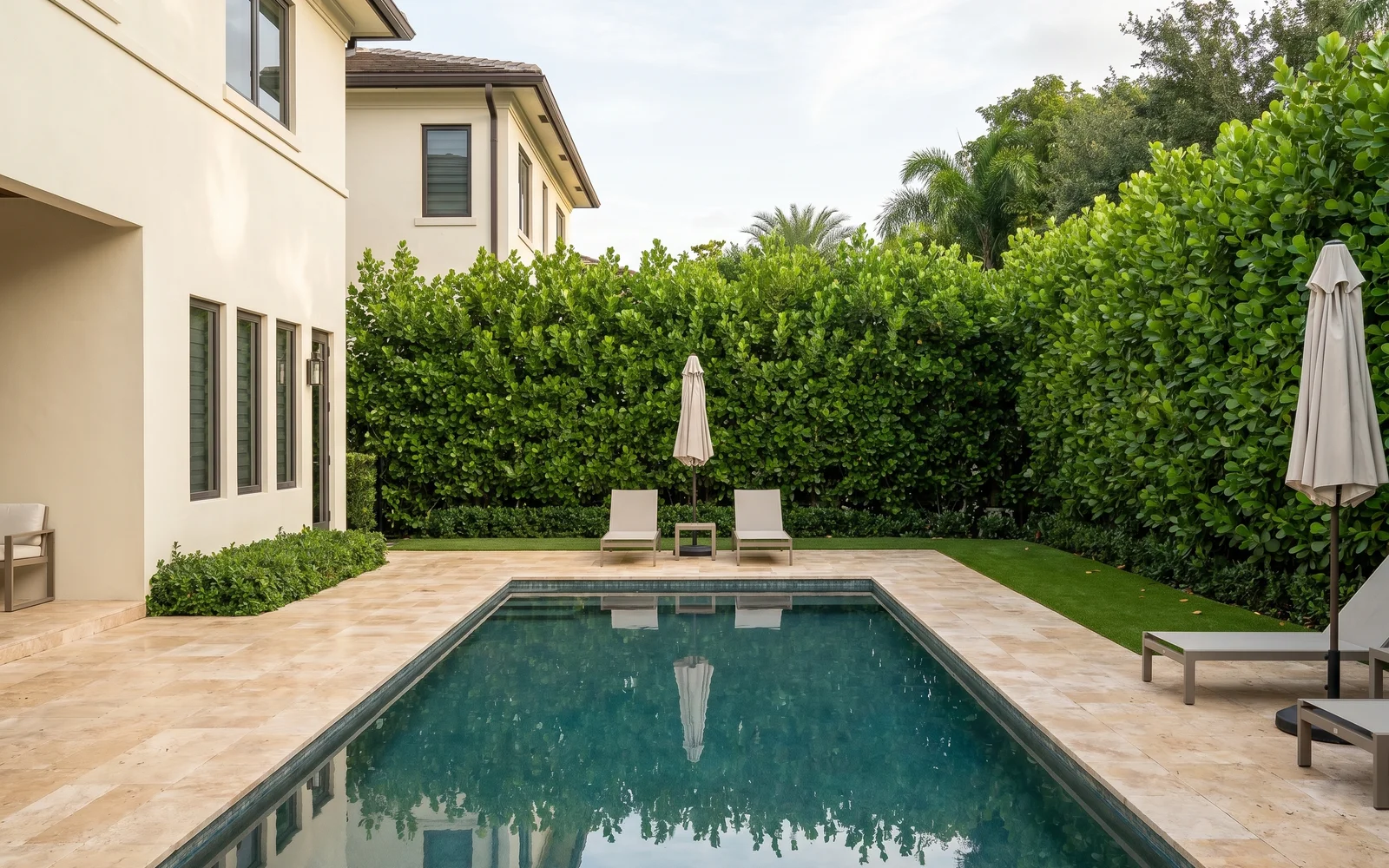
Clusia is a broadleaf evergreen shrub, usually Clusia guttifera or Clusia rosea, installed in a row to form a continuous hedge. It grows as a solid green mass from the ground up, and it is pruned and maintained as a hedge line. The whole length of the run is one connected wall of foliage.
Areca palm, Dypsis lutescens, is a multi-trunked clumping palm. Each clump sends up multiple reed-like trunks with soft, arching, pinnate fronds. Installed in a row, Areca palms create a series of tall, vertical, tropical columns with feathery tops. Between and below the clumps, there is always some open air.
What each one actually screens
Clusia screens everything from the ground to the top of the hedge. Neighboring patios, driveways, street sightlines, second-story windows within reach, and deck-level views all disappear behind a mature Clusia hedge. This is why it has become the default choice for premium South Florida privacy.
Areca palms screen the middle and upper zone beautifully. They are very effective at blocking a second-story neighbor, a distant building, or anything above eye level. They are not effective at blocking ground-level sightlines like a driveway pointed at your pool deck. The gap at the base of the clump is a feature of the plant, not a flaw to fix.
Height and how fast they get tall
Clusia is happy in the 6 to 12 foot range, with most South Florida privacy hedges held somewhere between 8 and 10 feet. Above 12 feet, Clusia works harder and loses some of the clean rounded look that makes it so popular.
Areca palms are a much taller plant over time. A mature Areca clump can push 20 to 30 feet in a healthy South Florida yard. When the goal is tall tropical backdrop, especially behind a pool or patio, Areca palms reach scales Clusia cannot.
Footprint and how wide they grow
A Clusia hedge grows as a continuous line with consistent depth. It has a planned footprint and stays in the width we set at install, with light shaping. Clusia is a predictable plant in terms of how much space it takes up.
Areca clumps widen as they mature. A tight row of young Areca palms can look sparse on day one and feel overgrown five years later, because the clumps fill out and send new trunks up over time. In tight side yards, that expansion can crowd paths, pool decks, and adjacent plantings.
Maintenance, frond drop, and upkeep
Clusia is a low-maintenance hedge. A light seasonal trim keeps it clean. Leaf drop is light and the leaves that do fall are easy to manage. Most homeowners do not think much about the hedge after year one.
Areca palms require ongoing maintenance. Fronds yellow, dry, and fall at a steady rate, and they land on lawn, decks, pools, and driveways. The palms also set seed, which can sprout unwanted volunteer palms nearby. Most Areca owners either enjoy the upkeep or hire it out quarterly.
Cold tolerance and winter behavior
South Florida gets occasional cold snaps. Clusia takes the cold without much visible damage. It is one of the most cold-reliable broadleaf privacy hedges in the region.
Areca palms are cold-sensitive. A hard January cold snap in the 30s can brown fronds across mature Areca plantings throughout Miami-Dade, Broward, and Palm Beach. The plants usually recover, but the look can suffer for months. This is a quiet factor worth thinking about if you want year-round privacy that never looks rough.
Cost, install, and starter size
Both plants come in a range of starter sizes. A mature, tall, multi-trunk Areca clump installed on day one is not cheap. A smaller starter Areca is more affordable but takes years to reach the tropical height most owners are picturing when they ask for Areca palms.
A finished Clusia hedge installed at full privacy height on day one is in a similar premium range. The difference is what you are paying for. With Clusia, you are paying for an installed privacy wall. With Areca, you are paying for height and tropical form, not for a privacy wall.
Pest and disease considerations
Clusia has relatively few pest and disease issues in South Florida. Most problems trace back to water or soil conditions rather than the plant itself.
Areca palms are more exposed to pest and disease pressure. They can be affected by nutritional deficiencies that show up as yellowing fronds, and by scale and other palm pests. They are not problem plants, but they ask for more attention than a Clusia hedge does.
When each plant is the clear winner
Most South Florida yards are not a real toss-up between these two. Once you say out loud what the plant has to do, the right choice usually picks itself.
Pick Clusia when
- You need true privacy along a property line.
- The hedge has to block ground-level sightlines from neighbors or the street.
- The install is close to a pool where frond drop would be a problem.
- You want the hedge to look the same year-round without winter cold damage.
- The yard is in the 6 to 12 foot height range, not taller.
- You want low ongoing maintenance.
Pick Areca palm when
- You want a tall tropical backdrop behind a pool, patio, or deck.
- The privacy job is blocking a second-story neighbor or a distant building.
- The yard can give up space for the clumps to mature outward.
- You are comfortable with regular frond and seed cleanup.
- The goal is resort look, not true ground-level privacy.
- You have an existing Clusia or hedge line to combine with the palms.
Why premium yards often use both
On the higher-end installs we work, the answer is almost never Clusia or Areca. It is Clusia for the privacy wall along the property line, Areca palms for the tall tropical height in key corners and behind the pool, and a coordinated plan that lets each plant do what it is actually good at.
The hedge handles the screening. The palms handle the sky. Together they produce the resort-grade privacy most South Florida homeowners are really picturing when they start this search.
What a combined design looks like in practice
A typical combined install runs a Clusia hedge along the full length of the property line or yard edge where true privacy matters, with Areca palm clumps staged behind the hedge at intentional spots. Those palm moments are usually at yard corners, behind pool benches, or along the rear edge of a patio.
The Clusia hedge reads as one continuous green wall. The Areca palms push up above it and give the yard the tall tropical ceiling that makes the space feel finished. From inside the yard, you get privacy and a skyline. From outside the yard, you get a clean green edge and a tropical silhouette above it. That is the look most homeowners are really chasing when they ask about Areca palms for privacy.