Plant Care
Clusia Growth Rate: Real Numbers by Season
Honest year-by-year Clusia growth data from an installer who plants the species every week. Vertical and lateral fill rates, factors that change the math, and what to expect month by month.
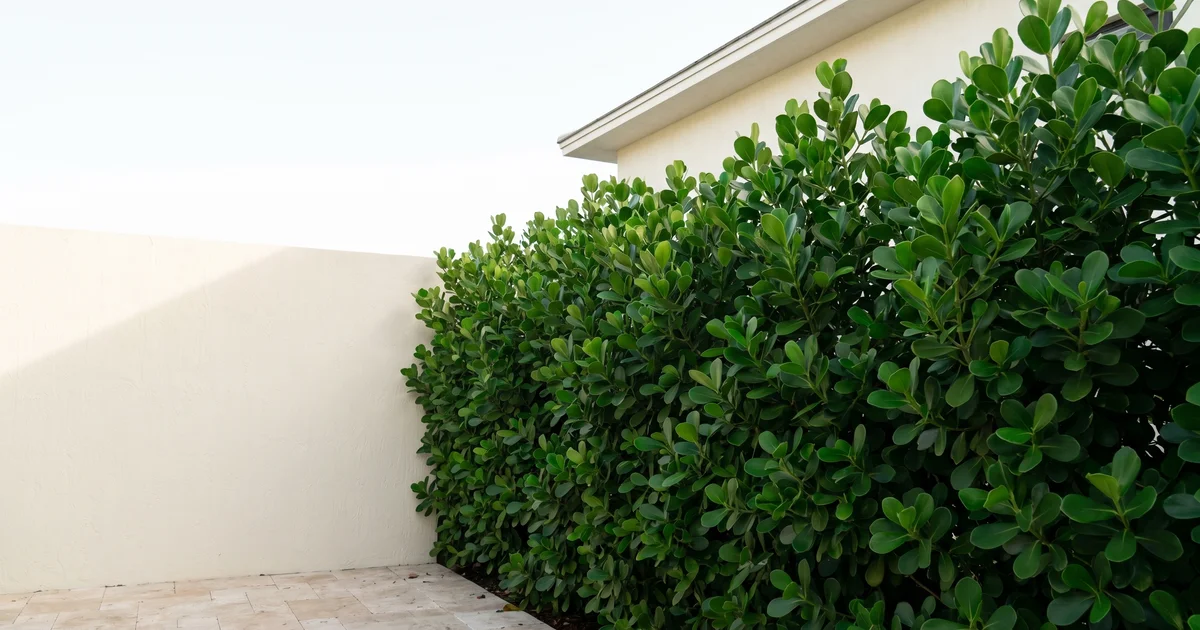
The single most common question we get on Clusia, after “how much does it cost,” is some version of “how fast will it grow?” The answer is rarely a single number, but it’s also not the mystery that some plant guides treat it as. We plant Clusia every week across Miami-Dade, Broward, and Palm Beach, and the numbers below come from real installs, not from marketing copy.
Planning a Clusia hedge install? This post is the growth-rate deep dive. For the full plan, varieties, spacing, install pricing, see our pillar on Clusia Hedges in South Florida.
The Short Answer
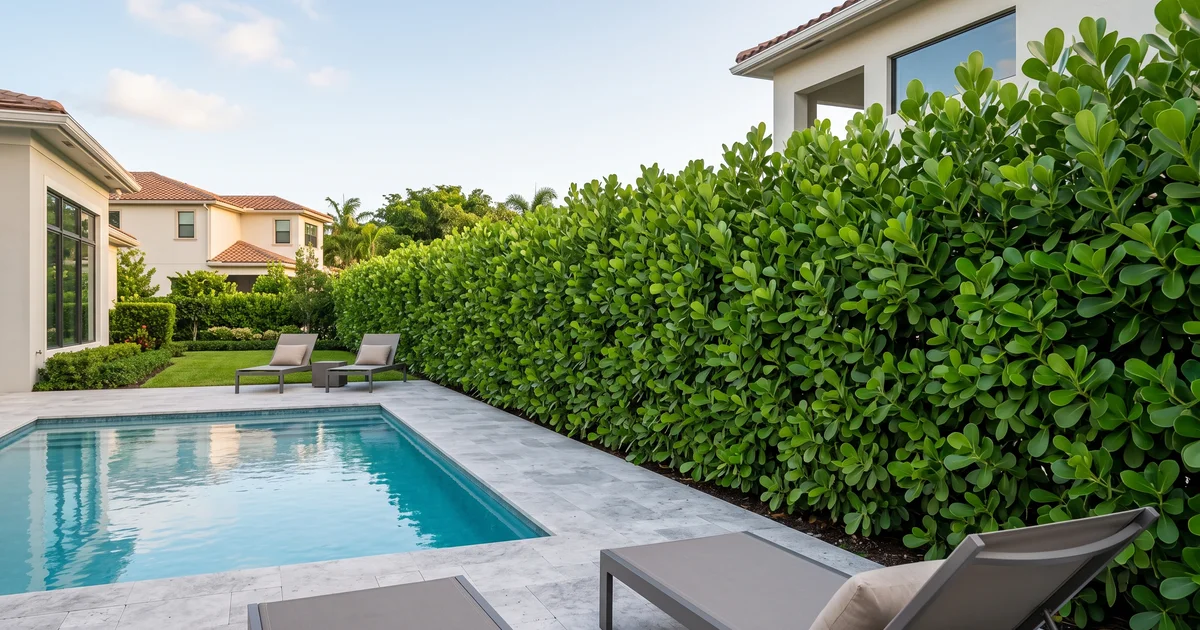
In healthy South Florida conditions, an established Clusia plant puts on roughly one to two feet of vertical growth per year. Lateral fill is faster: a 7-gallon Clusia hedge planted at 1.5 to 2-foot centers usually reads as a continuous wall within 6 to 12 months. Larger starter sizes (15-gallon and 25-gallon) read finished on install day and just thicken from there.
The honest caveats:
- Year one is mostly underground. Visible top growth is modest while the plant builds roots.
- Container size dominates the “feels finished” timeline more than annual growth rate does.
- Full sun + consistent water during establishment unlocks the rates above. Sparse early watering produces a hedge that grows half as fast for twice as long.
What “Growth Rate” Actually Means for a Hedge
People search for “clusia growth rate” with two different mental models. One is vertical growth, how tall the plant gets year by year. The other is lateral fill, how fast adjacent plants close into a continuous green wall. The two are not the same, and which one matters depends on what you’re after.
If you want a hedge that looks like a hedge the day it goes in, lateral fill is the number that matters. You can achieve it on day one by buying larger starter plants at tighter spacing, vertical growth rate becomes irrelevant in that scenario.
If you want a hedge that gets taller over time, vertical growth is the number that matters. You buy at a starter height you can accept now and plan for height to follow.
Most residential install conversations balance both. Our Clusia hedges pillar has the spacing math that lets you trade off starter size against fill time.
Vertical Growth, Year by Year
Here’s what we typically see on the ground after install, assuming full sun, consistent first-year watering, and a 7-gallon starter:
| Year | Vertical growth | Cumulative height | Notes |
|---|---|---|---|
| Year 1 | 6 to 12 inches | Starter + ~1 ft | Roots dominate; growth is modest |
| Year 2 | 12 to 24 inches | + 1 to 2 ft | Strongest visible growth phase |
| Year 3 | 12 to 18 inches | + 1 to 1.5 ft | Still growing fast, hedge fills out |
| Year 4 | 6 to 12 inches | + 6 to 12 in | Slowing as it approaches mature target |
| Year 5+ | 0 to 6 inches with shaping | Held at target | Light shaping maintains the line |
A 4-foot starter usually reaches the typical residential target height of 8 feet sometime in year 3 or 4. From there, the plant doesn’t stop growing, it just gets shaped to hold the line you want.
Lateral Fill: The Number That Actually Decides How Finished the Hedge Looks
Lateral fill, adjacent plants closing into one continuous green wall, is what most homeowners are really measuring when they say “the hedge isn’t growing fast enough.” The clock here runs in months, not years.
| Starter size | On-center spacing | Lateral close-up time |
|---|---|---|
| 3-gallon | 1 to 1.5 ft | 12 to 18 months |
| 7-gallon | 1.5 to 2 ft | 6 to 12 months |
| 15-gallon | 2 to 2.5 ft | 0 to 6 months (often closed at install) |
| 25-gallon | 3 to 3.5 ft | Closed at install |
This is why the most useful question for a buyer is “when do I want the hedge to look finished?” Not “how fast does Clusia grow?” The first question has answers; the second has caveats.
What Changes the Numbers
Six factors shift Clusia’s growth rate up or down from the baseline:
- Sun exposure. Full sun produces noticeably faster, denser growth than partial sun. Deep shade essentially halts the species.
- Water during establishment. The first 60 to 90 days are when consistent watering pays the biggest dividend. Skip it and the plant survives but grows half as fast for a year or more.
- Soil. Clusia tolerates sandy, alkaline South Florida soils, but rich loamy beds with light compost amendment grow it faster.
- Container size at planting. Bigger starter = faster perceived progress to a finished look. Vertical growth per year is fairly constant across sizes; lateral fill time isn’t.
- Spacing. Tighter centers mean less gap to close. The hedge “fills” faster simply because there was less distance.
- Fertilizer schedule. A balanced slow-release application twice during the growing season can push growth meaningfully. We hold fertilizer light in year one to keep the plant focused on roots.
If you’re optimizing for fastest visible growth, the formula is full sun + consistent water + 15-gallon at tight spacing + light second-year fertilizer. That combination produces the fastest finished-looking hedge we install.
Why the First Year Looks Slower Than You Expect
This is the question we field most often from anxious clients three months after install. The visible plant doesn’t seem to be growing. Is something wrong?
Usually, no. Clusia spends its first year putting energy into root establishment, building the underground system that supports years two, three, and four. Above-ground growth is real but modest. Walk past the hedge in late summer of year one and you’ll see new shoots; walk past in late summer of year two and you’ll see a foot more height with the lateral lines starting to close.
If the hedge looks the same in month nine as in month three with no new growth at all, that’s worth investigating. The likely culprits in order of probability:
- Water was inconsistent during establishment.
- The bed is in heavy shade we missed at planting.
- Root rot from a turf-zone irrigation pattern that kept the soil saturated.
- Heavy fertilizer in year one pushed weak top growth that the plant then dropped.
We answer growth-related questions on Clusia we installed at no cost, indefinitely. If something looks wrong, call.
When Clusia Stops Growing Fast
Clusia doesn’t stop growing, it slows to the rate where light shaping holds the line. On a hedge maintained at 8 feet, you’ll see modest new growth each year that gets trimmed back to the target. On an unmaintained Clusia, the plant continues to grow vertically and broaden out, eventually pushing past 15 feet at maturity if conditions are right.
Most residential hedges hit “maintenance mode” around year 4 or 5. From there, the hedge isn’t gaining height; it’s gaining density. Year-over-year the wall reads thicker, glossier, more uniform.
Frequently Asked Questions
How fast does Clusia grow per year? Roughly one to two feet of vertical growth per year in healthy South Florida conditions after the first establishment season. Year one is slower (6 to 12 inches) because the plant prioritizes roots. Years two and three are the strongest visible growth period.
How long until my Clusia hedge looks finished? Depends on starter size. 25-gallon Clusia reads as a finished hedge on install day. 15-gallon takes 0 to 6 months. 7-gallon takes 6 to 12 months. 3-gallon takes 12 to 18 months. Buying larger plants is the cheapest way to shorten the timeline.
Why doesn’t my Clusia look like it’s growing? Usually it’s growing roots, not crown, that’s normal in year one. If month nine still shows no new shoots above ground, look at watering consistency, sun exposure, and whether the bed is in a turf-irrigation zone that’s keeping the soil too wet.
Can I make Clusia grow faster with fertilizer? Marginally. A balanced slow-release fertilizer applied twice during the second growing season can push growth modestly. Heavy fertilizer in year one is counterproductive, it pushes weak top growth instead of root establishment.
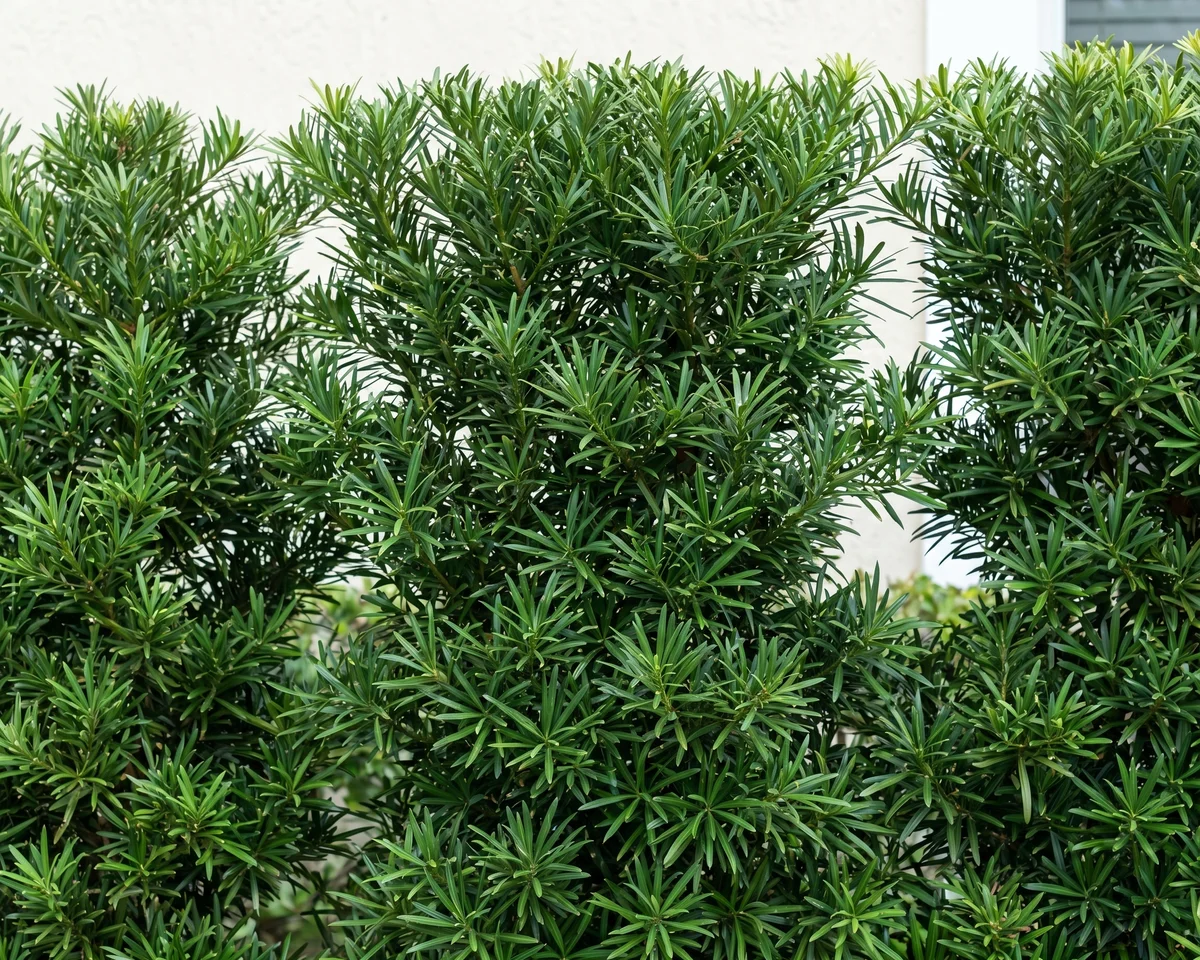
Does Clusia grow faster in sun or shade? Significantly faster in full sun. Partial sun slows growth meaningfully; deep shade essentially halts the species. For shaded hedge runs, we usually recommend Podocarpus instead, see our Podocarpus hedges pillar.
How tall will Clusia get if left unmaintained? On the residential cultivars (Clusia guttifera ‘Princess’ / ‘Nana’), 12 to 15 feet at maturity. Clusia rosea grows taller, into small-tree territory at 20 to 30 feet. Most residential hedges hold at 6 to 12 feet with seasonal shaping.
Will my Clusia hedge grow faster in the rainy season? Yes, modestly. Late spring through summer is the strongest growth window because moisture and warmth align. Winter growth is slower. The annual rate evens out across the calendar.
Does container size affect long-term growth rate? Not significantly. A 7-gallon plant and a 15-gallon plant from the same nursery grow at similar annual rates once both are established. The difference is the starting height, and that gap doesn’t close.
How fast does Clusia grow in Miami specifically vs other parts of Florida? Similar across South Florida. Coastal lots see slightly slower growth from salt exposure; inland sheltered lots see slightly faster. The species is well-matched to the entire region.
Plan Your Clusia Hedge
If you’re choosing between starter sizes or trying to time a hedge to a deadline, the most useful next step is a quote. We’ll size the plants to the timeline you want and tell you honestly when the hedge will read finished.
See also: Clusia Hedges in South Florida, our installer-side pillar covering varieties, spacing, and install. Or Clusia Plants for Sale if you’re buying delivery-only.
Ready to Plant
Request a free quote or call us at 305-222-7171. We serve Miami, Fort Lauderdale, West Palm Beach, Boca Raton, and Delray Beach.
Tagged
- clusia growth rate
- how fast does clusia grow
- clusia hedge
- clusia plant care
- South Florida hedges
Ready for a privacy hedge that looks finished from day one?
Get a free estimate from a South Florida specialist who handles delivery, installation, and the result you actually want.