Tips & Guides
Ficus Whitefly: Treat It or Replace the Hedge?
Customers ask us weekly how to treat ficus whitefly. The honest answer is treatment rarely works long-term. Here is why we recommend full root removal and why stump grinding alone is not enough.
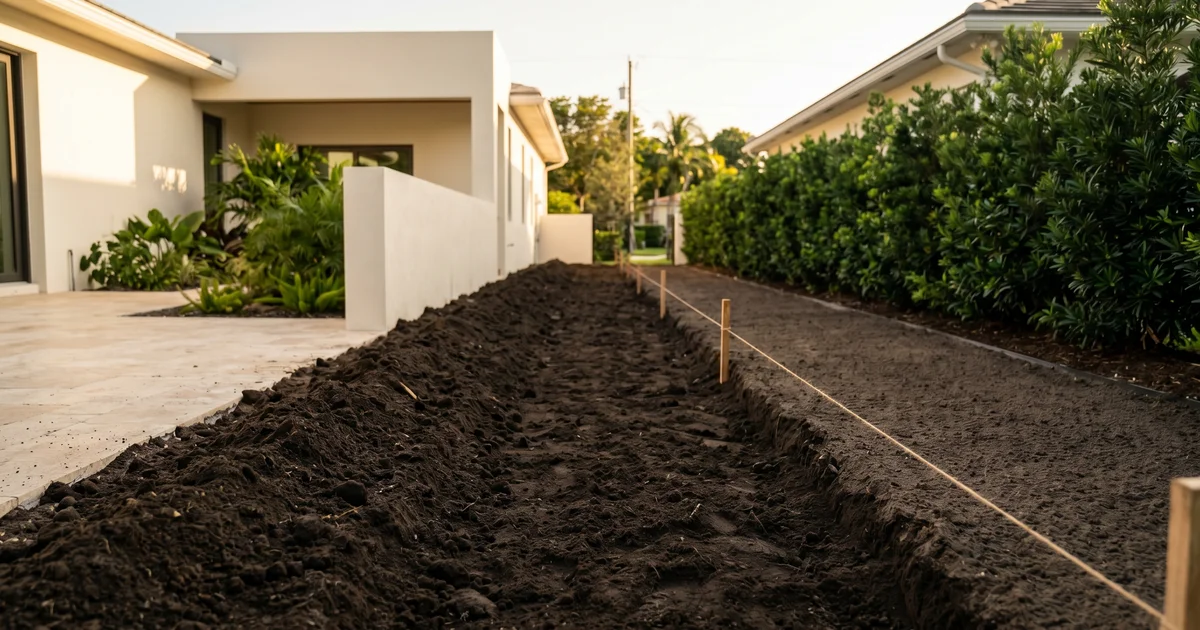
The call comes in every week and the question is always some version of the same thing. “My ficus hedge has whitefly. How do I treat it?”
The honest answer, the one we give every homeowner who calls us, is usually that treatment is not worth it. The hedge is failing for a reason. The whitefly is the symptom. The cure is not another spray cycle. The cure is to remove the hedge, do the removal correctly, and put in a hedge that does not carry the problem in the first place.
That answer surprises people. They were expecting us to schedule a treatment, take their money, and book a follow-up visit. We do not do that work, and after enough years of watching ficus hedges across South Florida, we have stopped recommending it for almost any situation.
This post explains why. It also explains what proper removal actually involves, because “removal” in this industry can mean very different things depending on who you ask, and most of what people call removal will fail in a way that costs more money two years later than doing it right would have cost today.
What the Whitefly Is Actually Doing
The ficus whitefly arrived in South Florida around 2007 and has been a constant on residential ficus hedges ever since. Most homeowners with a ficus hedge in Miami-Dade, Broward, or Palm Beach have either dealt with it already or will be dealing with it soon.
The pest itself is a tiny white insect that lives on the underside of ficus leaves and feeds on the plant’s vascular system. The damage shows up as defoliation, starting with the lower interior canopy and moving outward. A healthy ficus hedge can lose all of its leaves over the course of one bad whitefly cycle. A weakened ficus, the kind a hedge becomes after a few seasons of pest pressure, may not have the reserves to push the leaves back at all.
The pest also produces a sticky honeydew that drops onto everything below the hedge. Cars get coated. Pool decks get coated. Patios get coated. Then sooty mold grows on the honeydew, and the surfaces stain. The mess alone has driven plenty of homeowners to remove ficus runs even when the hedge itself is still partly alive.
The pest is not native, has very few natural predators in South Florida, and reproduces fast. Once it is in a neighborhood, it tends to stay.
Why Treatment Is Almost Never Worth It
When a customer asks us to spray their ficus hedge, we will not take the job. Here is the reasoning we walk them through.
Treatment is a schedule, not a cure. The most effective whitefly treatments are systemic insecticides that have to be reapplied. The plant is not cured. The pest is suppressed for a period of weeks to a few months, and then the next generation arrives. Skipping a single treatment cycle resets the damage. A homeowner who wants to keep a ficus hedge healthy with treatment is signing up for an ongoing pest-management bill that does not end.
Each treatment costs real money. The chemicals are not cheap, applying them properly takes labor, and on a long hedge run the cost per visit adds up. Over five years the cumulative cost of keeping a ficus hedge on treatment often exceeds the cost of removing it and replacing it with a hedge that does not need treatment at all.
Missing a cycle has a high failure mode. A homeowner who travels, who switches landscape providers, or who decides to skip a season to save money usually finds out that the hedge took heavy damage during the gap. Once a hedge has been through a serious whitefly cycle, the structural damage to the plant is hard to undo. The plant might come back, but it usually comes back thin and weak.
Treatment chemicals are not benign. The most effective systemic insecticides for whitefly are neonicotinoids, which have real concerns around bee and pollinator impact. We have personal opinions about whether they should be sprayed on a residential hedge year after year for the sole purpose of keeping a pest-vulnerable plant alive. We will not be the ones doing the spraying.
The plant itself is the underlying problem. Whitefly is not a problem on Clusia, Podocarpus, cocoplum, or most native hedges. It is a ficus problem. Keeping a ficus hedge alive through repeated treatment is treating the symptom of a deeper structural choice that was made when the hedge went in. The cleaner answer is to fix the underlying choice.
There are a small number of situations where treatment is the right call. A historically significant ficus hedge at an estate that is part of the property’s identity is one. A run where removal would damage adjacent infrastructure beyond a reasonable cost is another. For most residential homeowners with a failing ficus hedge along a property line, neither of those situations applies. The honest answer is to remove and replace.
Why “Removal” Has To Mean Removing the Roots
Once a homeowner is on board with removal, the next conversation is about what removal actually means. This is where a lot of jobs go wrong.
The cheapest version of “ficus removal” is to cut the plant down at the base. The stumps stay. Sometimes the company will grind the visible stumps down a few inches below grade, and then leave the site looking flat. That work is often called “stump grinding” or “stump removal” in the quote.
It is not removal. It is the start of a different problem.
A mature ficus has a root system that is dramatically larger than what is visible above ground. The plant we are looking at is the small part. The plant we are not looking at, the part in the soil, can extend many feet out from the trunk line and can be inches thick in diameter. Ficus roots are aggressive, they spread laterally, and they have an extraordinary ability to send up new shoots from a buried root even after the trunk is gone.
Here is what happens when you leave the roots in the soil.
The roots resprout. Within weeks of cutting the hedge down, new green shoots come up from the remaining root system. Not just one or two. Many, spread along the entire run. They look like little ficus plants emerging from what used to be your hedge line. If you ignore them they will grow into a thicket. If you try to remove them they will keep coming back, sometimes for years.
The roots interfere with replanting. If your plan is to install a new hedge where the old one was, the new plants need clean soil. They need to be able to set their own root system without competing with a dense mat of dead and dying ficus roots. They need room to establish. A bed full of leftover roots is a hostile environment for a new install. The new hedge will struggle, look thin, and possibly fail.
The roots are still doing damage. Ficus roots can lift pool decks, crack pavers, and intrude on plumbing. The fact that the trunk is gone does not make those roots stop. They may even continue growing for a period after the trunk is removed, using stored energy. The infrastructure damage continues until the roots are actually gone.
You cannot easily fix it later. Once a new hedge has been planted in soil that still contains old ficus roots, removing those roots later means tearing out the new hedge. The cheap shortcut at the start of the job locks in a bad outcome that gets expensive to fix.
The correct work is to extract the full root system. That means digging out the root balls, not grinding them, and following the major lateral roots back to the property line. On a typical residential ficus run, this is meaningful work. It takes the right equipment and an installer who knows how to do it without damaging the irrigation, the adjacent landscape, or the underground utilities.
What Stump Grinding Is, and What It Is Not
There is a real industry called stump grinding and the people in it are skilled. The work is honest work. What it is not, on a ficus hedge, is removal.
A stump grinder is a piece of equipment that uses a rotating cutter wheel to grind a tree stump down to below grade. On a tree stump, where the major woody mass is the stump itself and the surrounding roots are a relatively small percentage of the biomass, grinding can be a reasonable option, especially when the goal is just to flatten the site for grass or to remove a visual eyesore.
On a ficus hedge, the math is different. The grinder takes care of the stumps. It does not take care of the lateral roots that run several feet away from the original trunk line. It does not take care of the deeper root mass. Most stump grinders only work to a depth of six to twelve inches below grade, which is not enough to neutralize a mature ficus root system.
When a quote says “stump grinding included,” what is usually being offered is the visible stump work, not a full root extraction. We have walked properties where a previous homeowner paid for a “complete removal” job a few years back and we can still see the lateral roots from the old hedge running through the soil. The job is not done.
If you are comparing removal quotes, this is the single most important question to ask. Is the work full root extraction, or is it stump grinding? Those are not the same job, and they will not have the same price. A quote that is significantly cheaper than other quotes for the “same job” is almost always achieving that price by leaving the roots in the ground.
We do full root extraction on every ficus hedge removal we take. We also will not bid on a stump-grinding-only job, because we know the homeowner will be calling someone else in a year when the resprouting starts.
How We Do It
Our standard ficus removal involves a few stages and we walk customers through what to expect before we start.
Site walk and utility check. Before we cut anything we walk the run and locate the irrigation lines, low-voltage lighting, and any property-line markers. Underground utilities get called in if the work is going to be deep enough to matter, which on a ficus job it usually is.
Above-ground removal. The trunk and the canopy come down first. The branches and trunk material get hauled off. This is the part most people picture when they think about hedge removal. It is the smallest part of the actual job.
Root extraction. This is the work most other operators do not do. We follow the root system out from the original trunk line, extract the major lateral roots, and dig out the root balls. On a long run this is multi-day work. The site looks like a real construction project while we are doing it, because it is.
Soil cleanup and prep. After the roots are out we backfill, level the grade, and prep the bed for either grass or for a new hedge install. The site looks the way it would look if there had never been a hedge there. That is the point.
New install, if the homeowner wants it. Most of our removal jobs are bundled with a new install. The team that pulls the ficus out is the same team that puts in the new Clusia, Podocarpus, or cocoplum. There is no handoff between contractors, no waiting period, and the site is in the right condition for a clean replant because we just prepped it ourselves.
What Goes In After the Ficus Comes Out
Every removal job ends with the same question from the homeowner. “What should we plant instead?”
The short answer is anything that does not have the whitefly problem. The longer answer depends on the yard.
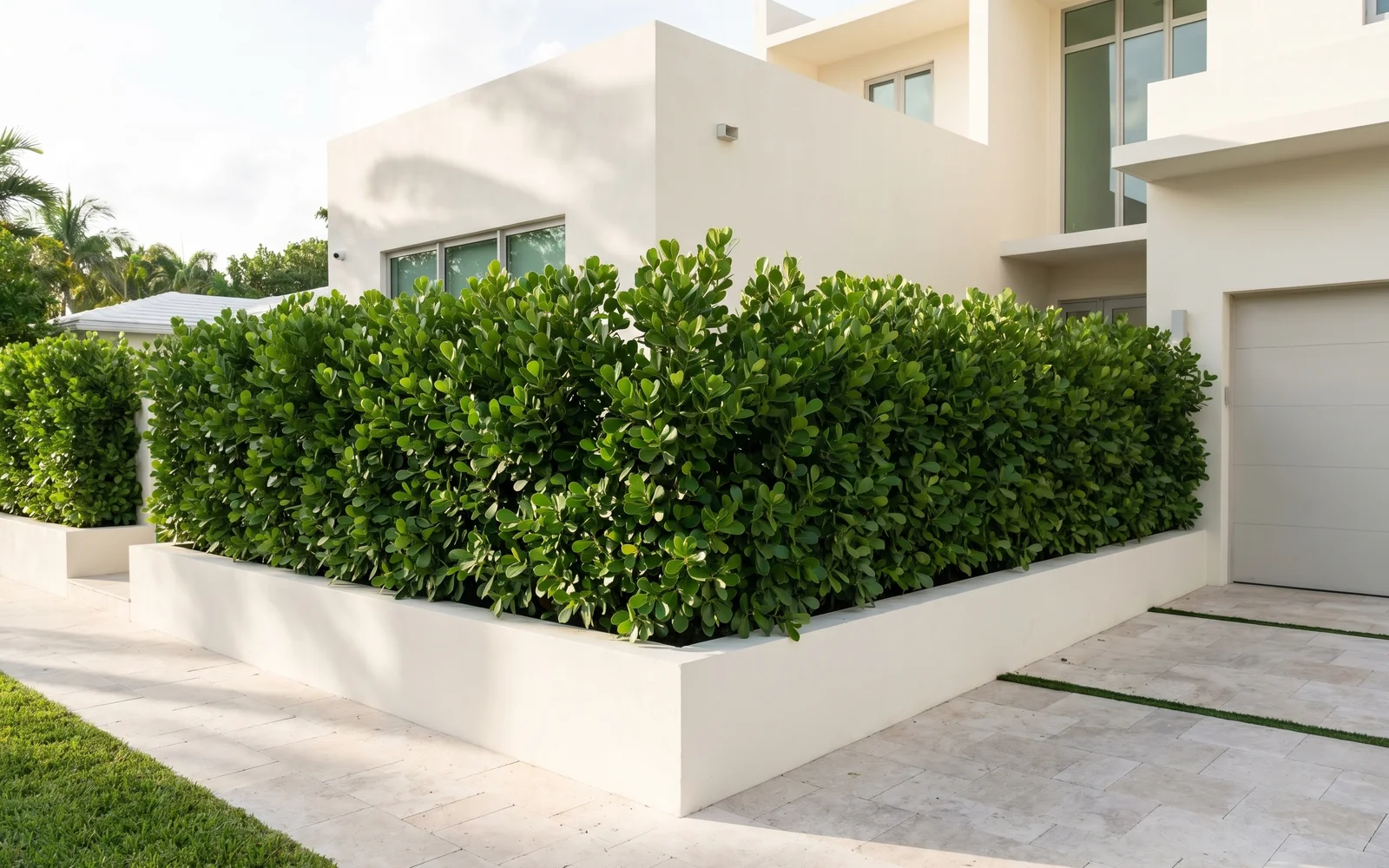
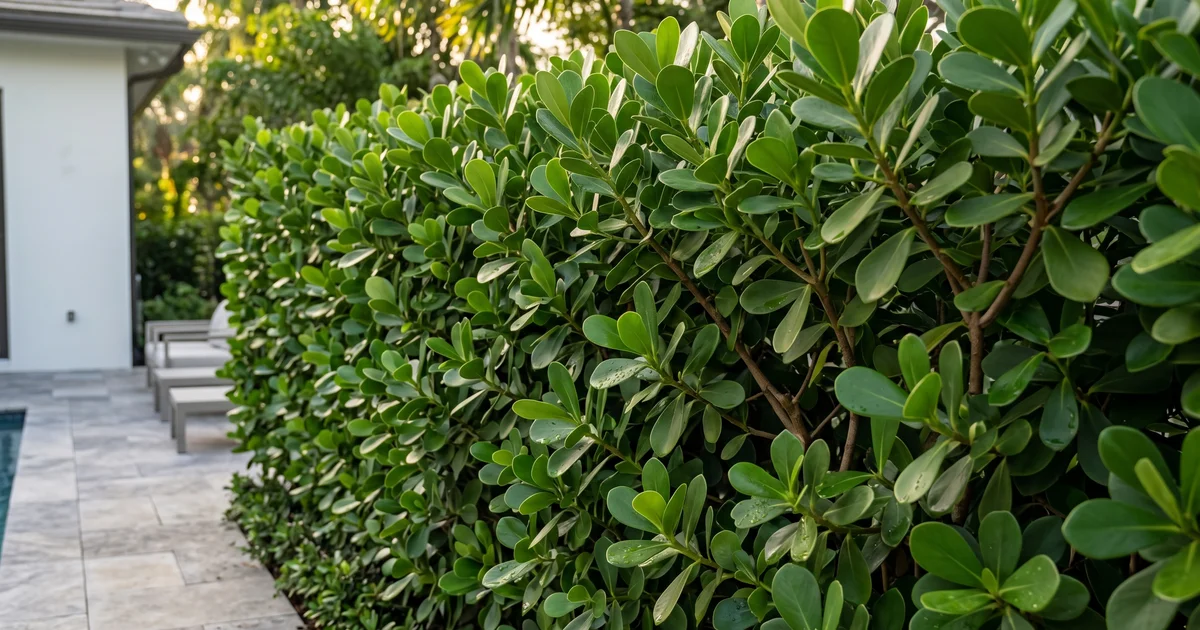
For most South Florida residential properties, Clusia is the default replacement for a removed ficus. It hits a similar height range, it gives the same kind of dense privacy, and it has no whitefly issue. It also has the structural strength to handle South Florida storms and the salt tolerance to handle coastal exposure. Our Clusia Hedges page covers the species in detail.
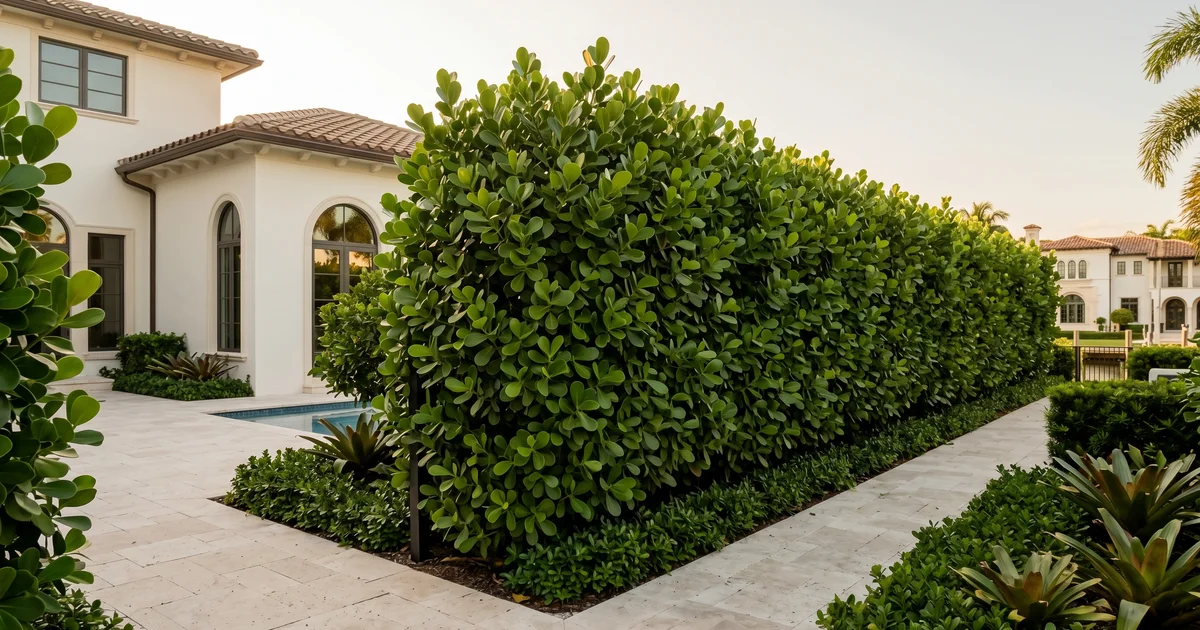
For taller, more formal property edges, especially driveways and two-story estate runs, Podocarpus is the right pick. It pushes higher than Clusia, takes clipping into clean architectural lines, and tolerates partial shade better. See Podocarpus Hedges.
For direct beachfront and canal-front properties where salt is a daily condition, cocoplum is often the strongest match. It is also a Florida-native, which qualifies it for Florida-Friendly Landscaping programs in HOA communities that prefer natives. See Cocoplum Hedges.
None of these replacements have the whitefly problem. None of them require ongoing chemical treatment. All of them, if installed properly with a hedge built for volume and structural strength rather than raced to height (we covered the height vs maturity trade-off in a separate post), will quietly outlast the ficus that came out, with much less maintenance.
The Honest Cost Conversation
The biggest hesitation homeowners have about full ficus removal is the cost compared to “just treating it” or “just grinding the stumps.” Both of those alternatives look cheaper at the moment of decision. Both of them tend to cost more in the long run.
Treatment is a recurring expense that does not end. Five years of treatment on a long hedge run usually costs more than the one-time removal. Ten years of treatment costs dramatically more. The math gets worse the longer you stay in the treatment cycle.
Stump grinding without root extraction is a one-time cost, but it sets up a series of follow-on costs. The resprouting work alone, year after year, adds up. If a new hedge is installed into the unprepped bed and struggles or fails, the replacement is another full install. The lateral roots may continue causing infrastructure damage to pool decks and pavers for years.
Full removal is more expensive than either of those at the moment of decision. Across a realistic five-to-ten year window, it is usually the cheapest option, often by a wide margin. We do not put numbers on a webpage because the right number depends on the specific yard, but we are happy to walk a property and put a real quote in front of you, with the work itemized so you can see exactly what you are paying for and what you are not.
A Quick Check For Homeowners Currently In The Treatment Cycle
If you are paying for ongoing whitefly treatment right now and trying to decide whether to keep going or to switch to removal, here is the question we would ask in your shoes.
How does the hedge look at the end of an untreated stretch? If you skip a treatment cycle, how much damage shows up? If the answer is “the hedge looks fine for a few months and then needs another treatment,” the hedge is in reasonable condition and the choice between continued treatment and removal is a financial one. If the answer is “the hedge has thinned out, has bare spots, and looks worse every year,” the structural damage is accumulating and the financial argument for removal is much stronger.
Also look at the canopy. A ficus that has been on treatment for years often has a thinned interior that no amount of spraying will rebuild. The visible green at the surface masks a hollow interior that you can see only by looking up from underneath. A hedge in that condition is unlikely to recover, regardless of treatment schedule.
And finally, look at the long horizon. The whitefly is not going away from South Florida. The treatment cycle is permanent for as long as the hedge is in the ground. If the answer to “do I want to be doing this in ten years” is no, the right time to switch is now.
FAQ
Q: Is there ANY treatment for ficus whitefly that actually works long-term? A: Treatments work in the sense that they suppress the pest for a window of weeks to months. None of them produce a permanent cure. The whitefly returns. A homeowner committing to treatment is committing to an ongoing cycle, not a one-time fix.
Q: Can I do the root removal myself after a stump grinder leaves? A: Technically yes, in the sense that anyone with a shovel and time can dig up roots. In practice, on a mature ficus run, the work is far beyond what a homeowner can reasonably do by hand. The lateral roots can extend many feet from the original trunk and can be inches thick. It is heavy equipment work, not weekend work.
Q: How long after ficus removal can we put in a new hedge? A: With proper root extraction and soil prep, the new hedge can go in immediately. There is no required waiting period. We typically do the install in the same job as the removal, with the team transitioning from extraction to planting on the same site.
Q: Will roots from the neighbor’s ficus hedge keep causing me problems even after I remove mine? A: Possibly, yes. Ficus roots cross property lines and a neighbor’s mature ficus can send roots well into your yard. We can identify whether your problem is your own hedge or the neighbor’s, and we can talk through options for managing the boundary if the neighbor’s hedge is the source.
Q: We just want the ficus gone, we don’t want a new hedge. Will you still do the removal? A: Yes. We do removal-only jobs. The site prep at the end of the work leaves the area clean and either grass-ready or ready for whatever you want to do with the space. We do not require you to bundle a new install.
Q: What about smaller ficus, like a single tree or a topiary, not a full hedge run? A: Same principles apply. The root system on a smaller ficus is proportionally smaller but still extends well beyond the trunk. Stump grinding alone usually leaves enough root mass to resprout. For removal to actually be removal, the roots have to come out.
Q: Can a healthy ficus hedge that has not had whitefly yet just be maintained? A: It can be, with the understanding that the whitefly is endemic to South Florida and will likely arrive eventually. We are not telling every ficus owner to rip the hedge out today. We are saying that when the time comes to make the decision, treatment is rarely the right long-term answer.
Closing
A failing ficus hedge is one of the more frustrating problems a South Florida homeowner can have. The plant looks bad, drops debris on everything below, attracts ongoing pest pressure, and asks for money on a schedule that does not end. Most of the calls we get are from people who have been in the treatment cycle for a year or two and are quietly exhausted by it.
Our recommendation is consistent. Remove the hedge. Remove it correctly, which means full root extraction, not surface grinding. Replace it with a hedge that does not carry the whitefly problem. Stop paying for the treatment cycle. The yard will look better, the pest pressure ends, and the new hedge will quietly become the kind of feature that defines the property for decades.
If that conversation matches where you are, we can come walk the run and put a real quote in front of you. You can request a quote or read more about how we do ficus removal on our Ficus Hedge Removal page. The honest installer answer is rarely the most exciting answer. In the ficus case, it is the one that has held up across thousands of yards in South Florida over the last decade and a half. The hedge can be better. The work just has to be done right.
Tagged
- ficus hedge
- ficus whitefly
- hedge removal
- stump grinding
- south florida
- buying guide
Ready for a privacy hedge that looks finished from day one?
Get a free estimate from a South Florida specialist who handles delivery, installation, and the result you actually want.