Tips & Guides
Is It Clusia or Calusa? The Spelling, Clarified
A definitive answer for South Florida homeowners typing 'calusa' into Google. It's Clusia, pronounced KLOO-zee-uh, and here's why the misspelling is so common.
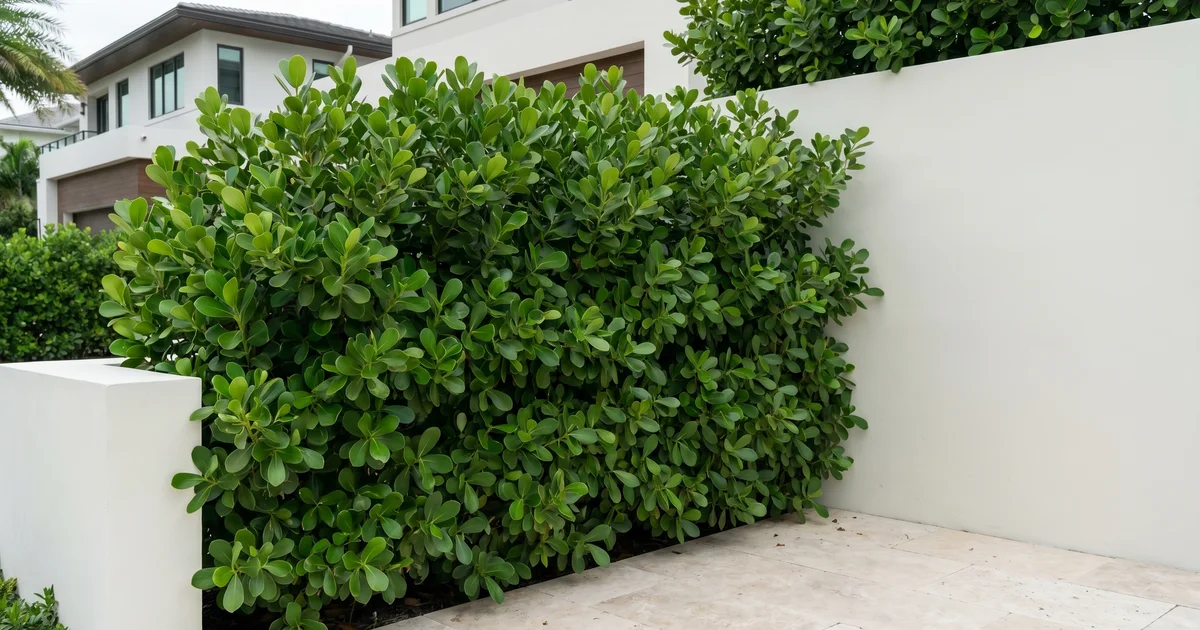
If you typed “calusa hedge” or “calusa plant” into Google and ended up here, you’re in the right place. The plant exists. The spelling doesn’t. It’s Clusia, pronounced KLOO-zee-uh, and you’re far from the only person who’s typed it the other way.
Looking to buy or install Clusia? This post clears up the spelling. For the full plant info, see our pillar on Clusia Hedges in South Florida or, if you’re buying plants directly, Clusia Plants for Sale.
The Short Answer
- Correct spelling: Clusia.
- Pronunciation: KLOO-zee-uh (rhymes with “Lucia” with a K).
- Common misspellings: calusa, calussa, klusia, clussia, calusa bush, calusa hedge.
- Latin genus: Clusia, named for the 16th-century Flemish botanist Charles de l’Écluse (Latin name: Carolus Clusius).
- What you’re searching for either way: the same plant, Clusia guttifera or Clusia rosea, both common privacy-hedge species across South Florida.
If you’re shopping for a hedge, plant, or installer and you see either spelling on a nursery tag, plant guide, or HOA approved-species list, it’s the same plant.
Why “Calusa” Comes Up
The misspelling shows up in Google searches several thousand times a month across South Florida. There are two reasonable explanations:
The Calusa people. The Calusa were a Native American people who lived on the southwest coast of Florida from roughly 500 BCE to 1750 CE. Their name is widely known in Florida historical context, there are Calusa Park, Calusa Boulevard, Calusa Springs, and Calusa Elementary across the state. If you’ve heard “Calusa” before in Florida, it’s almost certainly the people, not the plant.
Phonetic intuition. Most English speakers see “Clusia” and want to insert a vowel between the C and L for easier pronunciation. “Cuh-LOO-suh” → “Calusa” is a natural phonetic correction, even though it’s spelled differently from the actual genus.
Neither is your fault. The plant’s name is genuinely unusual, most homeowners don’t encounter the genus Clusia anywhere except as a hedge species in South Florida.
Pronouncing It Right
The correct pronunciation is KLOO-zee-uh, with three syllables. The “u” is long, the “sia” softens to “zee-uh.” Think of how you’d pronounce the name “Lucia” with a K replacing the L.
If you’ve been calling it “kuh-LOO-suh” or “klee-OO-see-uh,” that’s fine, every nursery and installer in South Florida has heard both. We’ll know what you mean.
The Latin Behind the Name
The genus Clusia was formally described by Carl Linnaeus in 1753 and named after the 16th-century Flemish botanist Carolus Clusius (born Charles de l’Écluse). Clusius is considered one of the founders of modern botany, he wrote some of the earliest scientific descriptions of plants from the Americas after the European colonization period.
The genus contains roughly 300 to 400 species, mostly tropical trees and shrubs from the Caribbean, Central America, and South America. Two species dominate the South Florida hedge trade:
- Clusia guttifera, the small-leaf form, often sold as ‘Princess’ or ‘Nana’ cultivars. The default residential privacy hedge.
- Clusia rosea, the larger-leaf form, also known as the Autograph Tree, Pitch Apple, or Signature Tree. Used as a featured specimen more often than a tight hedge.
Both are the same plant family you’re searching for whether you typed “clusia” or “calusa.”
Variations That Are Real Plants vs Just Misspellings
To avoid confusion: there’s no plant species called Calusa. There are some plants with names that sound similar:
- Coccoloba uvifera (sea grape), sometimes confused phonetically. Different plant entirely.
- Calophyllum (laurelwood/santa maria), sounds vaguely similar, completely different species.
- Caryota mitis (fishtail palm), no relation, just shares an initial sound.
None of these are what you’re looking for if your goal is the dense, glossy-leaved privacy hedge that’s everywhere in Miami-Dade, Broward, and Palm Beach. That one is Clusia, Clusia, Clusia, Clusia.
What to Search For
For most accurate Google results when researching the plant:
- Use “clusia hedge” rather than “calusa hedge.”
- For buying: “clusia plants for sale” rather than “calusa plants for sale.”
- For comparison content: “clusia vs podocarpus” rather than “calusa vs podocarpus.”
You’ll find more nursery sites, install guides, and plant-care content under the correct spelling. (We rank for both, so either way you’ll find us, but the broader internet is much richer under the correct name.)
Frequently Asked Questions
Is “calusa” a real plant name? No. There’s no plant species called Calusa. The name you’re searching for is Clusia, Clusia guttifera or Clusia rosea. The misspelling likely comes from phonetic intuition or the Florida Calusa people, who lent their name to many local places.
How do you pronounce Clusia? KLOO-zee-uh. Three syllables. Long “u” sound, soft “sia” ending. If you’ve been saying “kuh-LOO-suh,” that’s a reasonable phonetic guess but not the standard pronunciation.
Will I find different plants if I search “calusa” vs “clusia”? No, you’ll find similar content under both spellings because search engines correct for common misspellings. But the underlying plant is always Clusia, and the more accurate spelling will give you better results overall.
Is there a “Calusa bush” sold in Florida? Sometimes, yes, but it’s just Clusia with the misspelled label. The plant inside the container is identical regardless of which spelling appears on the tag.
Is the Calusa people’s name related to the plant? No, the two names are coincidentally similar. The Calusa people predate scientific botanical naming by over a thousand years, and the Clusia genus is named after the 16th-century Flemish botanist Carolus Clusius. Same syllable count, completely separate origins.
Does Mr. Clusia plant the same thing whether I say “clusia” or “calusa”? Yes. Whatever spelling you use when you call, we’ll quote the same species, Clusia guttifera or Clusia rosea, based on what fits your yard.
See also: Clusia Hedges in South Florida for the full plant info and install pricing, or Clusia Plants for Sale if you’re buying delivery-only.
Plant the Real Thing in Your Yard
Whether you searched “clusia” or “calusa,” the plant we’ll install is the same, dense, glossy, evergreen, and built for South Florida.
Request a free quote or call us at 305-222-7171. We serve Miami, Fort Lauderdale, West Palm Beach, Boca Raton, and Delray Beach.
Tagged
- clusia
- calusa
- clusia spelling
- plant name confusion
- South Florida plants
Ready for a privacy hedge that looks finished from day one?
Get a free estimate from a South Florida specialist who handles delivery, installation, and the result you actually want.