Tips & Guides
How to Measure a Hedge Line for a Privacy Hedge Quote
How to measure the hedge run on your property in feet, what to do about corners, curves, and obstacles, and what happens if you cannot measure it yourself.
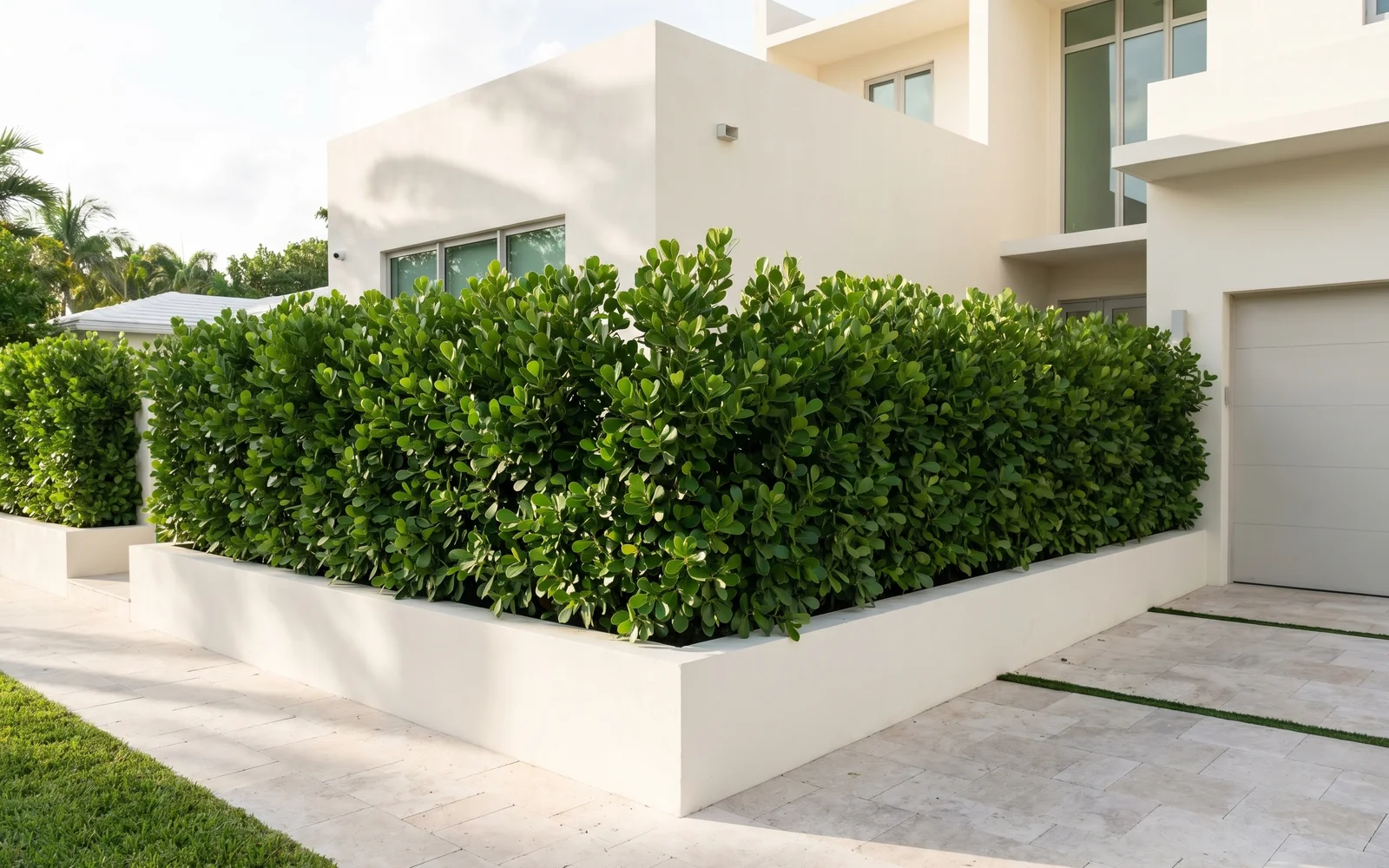
To measure a hedge line, walk the path the hedge will follow and record its total length in feet. That single number, the linear feet of the run, is what drives the plant count and the quote. You do not need to measure your whole yard, and you do not need to be precise to the inch.
If you cannot measure it, that is fine too. We measure every run on the walkthrough before anything is ordered. A rough number is enough to get started.
Measure the run, not the yard
The most common mistake is measuring the property instead of the hedge. A hedge quote cares about one thing: how many feet of green wall you want. If your back line is 80 feet but you only want the hedge across 50 of it, the number we need is 50.
Walk the exact path the hedge will take. Start where you want it to begin and stop where you want it to end. That distance is your run.
Measuring a straight run
A tape measure works, but for anything over about 30 feet a wheel or a phone is easier.
The simplest low-tech method is pacing. Measure your normal stride once against a tape, then count paces along the hedge line and multiply. Most adult strides land between 2.5 and 3 feet. Pacing a 60-foot run gets you within a few feet, which is close enough for a first quote.
Satellite tools work too. The measuring tool in Google Maps or Google Earth lets you click a start point and an end point along your property line and read the distance. On a clear aerial image this is usually accurate within a few feet.
Corners and multiple runs
Most South Florida yards need more than one run. A corner lot often needs two, and a fully enclosed back yard can need three.
Measure each straight segment separately and write them down as separate numbers. A back line of 60 feet plus a side line of 35 feet is two runs, not one 95-foot run. Keeping them separate matters, because corners change how plants are placed and because you may want different heights on different sides.
If you just want one number to start with, add the segments together and note how many corners are involved.
Curves, slopes, and uneven ground
For a curved bed, follow the curve rather than measuring the straight line across it. A curve is always longer than it looks, and measuring point to point will undercount the plants you need.
Slopes work the same way. Measure along the ground, not as a level distance. On a noticeable grade this can add several feet to a run.
Neither of these has to be exact. Round up rather than down. It is easier to adjust a number down on the walkthrough than to discover a run is short on install day.
Obstacles in the line
Real yards have things in the way. Air conditioning units, utility boxes, gates, driveways, existing trees, and pool equipment all interrupt a hedge line.
Measure straight through them and note where they are. Do not subtract the gap yourself. We need to know both the total span and where the interruptions sit, because some obstacles get planted around and others need a real gap for access or airflow. An AC condenser needs clearance. A gate needs a clean opening. A mature tree may mean a shaded section that suits a different species.
A quick note like “60 feet total, gate at about 20 feet in, AC unit near the far corner” tells us more than a single clean number.
What if you cannot measure it
Plenty of homeowners get to this point and stop. The property is awkward, the line is not decided yet, or there is simply no tape in the house.
None of that blocks a quote. Leave the measurement blank and tell us roughly what you have in mind, even if it is just “the back line” or “about half the side yard.” We confirm every run on the walkthrough with a wheel before anything is ordered, and the number on the final quote is ours, not yours.
If you would rather talk it through, call 305-222-7171 and we will work it out on the phone.
Turning feet into a plant count
Once you have a length, the plant count follows from the starter size. Larger plants sit on wider centers, smaller plants go tighter so the line still closes. Divide the run by the spacing and add one plant for the end of the run.
The exact numbers by container size are in our hedge spacing guide, and our Clusia by container size guide shows what each pot size actually looks like planted. If you are still deciding which plant belongs on the run, our privacy hedges overview covers the species options.
Frequently Asked Questions
What are linear feet for a hedge? Linear feet is simply the length of the hedge run measured along the ground, in feet. It is the total distance the hedge will cover, not the area of your yard. A 60-foot back property line planted end to end is 60 linear feet, regardless of how deep the bed is.
How accurate does my measurement need to be? Close is fine. Within five or ten feet is plenty for a first quote, because we confirm the run with a measuring wheel on the walkthrough before anything is ordered. Round up rather than down if you are unsure, since it is easier to adjust a number down later.
Do I measure around corners as one number or several? Measure each straight segment separately and note how many corners there are. A 60-foot back line plus a 35-foot side line is two runs. Corners change plant placement, and you may want different heights on different sides of the property.
What do I do about a gate or an AC unit in the hedge line? Measure straight through it and tell us where it sits. Do not subtract the gap yourself. Some obstacles get planted around and others need real clearance for access or airflow, and that decision belongs on the walkthrough rather than in the measurement.
Can I get a quote without measuring anything? Yes. Leave the measurement blank and describe the run in plain language, such as “the back line” or “about half the side yard.” We measure every run ourselves before ordering. The measurement field exists to speed things up, not to gate the quote.
Get a Scoped Quote
Send us whatever you have, an exact number or a rough idea, and we will come back with a real plan for the run: plant, height, spacing, and a clear price. We install across Miami, Fort Lauderdale, West Palm Beach, Boca Raton, and Delray Beach.
Request a free quote or call us at 305-222-7171.
Tagged
- how to measure a hedge line
- linear feet hedge
- privacy hedge quote
- hedge plant count
- South Florida hedges
Ready for a privacy hedge that looks finished from day one?
Get a free estimate from a South Florida specialist who handles delivery, installation, and the result you actually want.