Plant Care
Best Fertilizer for Clusia Hedges
What to feed a Clusia hedge, when, and how much. An installer's honest take on fertilizer type, schedule, and the South Florida soil issues that actually cause yellowing.
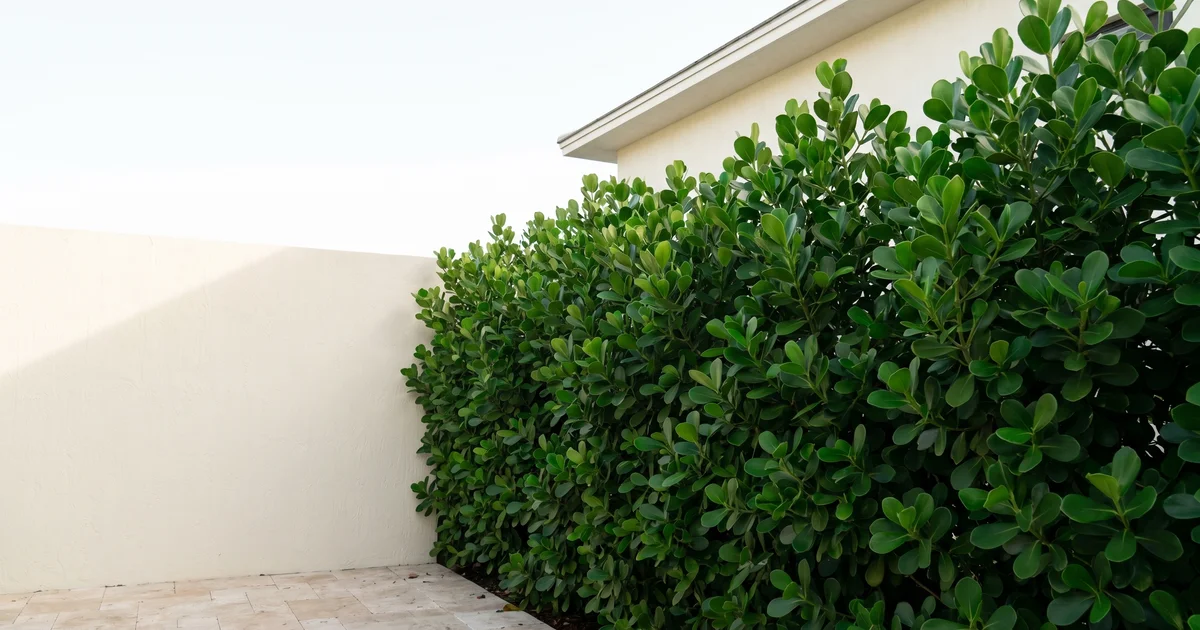
The best fertilizer for a Clusia hedge in South Florida is a balanced, slow-release granular blend made for shrubs and palms, with added micronutrients. Feed it two or three times a year, water it in, and do not overdo it. That is the honest short version. Clusia is not a heavy feeder, and most Clusia problems in South Florida come from soil and water, not from a missing fertilizer. This guide covers what to use, when, and how to tell the difference.
What kind of fertilizer Clusia actually needs
Clusia does well on a slow-release granular fertilizer with a fairly balanced ratio. Look for a shrub-and-palm or general ornamental blend. A ratio in the range of a balanced feed, something like an 8-2-12 palm special or a balanced all-purpose shrub fertilizer, works well in South Florida.
Two features matter more than the exact numbers:
- Slow release. Slow-release granules feed the plant gradually over months instead of dumping nutrients at once. That produces steady growth and less runoff, which matters near pools, canals, and the water table.
- Micronutrients. This is the big one for South Florida. Our soils are often sandy or limestone-based and run low on magnesium, manganese, and iron. A fertilizer that includes those micronutrients prevents most of the yellowing homeowners blame on a lack of feeding.
Why South Florida soil is the real story
Most yellow or pale Clusia in South Florida is not starving for nitrogen. It is short on micronutrients or dealing with high soil pH that locks nutrients up. Limestone soils and limestone fill push pH high, and at high pH the plant cannot take up iron and manganese even when they are present.
That is why a plain high-nitrogen lawn fertilizer often does not fix a pale Clusia hedge. It greens the lawn and does little for the shrub. A blend with chelated micronutrients, which stay available at higher pH, is what actually restores the color.
If a hedge stays pale after correct feeding, the issue is usually water, drainage, or pH, not the fertilizer. That is worth a closer look before adding more product.
When to fertilize Clusia
A simple, effective schedule for South Florida:
- Early spring as growth picks up.
- Early summer to support the main growing season.
- Early fall as a lighter feeding to carry the plant into the cooler months.
Two to three feedings a year is plenty for an established Clusia hedge. Newly installed plants benefit from a light feeding once they have settled, but do not push a stressed new plant with heavy fertilizer while its roots are still establishing.
Avoid heavy feeding in the middle of a hot, dry stretch. Fertilizer works with water, and a drought-stressed plant cannot use it well.
How much to use
Follow the label rate for the size of the plant and the area of the hedge bed. More is not better with Clusia. Over-fertilizing pushes soft, fast growth that is weaker, needs more trimming, and can burn roots if the granules sit dry against them.
Spread the granules evenly across the root zone, which extends out past the base of the plant, not just at the stem. Then water it in. Watering after feeding moves the nutrients into the soil and prevents granules from sitting on the surface or against the trunk.
Signs your Clusia needs feeding
- Overall pale green or yellow-green across the whole hedge, evenly, often points to a general nutrient need.
- Yellowing between green leaf veins, especially on newer leaves, points to a micronutrient issue like manganese or iron, common in high-pH South Florida soil.
- Slow, weak new growth during the warm season on an otherwise healthy, well-watered plant can indicate it is time to feed.
Before reaching for fertilizer, rule out the common lookalikes: overwatering, poor drainage, or a plant that is simply establishing after install. Those cause yellowing too, and more fertilizer will not fix them.
Common fertilizing mistakes
- Using lawn fertilizer on the hedge. High-nitrogen turf blends often lack the micronutrients Clusia needs in South Florida soil.
- Feeding a pale hedge more and more. If micronutrients or pH are the problem, extra nitrogen will not help and can make growth soft and weak.
- Fertilizing a stressed or bone-dry plant. Water first, feed a healthy plant, and always water the fertilizer in.
- Piling granules against the trunk. Spread them across the root zone instead, so they do not burn the base.
Frequently asked questions
What is the best fertilizer for a Clusia hedge? A slow-release granular shrub-and-palm or balanced ornamental fertilizer that includes micronutrients like magnesium, manganese, and iron. In South Florida, the micronutrients matter as much as the main nutrient ratio because our soils run low on them.
How often should I fertilize Clusia in Florida? Two to three times a year is enough for an established hedge: early spring, early summer, and a lighter early-fall feeding. Water the fertilizer in each time.
Why is my Clusia turning yellow if I already fertilize it? Often the fertilizer lacks micronutrients, or the soil pH is high and locking up iron and manganese. Overwatering and poor drainage cause yellowing too. Switch to a micronutrient blend and check drainage before adding more product.
Can you over-fertilize Clusia? Yes. Too much fertilizer pushes soft weak growth, increases trimming, and can burn roots. Follow the label rate and feed a well-watered plant.
Do newly planted Clusia need fertilizer right away? Not heavily. Let new plants settle first, then give a light feeding. Pushing a new plant with strong fertilizer before the roots establish does more harm than good.
Tagged
- best fertilizer for clusia
- clusia fertilizer
- clusia hedge care
- fertilizing clusia
- South Florida hedges
Ready for a privacy hedge that looks finished from day one?
Get a free estimate from a South Florida specialist who handles delivery, installation, and the result you actually want.