Plant Care
Are Clusia Roots Invasive? What the Root System Actually Does
An installer's honest answer on Clusia roots: how deep and wide they spread, whether they threaten foundations, pools, and pipes, and how far to plant from structures.
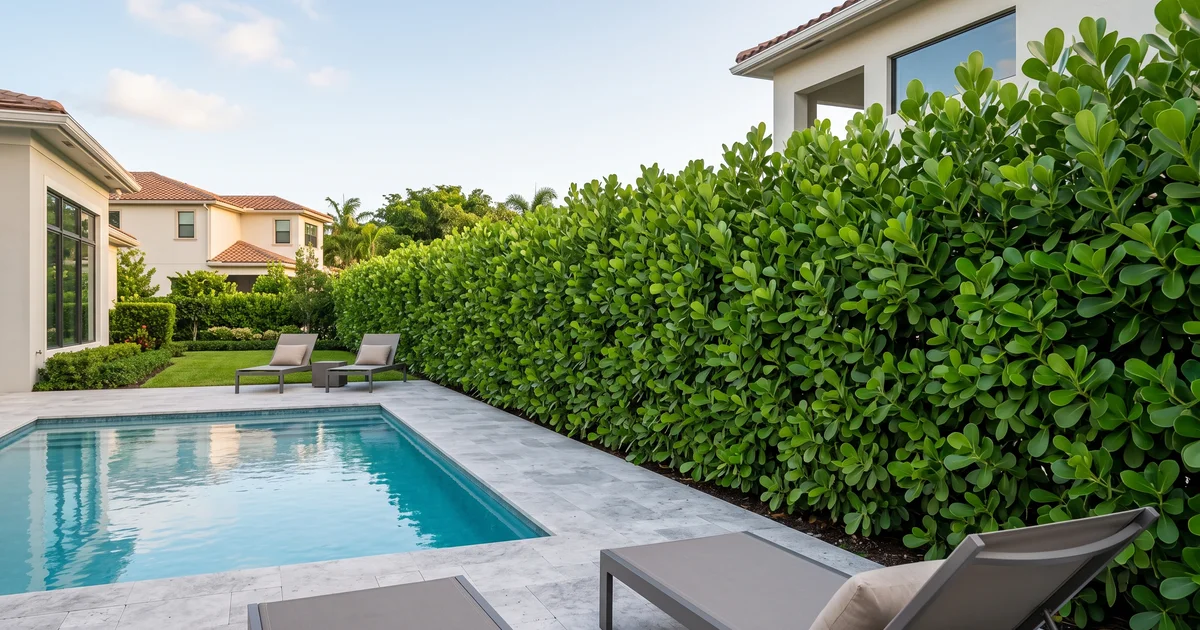
Right behind cost and growth speed, the question we field most on Clusia is some version of “will the roots wreck my driveway?” It is a fair worry. Anyone who has seen a ficus hedge lift a pool deck or crack a sidewalk has a good reason to ask before planting anything near the house. So here is the straight answer from a crew that plants this species every week across Miami-Dade, Broward, and Palm Beach.
Planning a Clusia hedge? This post covers roots. For varieties, spacing, and install, see our pillar on Clusia Hedges in South Florida.
The Short Answer
The Clusia we plant for hedges, Clusia guttifera (sold as ‘Princess’ or ‘Nana’), has a fibrous, shallow, non-aggressive root system. It is not classed as invasive, and in normal residential planting it does not crack foundations, lift pool decks, or invade sewer lines the way ficus does.
The honest caveats:
- Species matters. Clusia rosea, the autograph tree, is a large tree with far more aggressive roots. It is not the hedge plant, but the names get mixed up. More on that below, and we compare the two species in full in Clusia guttifera vs Clusia rosea.
- Any root near a structure needs a sensible offset. Shallow and fibrous does not mean plant it against the slab. A modest gap keeps roots, trunk flare, and future trimming easy.
- Wet, poorly drained beds cause more Clusia problems than roots ever do. The species dislikes constant saturation more than it dislikes tight quarters.
First, Which Clusia Are We Talking About
This is the single most important thing to get right, because two very different plants share the name.
Clusia guttifera is the hedge. It tops out around 12 to 15 feet on the residential cultivars, holds a tight glossy wall, and has a compact fibrous root system that stays close to the plant. This is what goes in when someone asks for a “Clusia hedge.”
Clusia rosea, the autograph tree or pitch apple, is a spreading shade tree that can reach 25 to 30 feet with a broad canopy and a much stronger, wider root system. In the wild it can even start life perched on another tree. It is a fine specimen tree in the right spot, but it is not a hedge, and its roots behave nothing like guttifera’s.
If a plant guide warns you that “Clusia roots are aggressive,” check which species it means. Almost always it is describing rosea. The hedge you are buying is guttifera.
How Deep and Wide Do Clusia Hedge Roots Actually Go
For established Clusia guttifera in South Florida’s sandy, alkaline soil, here is what we see when we dig, transplant, or remove one:
| Trait | What Clusia guttifera does |
|---|---|
| Depth | Mostly in the top 12 to 18 inches, with a few anchoring roots deeper |
| Spread | Roughly out to the edge of the canopy, not far beyond |
| Type | Fibrous and branching, not thick woody runners |
| Growth style | Slow and dense, follows moisture, does not go hunting for pipes |
| Regrowth | Will not resprout aggressively from cut roots the way some species do |
The takeaway is that Clusia builds a dense root mass near the plant rather than sending long structural roots out sideways looking for water and cracks to exploit. That behavior is exactly why it is a safer choice near patios and pools than the ficus it often replaces.
Clusia vs Ficus: Why People Ask This Question
Most “are Clusia roots invasive” searches trace back to a ficus story. It helps to see them side by side.
Ficus (benjamina and nitida) grows a fast, thick, far-reaching root system that is genuinely notorious in South Florida. It lifts pavers, cracks slabs, breaks into old clay sewer laterals, and keeps resprouting after removal. Whole neighborhoods have torn out ficus hedges for exactly this reason.
Clusia guttifera is close to the opposite. It fills a similar role, a dense evergreen privacy wall, without the underground drama. When a homeowner tells us they are replacing a ficus hedge that wrecked the walkway, Clusia is usually the plant we point them to. If you are weighing that swap, our Clusia hedges pillar covers how the two compare above ground too.
How Far From the House, Pool, or Fence Should You Plant
Shallow roots still deserve a sensible offset, mostly for the trunk and future trimming, not because the roots are a threat.
- From a foundation or wall: about 2 to 3 feet from the base gives the plant room and keeps maintenance easy.
- From a pool deck or paver patio: a similar 2 to 3 foot offset. Clusia roots are not the paver-lifters ficus roots are, but a small gap protects the edge and lets you trim.
- From a fence or property line: 2 feet or so lets the hedge fill toward the line without pressing hard against the panels.
- From a septic drain field: keep hedges off active drain fields as a rule for any species, and talk to your installer if the bed is tight.
These are general starting points. Lot conditions, hedge size, and where your irrigation runs all shift the right number, which is why we walk the bed before planting rather than quoting a distance blind.
When Clusia Roots Do Cause Trouble
Roots are rarely the villain, but there are a few real cases worth naming.
Constant saturation. The most common Clusia root problem is rot, not invasion. A bed sitting in a turf-irrigation zone that keeps the soil soaked can trigger root rot, which shows up as yellowing leaves and thin growth. The fix is drainage and watering discipline, not removal.
Planted far too close to a slab. Jammed right against a foundation with zero offset, any shrub gets awkward to maintain and the trunk flare can press the edge over many years. A modest gap avoids it entirely.
Confusing it with rosea. Someone plants a Clusia rosea seedling expecting a tidy hedge, and years later has a spreading tree with a matching root system. Buy the named hedge cultivar and this never comes up.
If your established Clusia looks stressed, roots are almost never the first thing to suspect. Water, drainage, and sun exposure explain the large majority of what we get called out for.
Frequently Asked Questions
Are Clusia roots invasive? No. The hedge species, Clusia guttifera, has a shallow, fibrous, non-aggressive root system and is not classed as invasive. It does not behave like ficus. The confusion usually comes from Clusia rosea, the autograph tree, which is a large tree with a much stronger root system and is not the hedge plant.
Will Clusia roots damage my foundation or pool? In normal residential planting, no. Clusia guttifera roots stay shallow and close to the plant rather than running sideways toward slabs and decks. A modest 2 to 3 foot offset from structures keeps things simple and protects the edge over time.
How deep do Clusia roots grow? Most of the root mass sits in the top 12 to 18 inches of soil, with a few deeper anchoring roots. The system is dense and fibrous rather than made of thick, far-reaching woody roots.
How far do Clusia roots spread? Roughly out to the edge of the canopy, not far beyond. Clusia builds a compact root mass near the plant instead of sending long roots hunting for water.
Can Clusia roots break into pipes or sewer lines? It is very unlikely with the hedge species. Clusia guttifera does not have the pipe-seeking, crack-exploiting roots that make ficus a known problem for laterals and irrigation lines.
How close to the house can I plant a Clusia hedge? About 2 to 3 feet from a wall or foundation is a comfortable starting point. That spacing is more about trunk room and easy trimming than any root threat.
Are Clusia roots better than ficus roots? For planting near structures, yes, clearly. Ficus roots are fast, thick, and known for lifting pavers and cracking slabs. Clusia guttifera gives you a similar privacy wall without that underground risk, which is why it is a common ficus replacement here.
Why is my Clusia struggling if the roots are healthy? Usually water, not roots. Overwatering and poor drainage cause root rot and yellowing far more often than any invasion issue. Check that the bed is not sitting in a soaked turf-irrigation zone before assuming anything worse.
Plan Your Clusia Hedge
If you are replacing a ficus hedge or planting near a pool, patio, or foundation, the useful next step is a walk-through. We will look at the bed, the drainage, and the offsets, then size and space the hedge to the spot.
See also: Clusia Hedges in South Florida, our installer-side pillar on varieties, spacing, and install. Or Clusia Plants for Sale if you are buying delivery-only.
Ready to Plant
Request a free quote or call us at 305-222-7171. We serve Miami, Fort Lauderdale, West Palm Beach, Boca Raton, and Delray Beach.
Tagged
- clusia roots
- are clusia roots invasive
- clusia root system
- clusia hedge
- South Florida hedges
Ready for a privacy hedge that looks finished from day one?
Get a free estimate from a South Florida specialist who handles delivery, installation, and the result you actually want.