Buying Guide
Clusia Guttifera vs Clusia Rosea: Which One Is the Hedge?
The two plants sold as Clusia are not the same. One is a tidy privacy hedge, the other is a spreading shade tree. How to tell them apart and which one your yard needs.
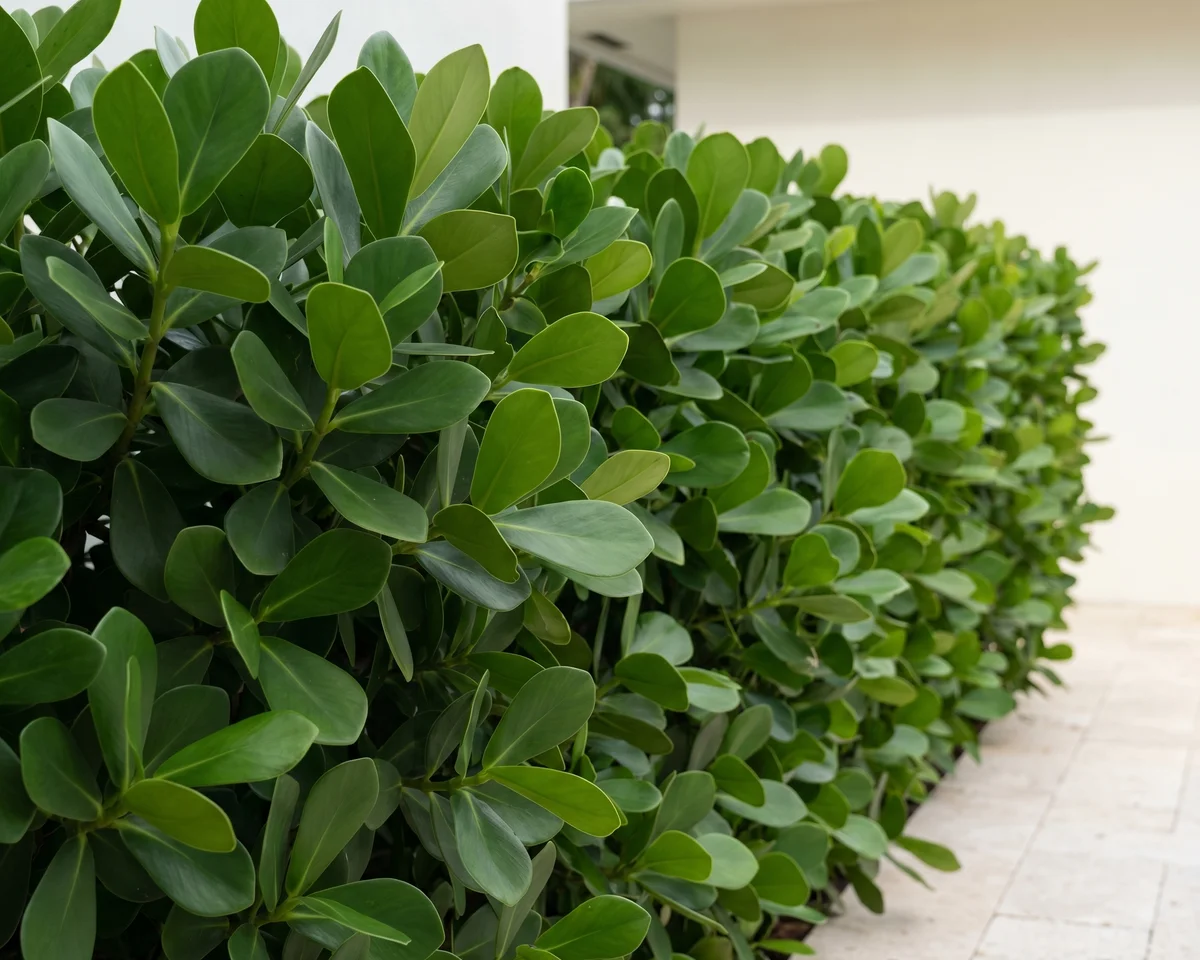
If you want a privacy hedge, you want Clusia guttifera. If you want a wide shade tree, you want Clusia rosea. They share a genus and a common name, and garden centers often label both simply “Clusia,” which is how people end up planting the wrong one along a property line.
The difference is not cosmetic. Guttifera holds a clipped wall at 12 to 15 feet with a compact, shallow root system. Rosea grows into a spreading tree of 25 to 30 feet with a canopy and a root system to match. One belongs two feet off a pool deck. The other does not.
Planning a hedge? This post covers the two species. For spacing, sizes, and install, see our pillar on Clusia Hedges in South Florida.
The Short Answer
- Clusia guttifera, the small-leaf species, sold as ‘Princess’ or ‘Nana’. This is the hedge. Dense, tidy, takes a clipped line, stays manageable.
- Clusia rosea, the autograph tree or pitch apple. This is a specimen tree. Bold leaves, broad canopy, far more vigor.
Almost every hedge of this kind installed across Miami-Dade, Broward, and Palm Beach is guttifera. When someone runs into trouble with a plant that got too big or lifted something, it is usually rosea planted where a hedge was wanted.
Side by Side
| Clusia guttifera | Clusia rosea | |
|---|---|---|
| Common name | Small-leaf, Princess, Nana | Autograph tree, pitch apple |
| Role | Privacy hedge | Shade or specimen tree |
| Mature height | 12 to 15 ft on residential cultivars | 25 to 30 ft |
| Leaf | Small, oval, glossy | Large, thick, paddle-shaped |
| Habit | Upright, compact, clips cleanly | Broad, spreading canopy |
| Root system | Fibrous, shallow, stays near the plant | Stronger, wider, more vigorous |
| Near structures | Comfortable with a modest offset | Needs real distance |
| Florida native | No | No |
Clusia Guttifera: the Hedge Plant
Guttifera is what we plant when somebody asks for a hedge of this kind. The leaves are small and oval, roughly the size of a large coin, and they sit tightly along the stem. That leaf size is what lets the plant read as a solid green wall rather than a row of individual shrubs.
It grows one to two feet a year in healthy South Florida conditions, with the strongest push in the first two or three years after planting. It loves full sun, handles salt on near-coastal lots, and takes a seasonal trim without sulking.
Most residential cultivars top out around 12 to 15 feet, which is tall enough to block a second-story window and short enough that maintenance never becomes a project. Held at 6 to 8 feet, which is where most hedges live, it is a genuinely low-drama plant.
The root system is the part buyers should care about. Guttifera builds a dense, fibrous mass that stays in the top 12 to 18 inches of soil and spreads roughly to the edge of the canopy. It does not send long structural roots hunting for water. That behavior is why it has largely replaced ficus along South Florida property lines.
Clusia Rosea: the Autograph Tree
Rosea is a different plant doing a different job. The leaves are large, thick, and paddle-shaped, and they are firm enough that you can scratch your initials into one and watch the mark stay. That is where the autograph tree name comes from.
Left alone it becomes a broad, spreading tree of 25 to 30 feet with a canopy to match. In the wild it can begin life perched in the crook of another tree and send roots down from there, which tells you something about how vigorous it is.
None of that makes it a bad plant. As a shade tree on a large lot it is handsome and tough, and it handles salt and wind as well as anything. It is simply not a hedge. Trying to hold rosea as a clipped privacy wall means fighting its natural form forever, and planting it close to a slab, a pool deck, or a driveway asks for the kind of trouble people associate with ficus.
Telling Them Apart at the Nursery
You do not need a plant tag. Look at the leaf.
Guttifera leaves are small, oval, and roughly coin-sized. Rosea leaves are large, rounded, and thick, often the size of your palm. Hold one of each next to the other and the difference is obvious immediately.
Two more checks. Guttifera grows upright and compact, with branching that stays tight to the stem. Rosea spreads outward even when young, with more space between leaves and a coarser overall look. And if the tag says anything about an autograph tree, pitch apple, or Clusia rosea, you are holding the tree.
If you are buying by container and want to know what arrives on delivery day, our guide to container sizes covers what each pot actually looks like planted.
Princess, Nana, Small-Leaf, Dwarf: the Cultivar Names
Once you know the two species apart, the trade names are the next hurdle. You will see the hedge plant sold under several labels:
- ‘Princess’ and ‘Nana’ are cultivar names for the hedge species. Both are selections of guttifera.
- Small-leaf and dwarf are descriptive shorthand for the same thing.
All of these point back to guttifera. Different growers use different labels, and a plant tagged ‘Nana’ at one nursery may be tagged ‘Princess’ at the next without any real difference in what you get.
One label deserves a flag: “Clusia rosea Princess.” You will see it on tags and in search results, and it mixes the two species together. ‘Princess’ is a guttifera selection. If a tag reads that way, ask what the plant actually is and check the leaf before buying. A small-leaf plant is the hedge regardless of what the label claims.
The practical takeaway is to buy on leaf size and on the grower’s answer, not on the tag. Names drift. Leaves do not.
The Roots Question
This is where the two species get confused in a way that costs money.
Search for warnings about invasive roots in this genus and you will find plenty, usually about damage near foundations and pipes. Almost all of them describe rosea. The hedge species, guttifera, has a shallow fibrous system that behaves nothing like it, which is the whole reason it is a common ficus replacement here.
The practical guidance splits cleanly. Guttifera is comfortable with a modest offset from a wall, pool deck, or property line, mostly to leave room for the trunk and for future trimming rather than because the roots are a threat. Rosea needs real distance from any structure, the way you would plan for any spreading tree.
We cover the detail in Are Clusia Roots Invasive?, including how deep and wide the hedge species actually goes.
Is Clusia Native to Florida?
Neither one is. The genus is naturalized in South Florida and thrives in the climate, but neither species is a Florida native, and neither appears on Florida-Friendly Landscaping native plant lists.
That matters in two situations. Some HOAs and municipal programs give preference to native species during architectural review. And some homeowners simply want native plants doing the work in their yard, for wildlife or water reasons.
If either applies to you, cocoplum is the native answer for a privacy hedge, and our native hedges in Florida pillar covers Simpson’s stopper, Walter’s viburnum, and yaupon holly alongside it. Both deliver privacy. Cocoplum also handles direct ocean spray better than either species here.
Which One Does Your Yard Need
Almost certainly guttifera, if privacy is the goal.
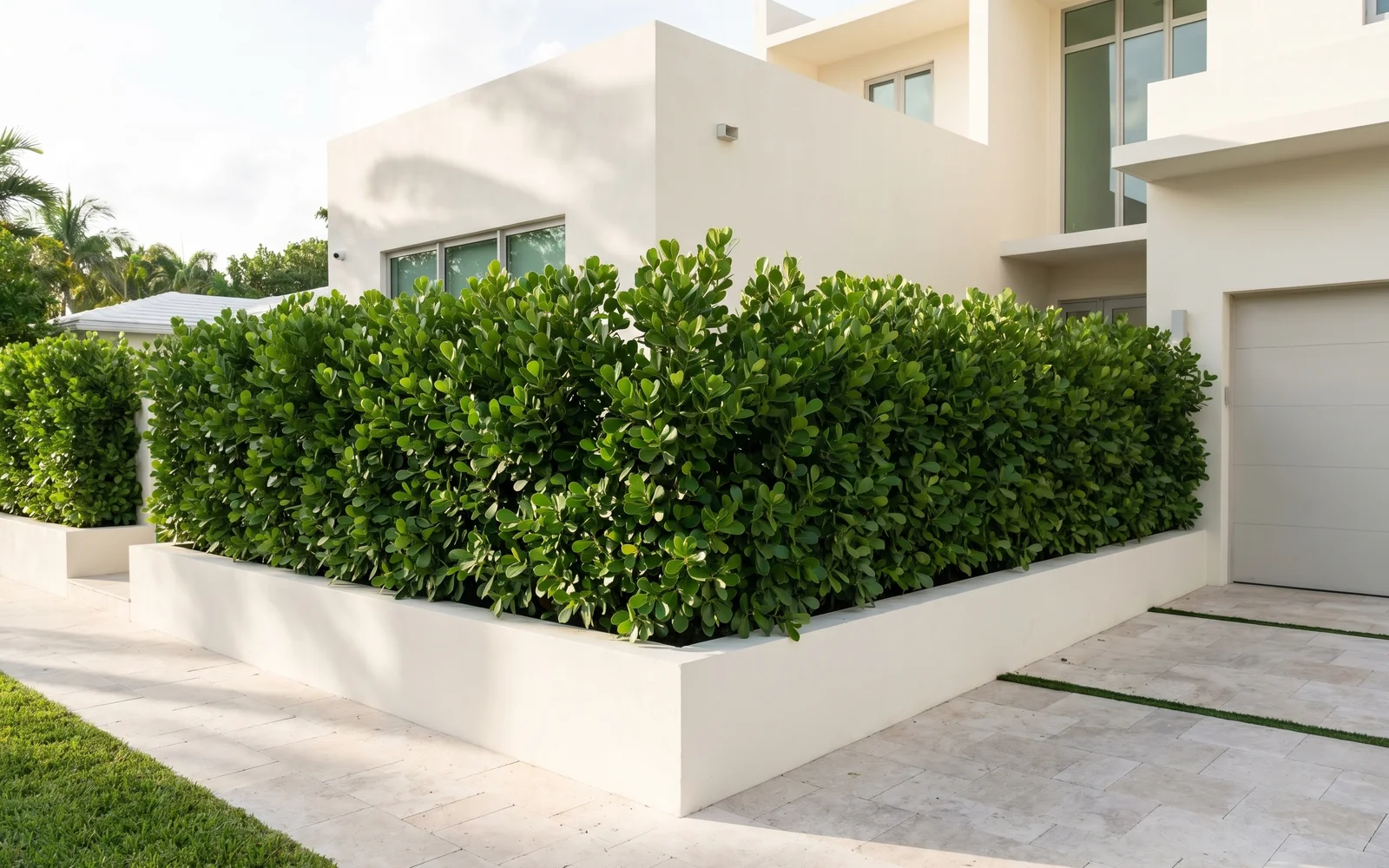
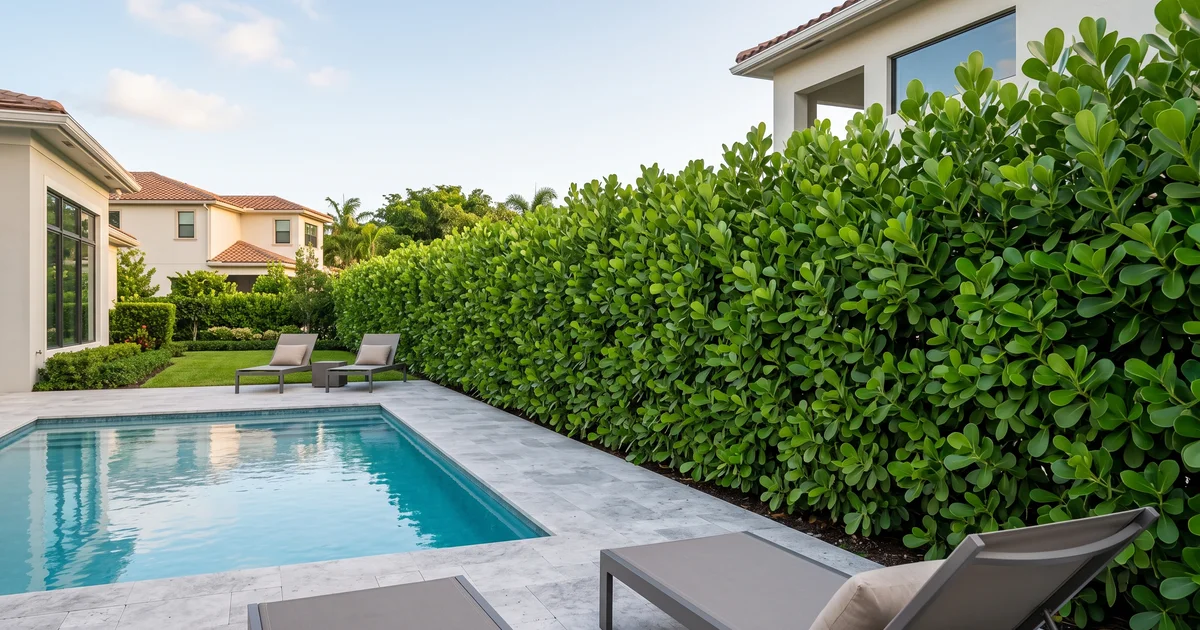
Pick guttifera for a property line, a pool screen, a driveway edge, a neighbour’s window, or anywhere you want a defined green wall. It is the right call on standard residential lots, and it is what we install on the large majority of jobs.
Pick rosea only if you actually want a tree: a shade canopy on a large lot, a specimen in an open lawn, or a natural coastal screen where you have room for it to be itself.
If you are weighing this genus against other species entirely, Clusia vs Podocarpus covers the formal alternative and cocoplum vs Clusia covers the native one.
What Gets Sold as What
Mislabeling is common, and it is rarely malicious. Both species move through the same supply chains, plant tags get generic, and retail staff turnover means “Clusia” is often as specific as the answer gets.
Two things protect you. Ask for the species by name rather than the common name, and look at the leaf before anything goes in the ground. A small-leaf plant sold as a hedge is almost certainly guttifera. A big-leaf plant sold as a hedge deserves a second question.
Buying from a grower who handles it weekly removes most of the risk, which is part of why we grow our own. Our Clusia plants for sale page covers container sizes and delivery.
Frequently Asked Questions
What is the difference between guttifera and rosea? Guttifera is the small-leaf hedge species that holds a clipped wall at 12 to 15 feet with a shallow fibrous root system. Rosea is the autograph tree, a spreading specimen of 25 to 30 feet with large paddle-shaped leaves and a much stronger root system. Same genus, very different jobs.
Which species is used for hedges? Clusia guttifera, sold as small-leaf Clusia, Princess, or Nana. It is the species behind almost every Clusia privacy hedge installed across Miami-Dade, Broward, and Palm Beach. Rosea can be pruned but fights its natural spreading form and is not suited to a clipped hedge line.
Is Clusia rosea the same as the autograph tree? Yes. Clusia rosea is commonly called the autograph tree or pitch apple. The name comes from its thick leaves, which hold a scratched mark. If a plant tag mentions the autograph tree or pitch apple, you are looking at rosea rather than the hedge species.
How do I tell small-leaf Clusia from large-leaf Clusia? Compare leaf size directly. Guttifera leaves are small and oval, roughly coin-sized, sitting tightly along the stem. Rosea leaves are large, rounded, and thick, often palm-sized. Guttifera also grows upright and compact while rosea spreads outward even when young.
Are Clusia rosea roots invasive? Rosea has a considerably stronger and wider root system than the hedge species and needs real distance from structures, the way any spreading tree does. Most online warnings about aggressive Clusia roots are describing rosea rather than guttifera, which stays shallow and compact.
Are Clusia guttifera roots a problem near a pool or foundation? Not in normal residential planting. Guttifera builds a shallow fibrous root mass in the top 12 to 18 inches that stays near the plant. A modest offset from a slab or pool deck is about trunk room and easy trimming rather than any root threat.
How tall does Clusia guttifera grow? Residential cultivars top out around 12 to 15 feet, though most hedges are held between 6 and 10 feet. That range covers second-story screening at the top end and a standard property-line hedge at the more common heights, without maintenance becoming a real chore.
How tall does Clusia rosea grow? Left to its natural form, rosea reaches roughly 25 to 30 feet with a broad spreading canopy. That is tree scale rather than hedge scale, and it is the main reason it belongs on a large lot as a specimen rather than along a property line.
Is Clusia native to Florida? No. Neither guttifera nor rosea is a Florida native, though both thrive here and are widely planted. If native status matters for HOA review or personal preference, cocoplum is the native privacy hedge, alongside Simpson’s stopper, Walter’s viburnum, and yaupon holly.
Can you use Clusia rosea as a privacy hedge? You can prune it into a screen, but you will be working against the plant. Rosea wants to spread and reach tree height, so holding it as a tidy clipped wall means constant cutting, and its root vigor limits how close to structures you can place it safely.
Which of the two grows faster? Rosea is the more vigorous plant overall because it is growing toward tree size. For the purpose most buyers care about, closing a hedge line into a solid screen, guttifera is the faster route because its dense compact growth fills laterally rather than pushing upward and outward.
Does it matter which one I buy if I just want privacy? Yes, significantly. Guttifera gives you a defined hedge that stays where you put it. Rosea gives you a tree that will outgrow the role, needs more clearance from structures, and takes far more cutting to hold as a screen. Ask for the species by name.
See also: Clusia Hedges in South Florida, our installer pillar covering varieties, spacing, and install.
Get the Right Plant in the Ground
The fastest way to avoid this problem entirely is to have someone who plants it every week look at your yard and tell you what belongs there. We grow our own guttifera, size it for the run, and install it across Miami, Fort Lauderdale, West Palm Beach, Boca Raton, and Delray Beach.
Request a free quote or call us at 305-222-7171.
Tagged
- clusia guttifera vs clusia rosea
- clusia rosea
- clusia guttifera
- small leaf clusia
- autograph tree
- South Florida hedges
Ready for a privacy hedge that looks finished from day one?
Get a free estimate from a South Florida specialist who handles delivery, installation, and the result you actually want.