Why a privacy hedge matters to a real estate listing in South Florida.
South Florida buyers walk a lot of properties before they make an offer. The houses they remember and end up bidding on are the ones that felt private, settled, and finished from the moment they pulled into the driveway. A property that reads as exposed to the street, to the neighbors, or to anyone passing on a sidewalk works against itself at every showing.
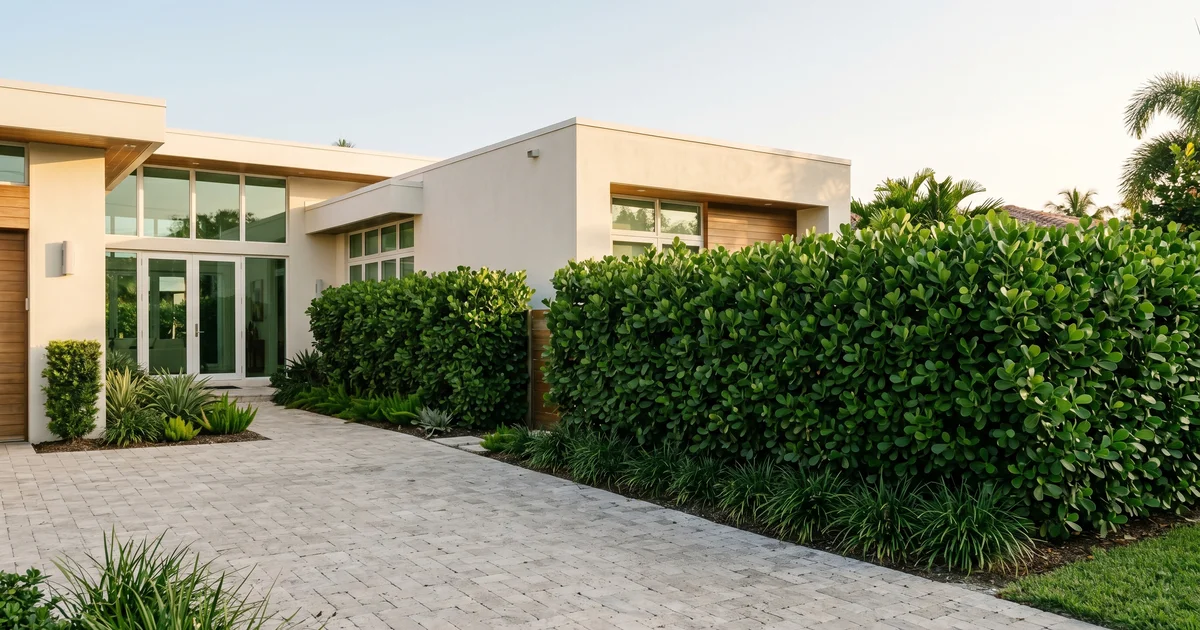
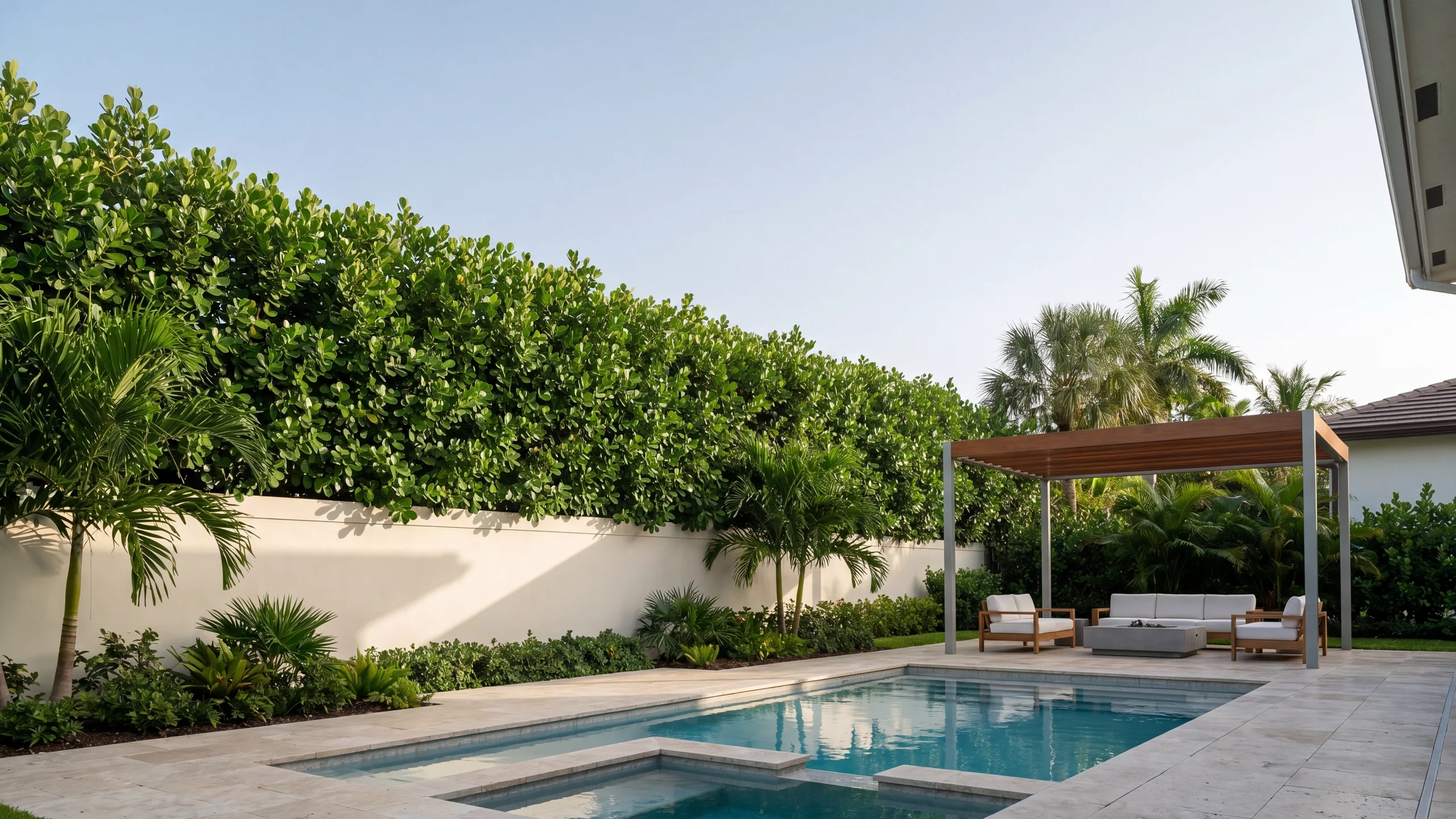
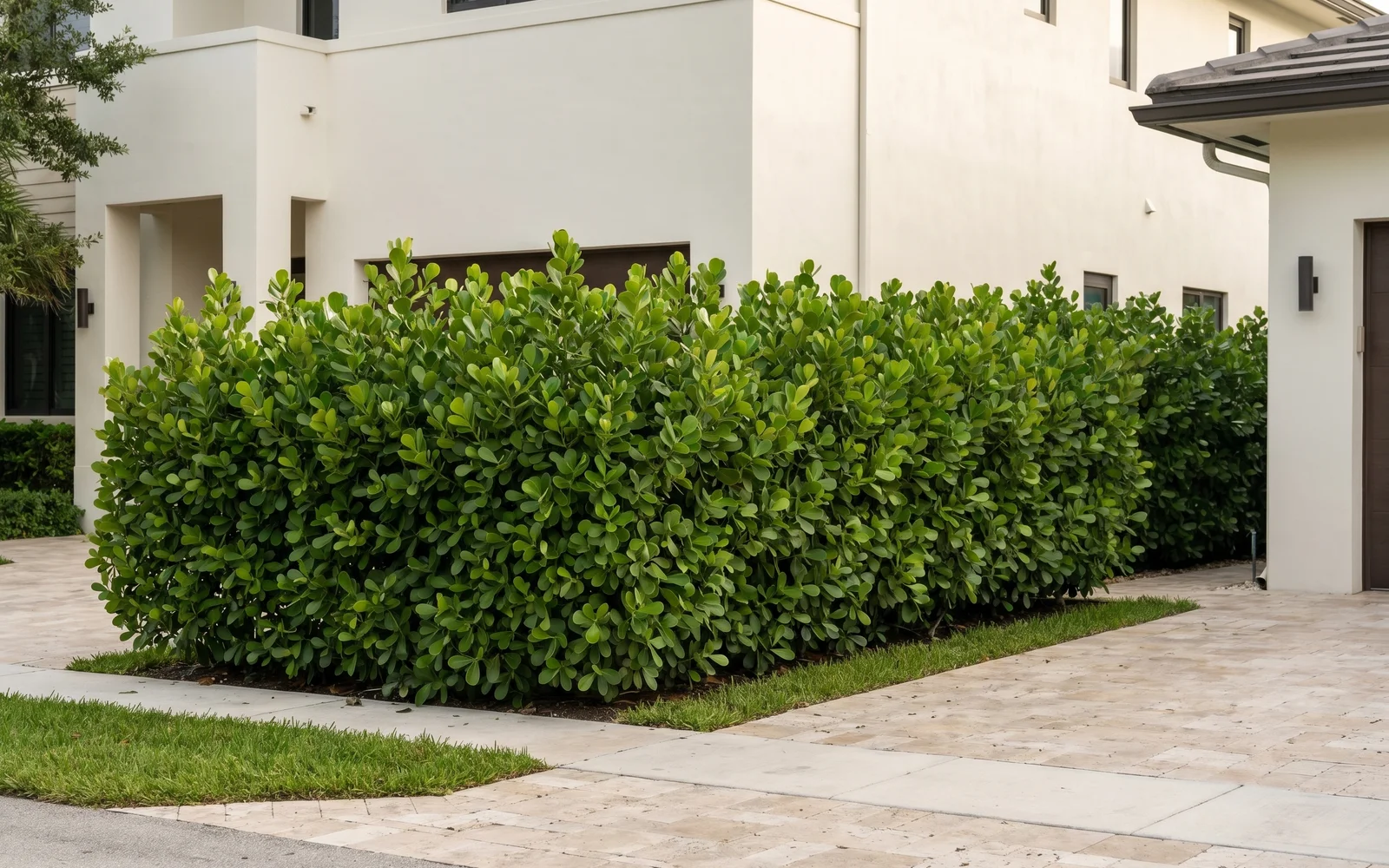
A real privacy hedge does several things for a listing at once. It frames the property visually so the architecture reads more clearly in photos. It creates a buyer sense of "this is the yard, this is the house, this is the lot" without exposed adjacent properties dragging the eye. It signals investment by the seller, which buyers read as care for the property overall. And it solves the privacy question before the buyer has to ask it.
The effect is most pronounced on properties where the original landscaping has been neglected, where neighboring lots are out of step with the listing, or where the property is on a street with enough activity to matter. We have done dozens of pre-listing installs across South Florida and the pattern is consistent. Properties with a finished hedge line photograph better, show better, and close at numbers closer to the original asking.
What we deliver that matters specifically to agents.
Timelines that respect the listing window.
The single most important thing an installer can do for an agent is hit the date. We treat the listing date as a project constraint, not a target. If we cannot hit the date with the right plants and the right install quality, we will say so up front and recommend either an adjusted listing date or a scope that we can hit. We will not promise a date we are not confident in.
Scope sized to the listing, not to the maximum quote.
A common pattern in the industry is for installers to scope projects as large as they can get away with. That is not how we work pre-listing projects. The right scope for a particular listing is whatever actually changes the buyer experience at the showings. Sometimes that is a long perimeter install. Sometimes it is a focused 60-foot run on the front line. Sometimes it is a single repair to a failing existing hedge. The scope decision should be driven by what the listing needs, not by what the seller can be talked into.
Clean handovers and showing-ready sites.
We leave properties in showing-ready condition. No piles of mulch in the driveway. No exposed soil tracking into the house. No leftover equipment for the agent to coordinate around. The morning after our install, the agent can run a showing without any cleanup work first.
Documentation the agent can use.
We provide before-and-after photographs of the work that the agent can include in listing materials or buyer-question responses. A recently improved boundary is a documented value-add. We hand over the photo record as part of the project.
Honest reads when a project will not help.
Some listings will not benefit enough from a hedge install to justify the project. Some properties need a different fix entirely. We will tell you that. We would rather not take a project than take one that does not change the close trajectory. Agents who have worked with us long enough come to us for the honest read first, even on properties where the right answer is no project.
The trade-offs we navigate on a pre-listing timeline.
Pre-listing installs have constraints that ordinary residential installs do not. The agent and the seller have a date. The buyer expectations are different from the owner expectations. The plant size selections often shift.
Starter size selection.
A residential homeowner planning a hedge for their long-term yard sometimes opts for smaller starter plants because they will wait for the hedge to fill in. A pre-listing install does not have that runway. We typically recommend larger starter plants that hit a finished look on install day. The cost per plant is higher, the total cost is higher, but the listing benefits from the finished result immediately. The math usually still works because the listing closes at a higher number.
Species selection driven by the listing window.
The right plant for a long-term residential hedge is sometimes a different plant than the right pick for a pre-listing install. A faster-filling species or a larger starter plant can deliver the listing-day effect more reliably. We talk through this with the agent and the seller and recommend accordingly.
Schedule precision.
An ordinary residential install can flex by a few days if the weather is bad. A pre-listing install on a tight listing window does not have that flex. We plan with buffer baked in, and we communicate quickly if anything threatens the date. The agent should never be surprised by a schedule slip.
The partnership question.
Some agents bring us listings often and refer sellers to us as a standing piece of their listing prep. We treat these relationships as partnerships. The agent gets to know how we work, we get to know how they work, and the projects get smoother and faster over time.
We do not pay referral fees and we do not do co-marketing. The relationship is based on the work we deliver and the listings closing the way the agent wants them to. Agents whose listings benefit from the work tend to bring us more listings. That is how we want the relationship to function.
If you are an agent who wants to talk about an upcoming listing, we would rather hear about the specific property than have a general conversation about partnerships. Send us the address, tell us what you are working with, and we will give you an honest read on whether a hedge install would help, what scope makes sense, and what timeline we can hit.
Special situations we handle for agent listings.
Failing ficus along a listing's property line.
A ficus hedge that has been beaten up by whitefly is one of the most common things that hurts a listing photographically and at showings. We do clean ficus removal as part of the project, including the full root extraction that makes the new install actually take. See our piece on treating ficus whitefly vs removing the hedge for more on why this matters.
Coastal and waterfront listings.
Coastal properties with salt exposure benefit from species choice that is matched to the conditions. We recommend cocoplum or other salt-tolerant options for waterfront listings where standard Clusia would be working against the salt. The right plant in the right yard is part of the value we add.
HOA and architectural review committee approvals.
Many South Florida communities require ARC approval for hedge installs. We have done enough projects in the major communities to know what gets approved and what gets pushed back. We can advise on what the ARC is likely to accept, and we can structure the project to make approval smooth.
Tight access or hardscape constraints.
Some properties have access constraints that make installation more complex. Narrow driveways, gated communities with vehicle limits, hardscape edges that need to be protected. We work these out as part of the project planning instead of treating them as surprises on install day.