Comprehensive Privacy Hedge Solutions in Pinecrest
Pinecrest is not a typical Miami-Dade village. The lots are larger, the canopy is older, and the homeowner expectation is closer to estate-grade than suburban. A privacy hedge here is rarely a quick add-on. It is part of the architecture of the property, and it tends to outlive a few rounds of furniture and pool refurbishments.
Mr. Clusia plans Pinecrest hedges with that lifespan in mind. We scope each project around the actual Pinecrest factors: deep front setbacks, mature live oak shade, limestone-laced soil that often sits a foot below the surface, and finished heights that need to relate to two-story facades and tall iron gates. The standard install we run on Sunset Drive is the same one we run off Banyan Drive, and the standard is held without exception.
Why Pinecrest Homeowners Choose Podocarpus
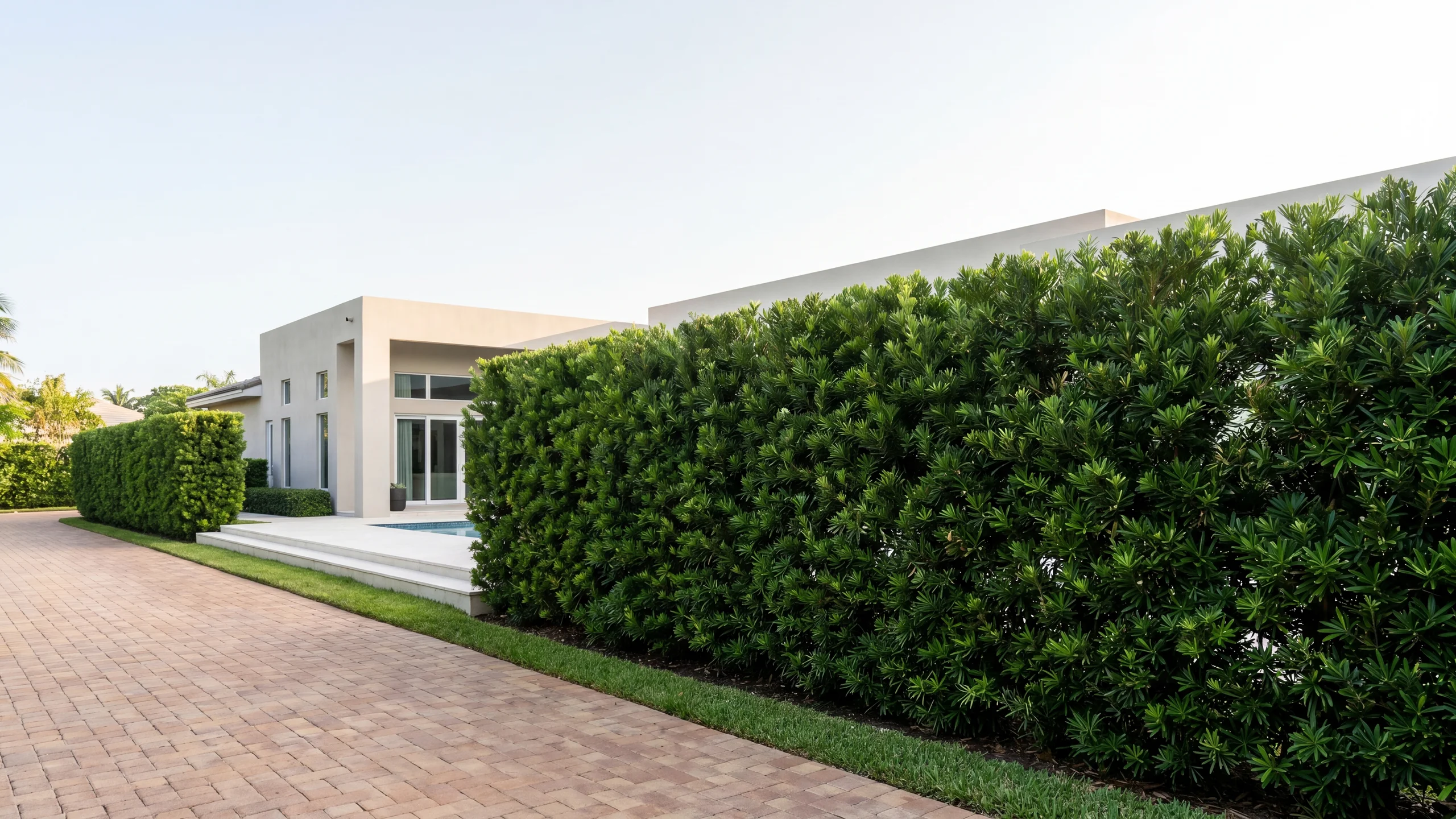
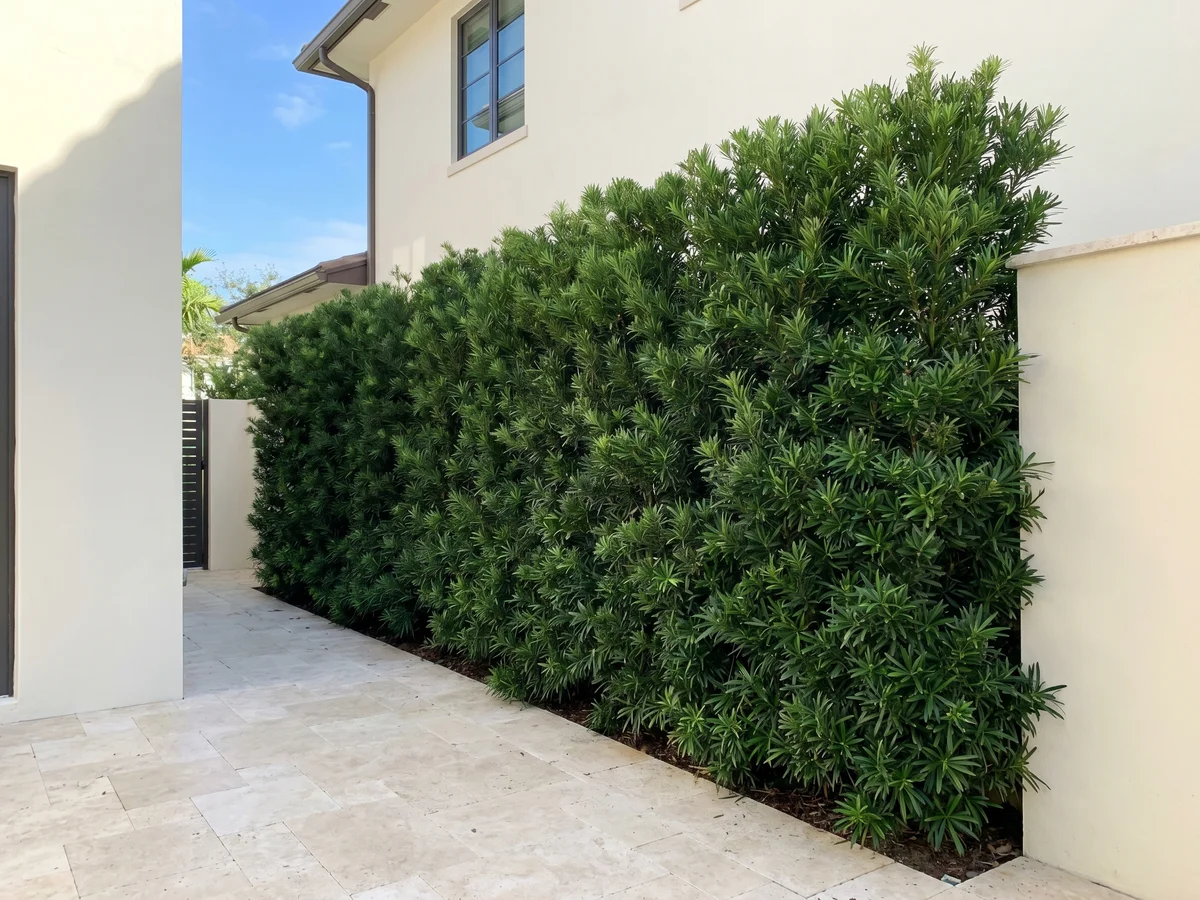
Pinecrest homeowners pick Podocarpus when they want a hedge that reads like part of the home. The plant has a fine, needle-like leaf and a naturally upright habit. Once shaped, it looks more like a clipped architectural element than a row of shrubs. That visual posture is the right match for the village's mix of formal Mediterranean, classic A-frame, and updated modern homes.
The other reason is practical. Podocarpus tolerates the partial shade thrown by Pinecrest's live oak canopy. Most tropical hedges thin under those conditions, especially along Old Cutler-adjacent streets where the trees stretch over the property lines. Podocarpus holds tight where it is shaded, which keeps a long Pinecrest run looking continuous instead of patchy.
Cold tolerance plays a role too. Pinecrest sits inland, and the village does see the rare cold front that affects Miami-Dade once or twice a winter. Podocarpus shrugs those events off with a clean shaping pass in spring. Owners who want a single hedge to perform across decades, not just easy seasons, tend to lean toward this plant.
Podocarpus Strategy and Execution in Pinecrest
The Pinecrest install is a planning project before it is a planting project. The key questions get answered upfront. How long is the run, in actual measured feet rather than estimated. How tall does the finished wall need to be to relate to the home, the gate, and any neighboring two-story builds. Where does the canopy break, and where does sun reach the ground for more than three hours a day. What is the bed depth, and at what level does the limestone shelf interrupt root development.
Once the answers are in, the plant choices follow. For most Pinecrest installs we set Podocarpus on roughly 30-inch centers, with adjustments based on starter height. Tall front-line runs along Sunset Drive or Killian Drive tend to start at 8 to 10-foot stock so the wall is functional on day one. Side-yard runs near guesthouses, pool cabanas, or driveway gates often start at 6 to 8 feet because they are more easily approached for the steady shaping that produces the formal read.
Soil work matters more in Pinecrest than in newer Miami-Dade subdivisions. Limestone often sits under a thin layer of native fill, and the bed has to be opened deeper than it looks. We bring in equipment that can break the shelf where needed, amend the bed for drainage, and set the root balls at the right depth so the line stays even as the hedge matures.
Podocarpus Options for Pinecrest Homes
Pinecrest projects fall into a handful of recognizable Podocarpus configurations. The long front-yard run is the most visible, often along a 150 to 300-foot frontage with a centered driveway gate. The driveway-edge hedge is another standard, typically running 80 to 150 feet from the entrance to the motor court. Estate perimeter installs that wrap two or three sides of the property are common in the village, especially on lots between Old Cutler Road and the canal corridor.
For two-story screening, we run Podocarpus at 12 to 15 feet of finished height, sometimes higher on properties with adjacent build-up. For formal entrance treatments around iron gates and stone columns, we shape the hedge into a tighter, more architectural line and hold it with a steadier shaping rhythm. For equestrian and large-lot perimeters west of US-1, we use bigger starter stock and slightly looser centers because the run length is the priority over needle-tight density.
Pinecrest homes also call for Podocarpus around tennis courts, guest cottages, and pool cabanas tucked into deeper portions of the lot. These zones benefit from a hedge that reads consistent across long sightlines and does not require frequent intervention. Podocarpus is comfortable in those roles.
Custom Podocarpus Deliverables for Pinecrest
Every Pinecrest install we quote includes the same core deliverables. An on-property walk to confirm conditions. A written, itemized quote covering plant counts, starter sizes, soil prep, install labor, and cleanup. Nursery-grown Podocarpus delivered on a scheduled day rather than left to a third-party transport. A planting line laid by our own crew with consistent centers across the full run. A clean post-install site, with debris removed and beds dressed. A finished walkthrough that covers watering through the establishment window and the simple shaping rhythm that keeps the hedge formal.
The scope does not flex based on neighborhood prestige. A Suniland install and a quieter run off SW 124th Street get the same quality of plants, the same crew, and the same standard of finish. The difference is only in the size of the project, never the level of care.
Real Pinecrest Case Studies and Client Results
One Banyan Drive owner needed a tall Podocarpus wall to block the second story of a new build going up next door. We sized the starter stock at 12 feet, set tight centers, and installed the hedge over four days. By the time the neighboring build was complete, the hedge already screened the upper windows and softened the new mass behind the property line.
A Pinecrest equestrian property near the canals wanted a 320-foot perimeter run that would not interfere with the horse paddocks behind it. We routed the hedge along the road-facing side, used a steady starter size to match the long line, and finished the install in one continuous push. The owner reported that the road noise dropped noticeably the same week, and the property silhouette finally looked finished from the street.
A Mediterranean home off Killian Drive wanted formal entrance treatments around a stone-column gate. We installed shorter Podocarpus pieces flanking the columns and a taller run extending out along the property line. The shaped lines tied the gate into the broader landscape, and the hedge has held its sharp profile through the village's standard maintenance cycle.
About Pinecrest
Pinecrest sits south of Coral Gables and Coconut Grove in Miami-Dade County, with ZIP codes 33156 and 33176 covering most of the village. The community is shaped by long lots, mature live oak canopy, and a quiet residential character that locals protect closely. Sunset Drive, Old Cutler Road, Killian Drive, US-1, and Red Road frame the area, and the side streets between them carry some of the most established Mediterranean Revival and traditional homes in the county.
Pinecrest Gardens anchors the village center, and the Pinecrest Farmers Market, the Saturday morning routine on Killian, and the proximity to Fairchild Tropical Botanic Garden give the area a distinct lifestyle. Suniland to the north and the Old Cutler corridor to the east bring slightly different character, with the equestrian-leaning streets to the west adding another layer. Privacy is part of the local culture here, which is why the village has more clipped Podocarpus walls than almost any other neighborhood in South Florida.