Comprehensive Privacy Hedge Solutions in Coral Gables
Coral Gables holds itself to a higher landscape standard than almost any other city in South Florida. The streetscape is part of the brand. Anything planted on a Gables property is read in the context of the original 1920s landscape vision, the historic district rules, and decades of established gardening practice. A privacy hedge here is a long-term decision, and it is rarely chosen casually.
Mr. Clusia plans Coral Gables hedges with that context in mind. We scope each project around the actual conditions on the ground: narrow historic side yards, deep canopy, mature stucco walls, and the limestone-laced soil that sits under most of the city. The standard install we run on Coral Way is the same one we run inside Cocoplum, and the standard does not flex from one ZIP code to the next.
Why Coral Gables Homeowners Choose Podocarpus
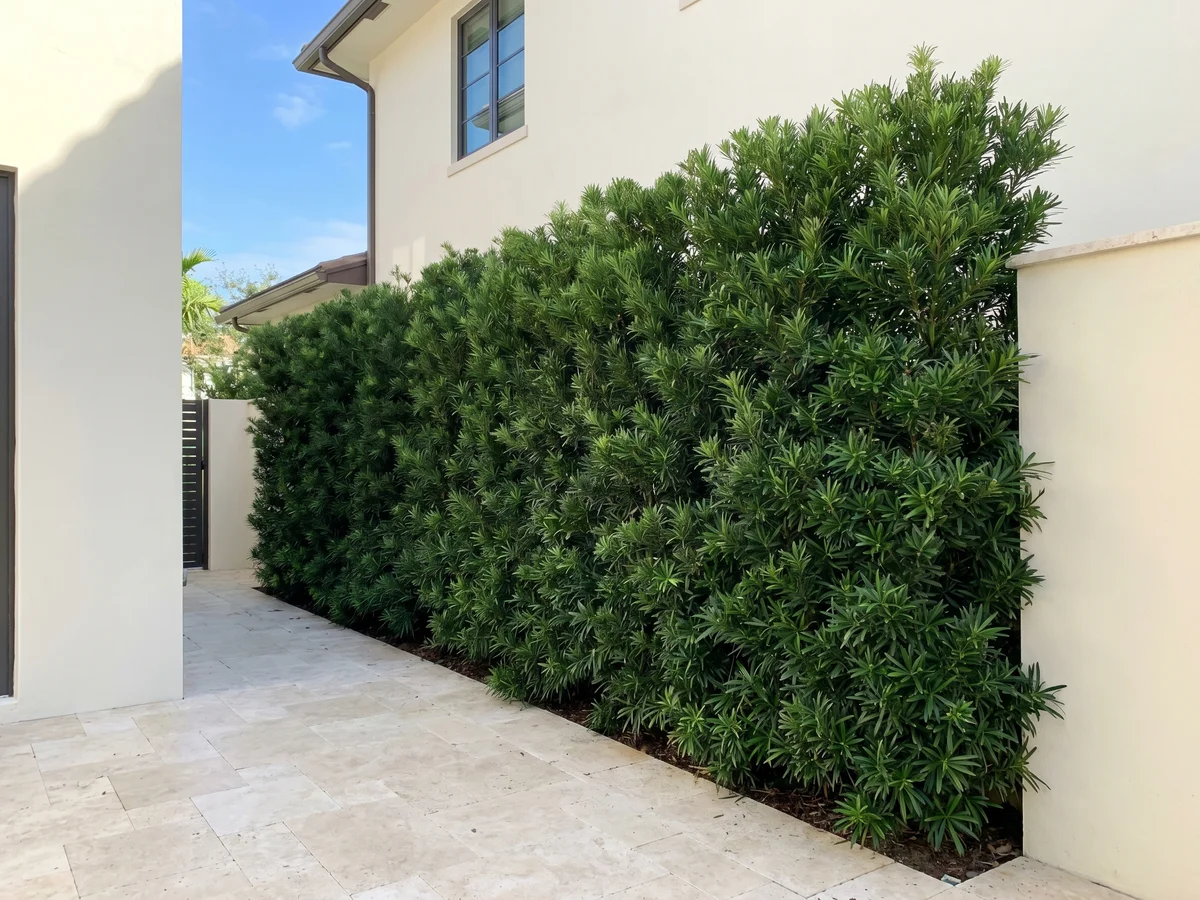
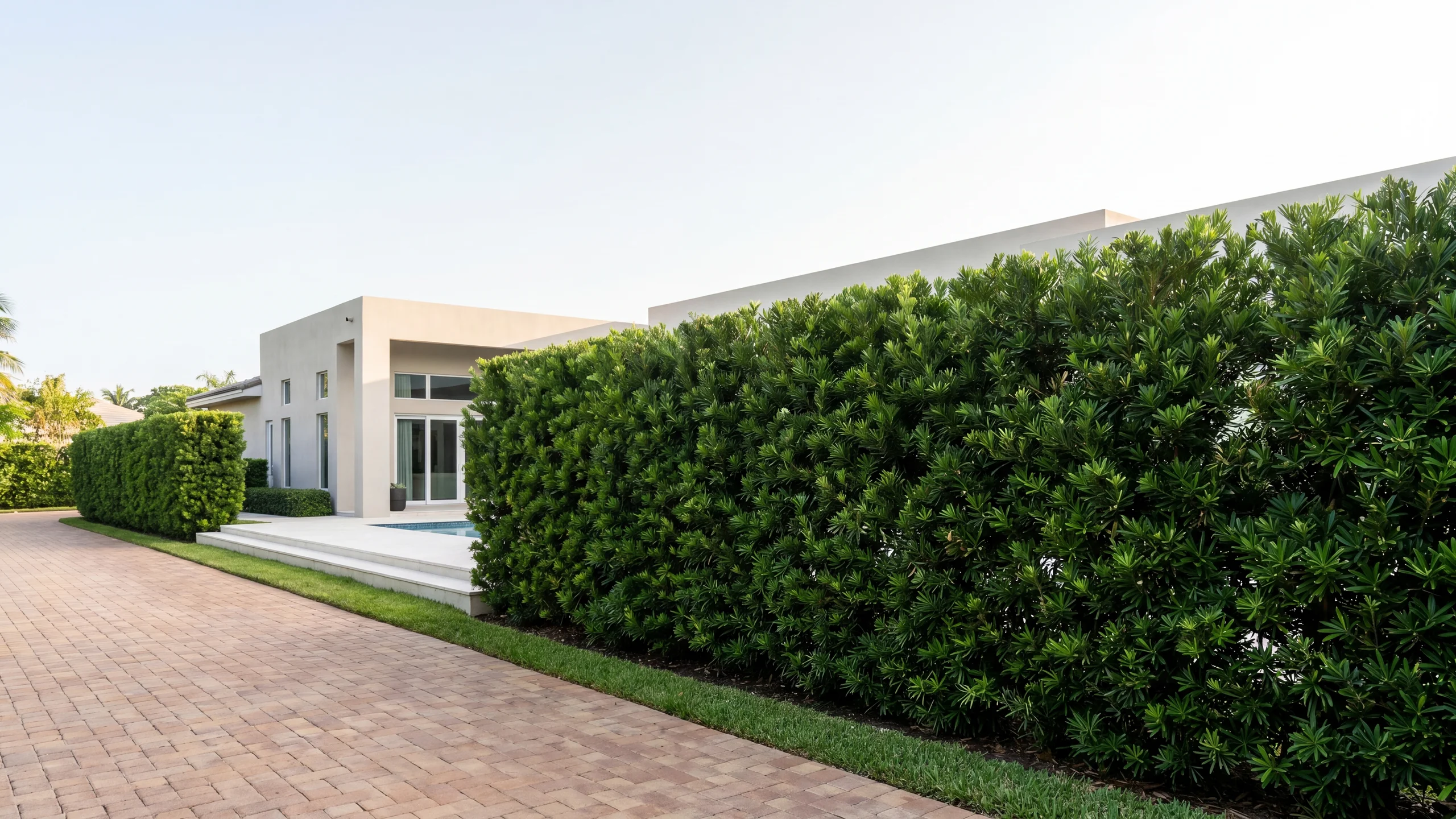
Coral Gables homeowners pick Podocarpus when they want a hedge that respects the architecture instead of competing with it. The plant's fine, needle-like leaf and naturally upright habit produce a clipped vertical line that complements stucco walls, limestone columns, and barrel tile rooflines. It is the closest South Florida equivalent to the Italian cypress and yew hedges of older Mediterranean gardens, and it survives here while those alternatives struggle.
The other reason is functional. Coral Gables sits under heavy oak, gumbo limbo, and royal poinciana canopy, especially across the historic core, the Riviera section, and the streets around the Biltmore. Most tropical hedges thin in that dappled shade. Podocarpus holds dense, even foliage from the bottom of the line to the top, which is what a formal Gables hedge has to do.
Historic preservation also matters. The Coral Gables Historic Preservation Office takes the original landscape language of the city seriously, and clipped, formal hedge work fits that language naturally. Podocarpus has been used in the Gables for decades for exactly this reason.
Podocarpus Strategy and Execution in Coral Gables
The Coral Gables install starts with the architecture. Where does the home sit on the lot. How tall is the parapet, the chimney, the second-story window. What is the relationship between the hedge line and the limestone wall, the iron gate, the loggia. The hedge has to relate to those elements at finished height, not just at install height.
Once the architectural framing is clear, the run is sized. For most Gables installs we set Podocarpus on roughly 28 to 30-inch centers, with adjustments based on starter height. Front-line projects on streets like Coral Way or Granada Boulevard often start at 8 to 10-foot stock for an immediate visual return. Tight side-yard installs in the historic core sometimes call for taller starter plants because the run is short and the priority is the second-story screen rather than a long horizontal line.
Soil work is essential. The limestone shelf in Coral Gables can sit very close to the surface, and the bed often has to be broken below the visible layer. We bring in equipment that can do that without damaging adjacent hardscape, amend the bed for drainage, and set root balls at the right depth so the line stays even as the hedge matures. Skipping this step is the most common reason a Gables hedge fails to settle into a clean wall.
Podocarpus Options for Coral Gables Homes
Coral Gables Podocarpus projects fall into a handful of recognizable configurations. The historic-core side-yard hedge runs 60 to 120 feet between two homes, often replacing aging ficus or hibiscus. The front-line formal hedge runs along Coral Way, Granada, Riviera Drive, or one of the smaller named avenues, framing the home from the street. The Cocoplum or Old Cutler Bay perimeter hedge wraps gated estate properties and ties into the home's entry sequence.
For two-story screening, we run Podocarpus at 12 to 15 feet of finished height. For formal entrance treatments around stone columns and iron gates, we shape the hedge into pyramids or columnar forms. For tight side yards, we use compact cultivars like 'Maki' so the line stays controlled at a narrow footprint. For long Cocoplum perimeters, we use bigger starter stock to keep the line in scale with the surrounding estate landscaping.
Many Gables homes also use Podocarpus around guesthouses, pool cabanas, summer kitchens, and the rear patios that sit behind primary lawns. These zones benefit from a hedge that reads consistent and quietly architectural. Podocarpus suits those secondary structures the same way it suits the primary house.
Custom Podocarpus Deliverables for Coral Gables
Every Coral Gables install we quote includes the same core deliverables. An on-property walk to confirm conditions and any historic preservation considerations. A written, itemized quote covering plant counts, starter sizes, soil prep, install labor, and cleanup. Nursery-grown Podocarpus delivered on a scheduled day rather than left to a third-party transport. A planting line laid by our own crew with consistent centers across the run. A clean post-install site, with debris removed and beds dressed. A finished walkthrough that covers watering through the establishment window and the simple shaping rhythm that keeps the hedge looking clipped and intentional.
The scope does not change based on which Gables neighborhood you live in. A Cocoplum estate install and a smaller historic-core side-yard run get the same plant quality, the same crew, and the same standard of finish. The only difference is the size of the project.
Real Coral Gables Case Studies and Client Results
One Cocoplum waterfront family wanted a 180-foot Podocarpus run along a side property line that bordered a neighboring estate. We sized starter plants at 10 feet, set the line tight, and finished the install across three days. The hedge created an architectural buffer that complemented the home's stucco facade and gave the family a private courtyard feeling along the side of the property.
A Riviera Drive family with a historic 1930s home wanted formal entry treatments flanking a stone-and-iron gate. We installed shorter shaped Podocarpus at the columns and a taller flanking run extending out along the property line. The gate, hedge, and limestone wall now read as one connected entry sequence, which is the look the family had wanted since they bought the home.
A French Country Village owner needed a tight side-yard screen between their home and a recently expanded neighbor. The narrow strip ruled out a wider tropical hedge. We installed a Podocarpus line on tight centers, sized to clear the second-story window above. The owner reported that within a week the bedroom and primary bath felt private again, and the hedge has held that line cleanly through every shaping cycle since.
About Coral Gables
Coral Gables was founded in the 1920s as one of the country's first planned communities, designed under George Merrick around a Mediterranean Revival aesthetic that still defines the city. The streets curve, the homes wear stucco and barrel tile, and the canopy of oaks and royal poincianas covers most of the historic core. ZIP codes 33134, 33146, and 33156 cover the bulk of the city, with neighborhoods like Granada, Riviera, the French Village District, Cocoplum, and Old Cutler Bay each carrying distinct character.
Landmarks shape daily life here. The Biltmore Hotel, the Venetian Pool, Miracle Mile, and the University of Miami sit in or near the city, and the surrounding streets carry the quiet rhythm of an established residential community. Historic preservation runs deep, and the city's relationship with formal landscaping goes back almost a century. That tradition is why Podocarpus, more than any other privacy hedge, feels native to Coral Gables.