Privacy hedges, permits, and South Florida rules
The relationship between privacy hedges and permitting is often misunderstood. Homeowners assume either that hedges have no rules at all or that any tall planting needs a full permit. Both are wrong. This section covers the reality, the common exceptions, and how to plan a hedge that fits cleanly within local code from the start.
The general rule: hedges are plantings
Most South Florida municipalities treat hedges as landscaping rather than construction. That means no building permit, no engineered drawings, no plan check, and no post-install inspection. This is the default for residential hedges in Miami-Dade, Broward, and Palm Beach counties.
The practical implication is that a hedge install can typically move from quote to finished line in a fraction of the time a comparable fence install takes. Homeowners on a timeline often pick hedges for the regulatory simplicity alone, even before considering the aesthetic and functional reasons.
The rules that still apply
Hedges are regulated less than fences but not unregulated. The most common constraints:
- Front-yard height limits are usually lower than side or rear-yard limits. A typical municipal rule caps front hedges at something like three to four feet, with taller height allowed behind the front building line.
- Corner visibility triangles at intersections require shorter plantings so drivers can see around the corner. These are strictly enforced in many cities.
- HOA rules can impose approved plant lists, maintained height limits, and setback expectations on shared edges. HOAs are separate from city code and have their own approval process.
- Easements and utility setbacks may restrict where the hedge can be planted even if the rest of the property is unrestricted.
None of these typically require a permit. They do require that the install plan respects them. A good install ends with a hedge that sits comfortably inside all applicable limits, not one that pushes against them.
Where hedges do sometimes require a permit
A handful of situations can put a hedge into permit territory:
- Exceeding maximum hedge heights in a city that treats over-height plantings as needing a variance.
- Installing in protected vegetation zones, easements, or near tree-protection areas.
- HOA or condominium-level rules that require architectural approval for any landscape change above a certain scale.
- Installations involving hardscape, such as retaining walls, planter curbs, or irrigation work tied to a permit-requiring system.
These are the exceptions, not the default. A simple privacy hedge along a standard residential property line, at a standard height, almost never fits any of them. When one of these edge cases does apply, we identify it before install and help the homeowner understand what the approval path looks like.
Fence permits compared, honestly
Fence permitting in South Florida varies by municipality but is consistently more work than hedge installation. Site plans, setback diagrams, sometimes engineering details, neighbor notification for certain heights, and an inspection after install are typical elements. HOA approval often sits on top of the city review. Depending on the city, the total timeline from decision to finished fence can run weeks to months.
This is not a complaint about the process. Fences are structures that benefit from code oversight. The point is that the comparison between a hedge and a fence is not just aesthetic or financial. It is also a comparison between a simple landscaping install and a formal construction permit process, and that difference alone moves a lot of homeowners toward the hedge.
How city height rules typically work
Most South Florida cities that have hedge height rules apply them this way: a lower maximum height in the front yard, a higher maximum in the side and rear yards, and specific restrictions at intersection corners for visibility. The exact numbers vary. Some cities publish them clearly. Others publish them in zoning code that takes a phone call to confirm.
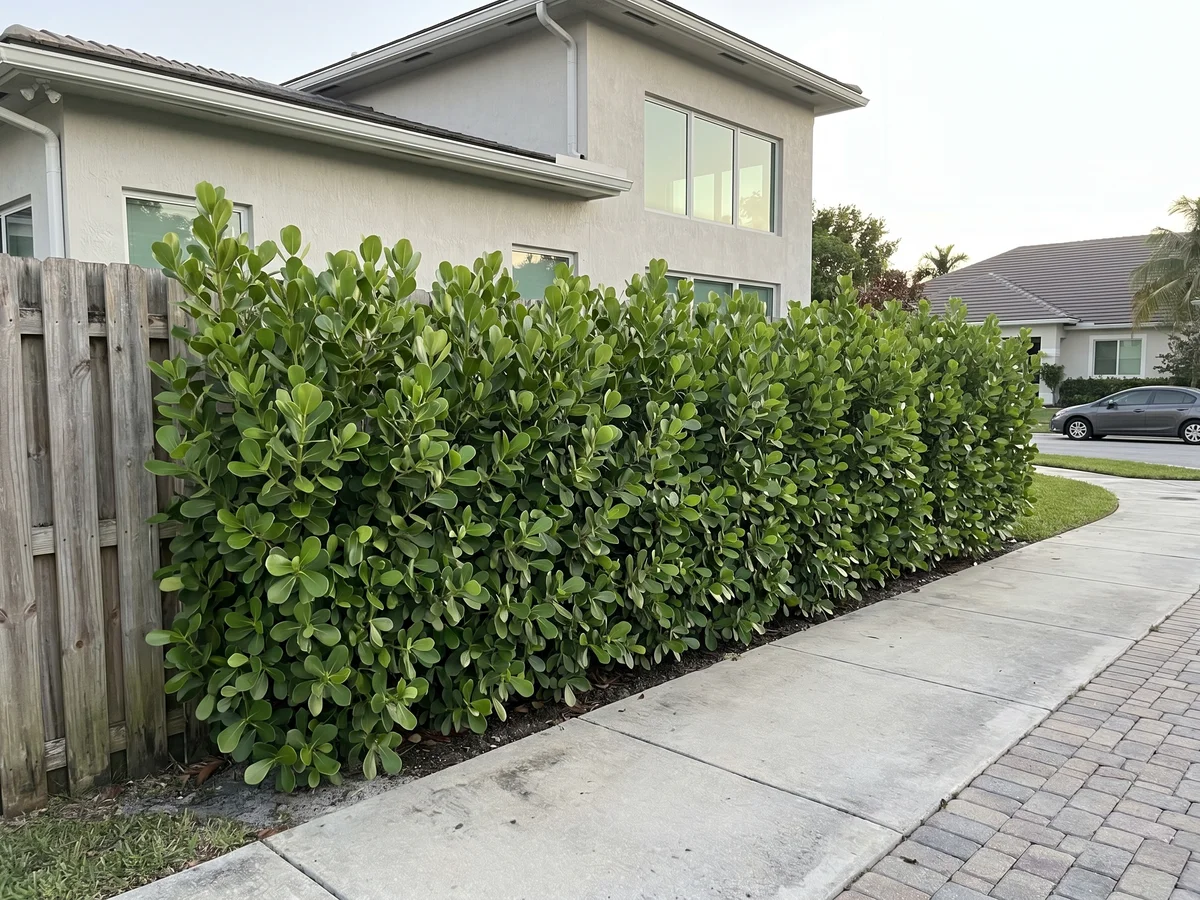
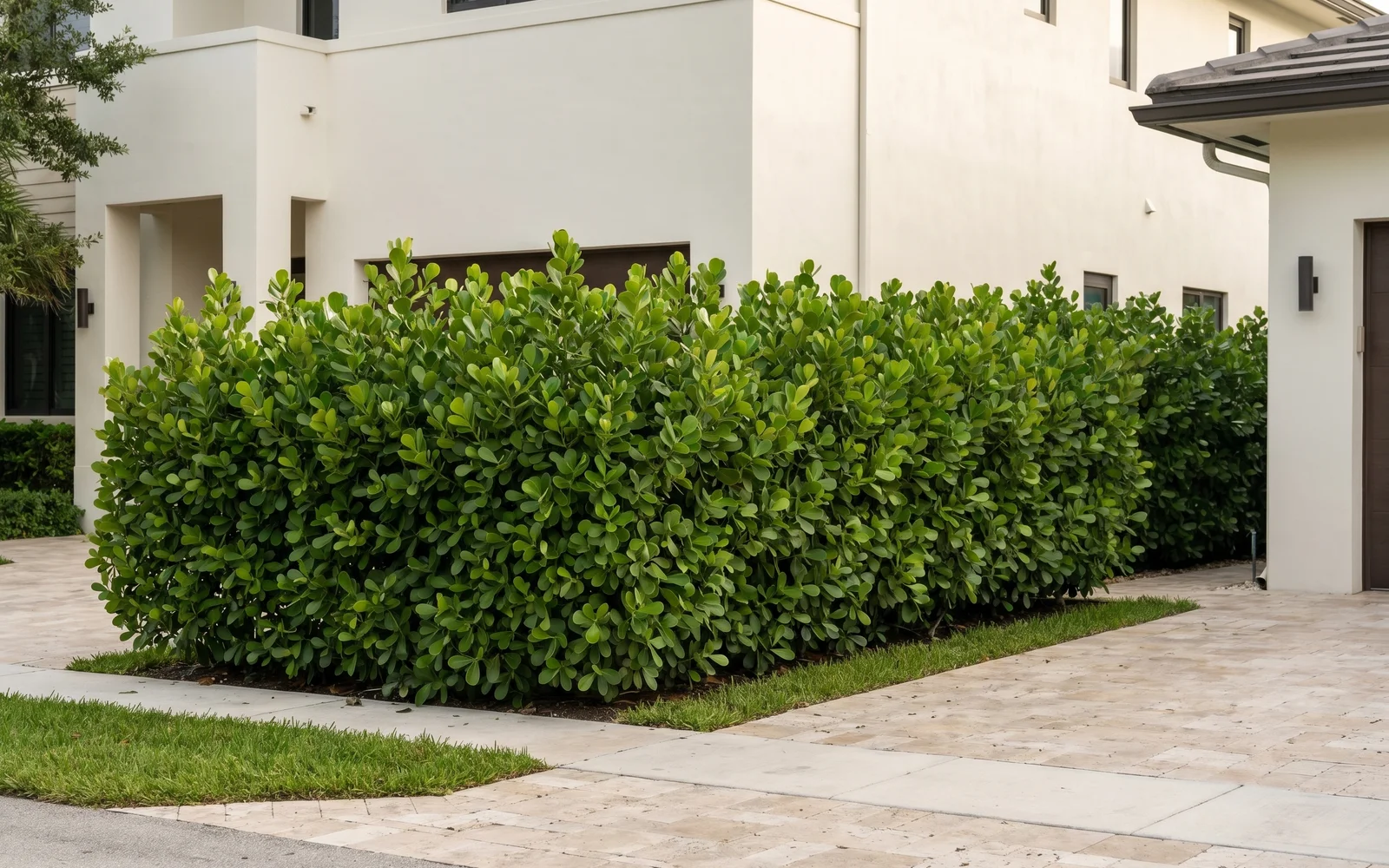
We design hedges to live cleanly inside those numbers. A Clusia hedge maintained at eight feet in a side yard that allows eight feet fits the rule. The same hedge maintained at ten feet in the same side yard does not. Enforcement usually starts with a complaint from a neighbor rather than proactive inspection, but once enforcement starts, the city expects the hedge to be brought back to the maximum height. Designing to the rule avoids the issue entirely.
What HOA rules usually look like
HOA landscape rules range from almost nothing to a detailed approved plant list. Most HOAs in South Florida accept Clusia and Podocarpus as standard premium hedge species. What HOAs more often care about is the maintained height, how the hedge looks from the common-area side, and whether it fits the community's overall landscape standard.
For HOA homes, a quick call or a submission form before install usually clears the plan. The approval process is not difficult when the species is standard and the hedge is designed to fit the community's expectations. It is just a small step that should be done before the install day, not after.
Setbacks, property lines, and neighbor expectations
Where on the property the hedge is planted matters. A hedge planted right on the property line can grow into a neighbor's yard, which creates a maintenance and neighbor-relations question even if no permit is involved. Most installs sit the hedge a foot or two off the line to leave room for mature width.
Even without a permit process, neighborly communication before a major property-edge install is a good idea. A short conversation with adjacent owners about the plan, the height, and the species sets expectations and usually produces goodwill that saves trouble later. This is not a regulatory requirement. It is just a better way to install a hedge that is going to be a shared sightline for years.
How we handle the permit question during a quote
During a quote walk, we look at the site, the local city rules, and any HOA expectations that apply. If the hedge fits cleanly, we say so and move to install planning. If there is anything that could complicate the regulatory side, we flag it up front. Most installs clear without issue. A smaller share need a quick phone call to the city or an HOA submission. A very small share require a formal variance or approval, and those conversations happen before we commit to an install date.
The goal is that the homeowner never has an unpleasant surprise related to permits, inspections, or code enforcement. Hedges are the simpler path, but only when they are planned correctly for the specific property. That part of the work is baked into the quote and the install plan.