Plant Care
Do Clusia Plants Flower? What South Florida Owners Should Expect
Yes, Clusia flowers, but a trimmed Clusia hedge rarely shows it. When each species blooms, what the flowers and fruit look like, and why your hedge may never bloom.
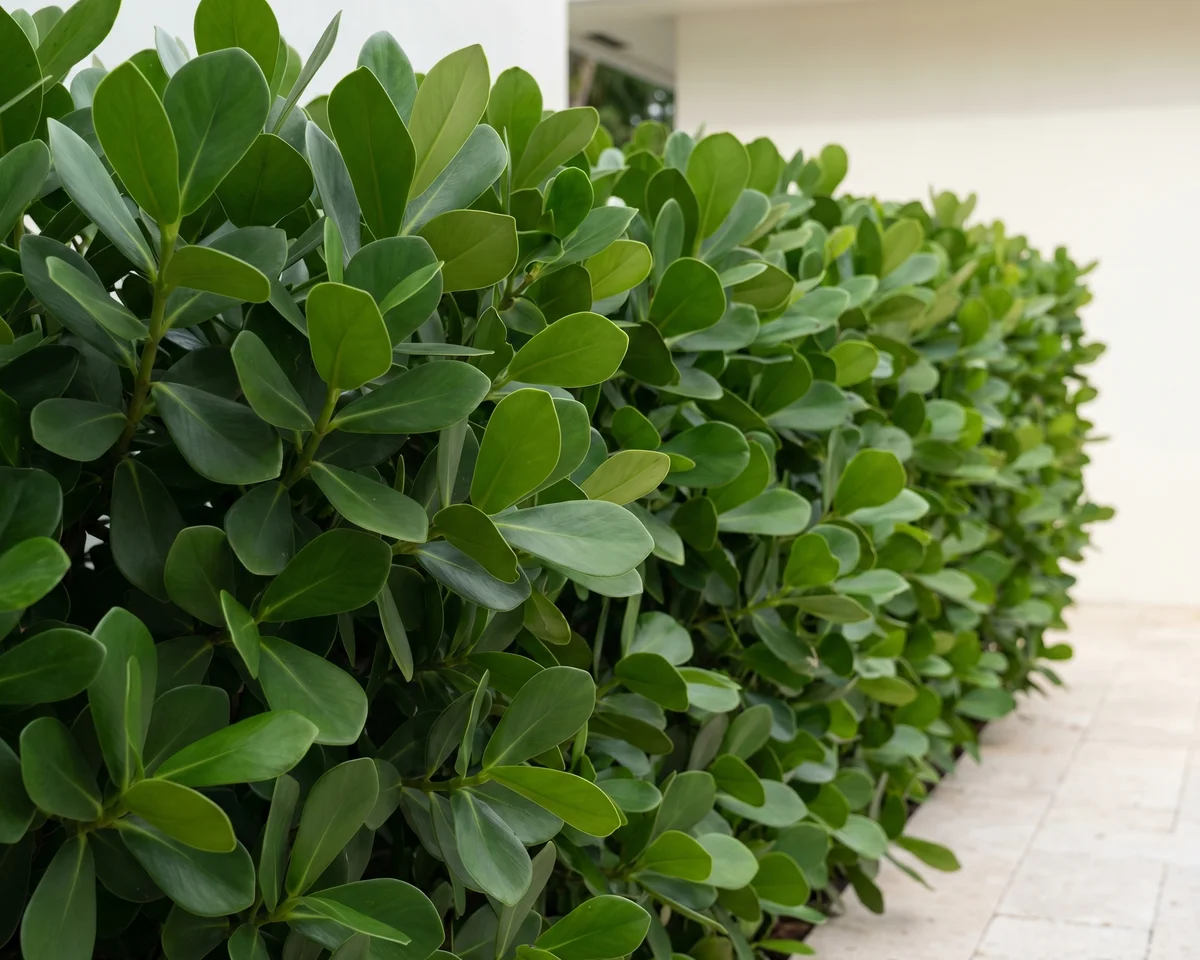
Yes, Clusia plants flower. But if you own a trimmed Clusia hedge in South Florida, you may never see a bloom. The large-leaf species, Clusia rosea, puts on showy pink and white flowers in summer. The small-leaf Clusia used for most hedges flowers far less, and regular shaping removes much of the growth where flowers would form. This guide covers what each type does, what the fruit looks like, and what it means for a hedge.
The short answer by species
Two plants are sold as “Clusia” in South Florida, and they behave differently. Our Clusia guttifera vs Clusia rosea guide covers how to tell them apart. For flowering, here is the split.
| Clusia rosea (autograph tree, pitch apple) | Clusia guttifera (small-leaf Clusia) | |
|---|---|---|
| Typical use | Shade tree or large screen | Privacy hedge |
| Flowers | Showy, pink and white, 2 to 3 inches across | Small, waxy, white to pale pink |
| Bloom season | Summer | Summer, roughly May through August |
| How often you see them | Regularly on untrimmed plants | Rarely, mostly in the warmest spots |
| Fruit | Round, about 3 inches, splits open | Small capsules, early fall to late winter |
Clusia rosea flowers and fruit
Clusia rosea is the tree form. The University of Florida’s IFAS fact sheet on Clusia rosea describes pink and white flowers two to three inches across that appear in summer. An unusual detail: the flowers open at night. On overcast days they sometimes stay open through the morning, which is when most people notice them.
After the flowers comes the fruit that gives the plant its “pitch apple” name. It starts as a fleshy light green ball about three inches wide. As it ripens it turns black and splits open. Inside are bright red seeds sitting in a black, sticky, resin-like material. Birds eat the seeds and spread them, and the seeds sprout easily. That is why you can find young Clusia rosea growing out of palm trunks, wall cracks, and other odd places in South Florida.
UF/IFAS describes the fruit as poisonous. Do not eat it, and keep children and pets from chewing on it. Our page on whether Clusia is toxic to animals covers pets, horses, and what to do after a nibble.
Clusia guttifera flowers
Small-leaf Clusia, the one in most privacy hedges, does flower. The blooms are small and waxy, white to pale pink, and they show up in summer. Fruit capsules can follow from early fall into late winter.
In practice, guttifera blooms are not common. South Florida plant guides note that small-leaf Clusia rarely flowers outside the warmest parts of Zone 10. Many homeowners own one for years and never see a flower. That is normal and is not a sign the plant is sick.
There is some debate among botanists about whether guttifera is its own species or a form of Clusia rosea. For a homeowner, the label matters less than the leaf. Small, narrow leaves mean a hedge plant that blooms rarely. Large, round, leathery leaves mean the tree form that blooms every summer.
Why your Clusia hedge is not flowering
If your hedge has never bloomed, the likely reasons are simple.
- It is the small-leaf type. Guttifera flowers sparingly even when left alone.
- It gets trimmed often. Flowers form on new growth near the outer edge of the plant. A formal hedge gets that outer growth sheared off every few weeks to keep the face tight. In our experience, regularly shaped Clusia hedges almost never show flowers for that reason.
- It is young. A plant still putting its energy into roots and height is less likely to bloom.
- It sits in shade. Clusia handles partial shade well as a hedge, but full sun gives the best chance of flowers.
None of these hurt the hedge. A Clusia hedge is grown for dense, glossy leaves and privacy, not for blooms. If flowers are a priority, you can let one section grow out without shearing and see what it does in summer. Just know that an untrimmed section will get looser and taller than the rest of the line. Our Clusia hedge trimming guide explains how shaping affects density.
Do Clusia flowers make a mess?
On a hedge, almost never. Small-leaf Clusia makes too few flowers and fruit to drop much litter.
Clusia rosea trees are different. A mature tree in full bloom and fruit can drop split fruit and sticky seed material on patios, pool decks, and cars below. If you plan to grow the tree form near a hardscape, place it where fallen fruit is easy to sweep up.
Choosing Clusia for flowers vs privacy
Most South Florida yards that call us want privacy first. For that job, small-leaf Clusia is the better fit. It stays tight, takes regular shaping, and does not shed fruit across the yard. See our Clusia hedges page for how we install it and how tall it can be held.
If you want a flowering screen instead, a hedge plant that blooms more freely may suit you better than Clusia. Ask us when we visit and we will talk through the trade-offs for your space. When you are ready to choose plants and sizes, browse our Clusia plants for sale.
Frequently asked questions
Do Clusia plants flower? Yes. Clusia rosea produces showy pink and white flowers about two to three inches wide in summer. Small-leaf Clusia guttifera also flowers in summer, but its blooms are small and uncommon, and a regularly trimmed hedge rarely shows any.
What color are Clusia flowers? Clusia rosea flowers are pink and white. Small-leaf Clusia guttifera flowers are white to pale pink and waxy. Both bloom in the warm summer months in South Florida.
When does Clusia bloom in Florida? Summer. Small-leaf Clusia blooms roughly May through August when it blooms at all. Clusia rosea flowers in summer too, and its flowers open at night, sometimes staying open through the morning on cloudy days.
Why is my Clusia hedge not flowering? Most hedges are small-leaf Clusia, which flowers rarely, and regular trimming removes the outer growth where flowers form. Young plants and shady spots bloom even less. A hedge without flowers is healthy and normal.
Is Clusia fruit poisonous? UF/IFAS describes Clusia rosea fruit as poisonous. Do not eat it, and keep children and pets away from fallen fruit. Small-leaf hedge Clusia makes very little fruit, so exposure from a trimmed hedge is uncommon.
Why is Clusia rosea called pitch apple? The round fruit splits open when ripe to show red seeds packed in a black, sticky, resin-like material. That pitch-like coating gives the plant its common name.
Tagged
- do clusia plants flower
- clusia flowers
- clusia rosea flower
- pitch apple fruit
- clusia guttifera
- South Florida hedges
Ready for a privacy hedge that looks finished from day one?
Get a free estimate from a South Florida specialist who handles delivery, installation, and the result you actually want.