Plant Care
How to Trim a Clusia Hedge in South Florida
An installer's guide to trimming Clusia hedges in South Florida. When to trim, how often, the taper that keeps the base full, tools, and the mistakes that thin a hedge out.
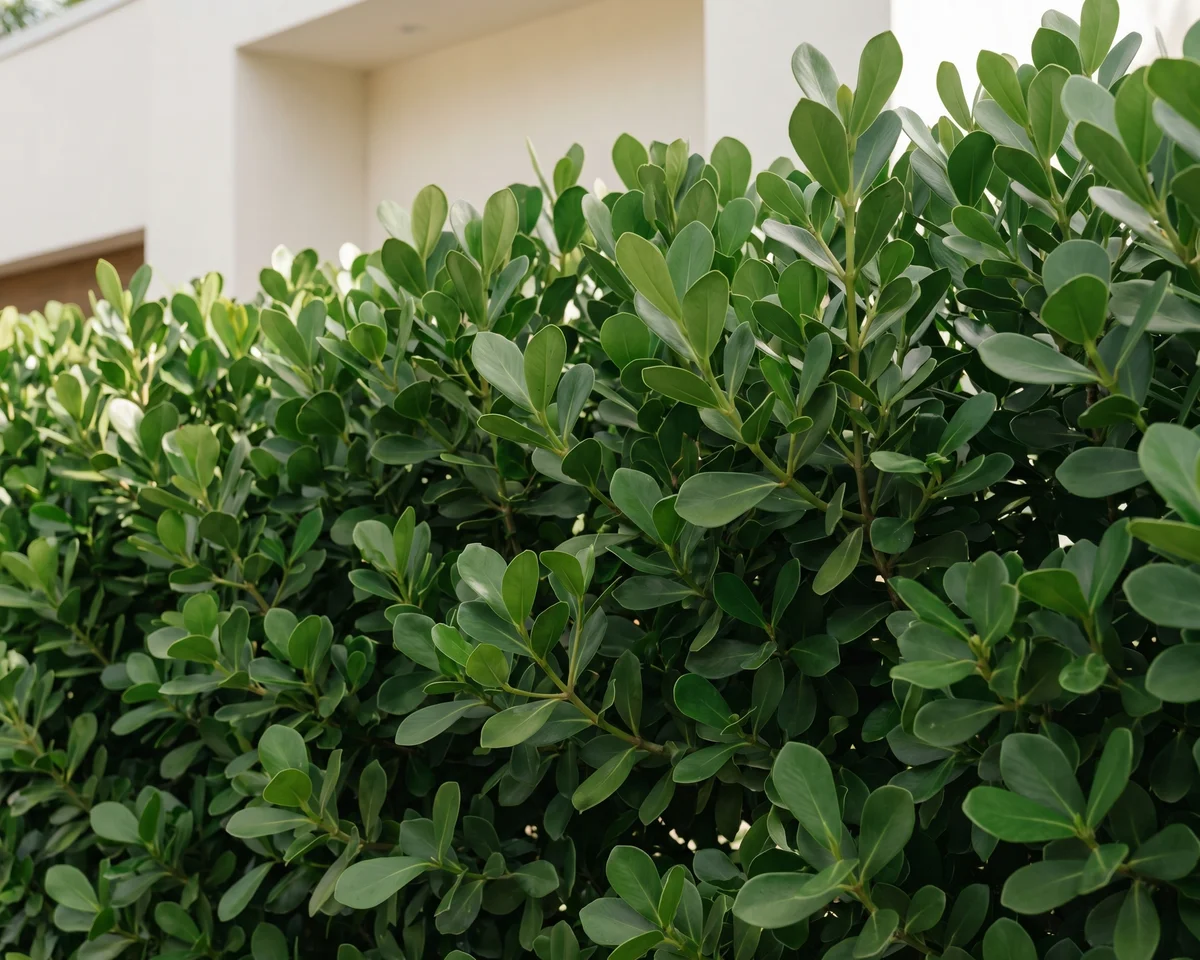
Trimming a Clusia hedge is simple once you know two rules: trim lightly and often, and keep the base wider than the top. Do those two things and a Clusia hedge stays dense, green, and full from the ground up for years. Skip them and the hedge thins at the bottom and gets leggy on top. This guide covers exactly how we trim Clusia hedges on South Florida yards, from timing to technique.
When to trim a Clusia hedge
In South Florida, Clusia grows almost year round, with the strongest push in the warm wet months from late spring through early fall. That means Clusia needs trimming more often than a homeowner from a colder climate might expect.
For a maintained formal look, trim every 6 to 10 weeks during the growing season and every 10 to 12 weeks in the cooler months. For a softer, more natural hedge, you can stretch that to a few times a year. The key is not the calendar. It is catching the new growth before it gets long and woody. Light frequent trims keep the hedge dense. Hard occasional trims leave holes.
How often is too often
You cannot really trim Clusia too often as long as each trim is light. Clusia responds to trimming by branching, which is exactly what makes a hedge dense. Frequent light shaping builds a thicker wall over time.
What hurts a Clusia hedge is the opposite: letting it run for six months, then cutting it back hard all at once. That removes most of the green growth in one pass and can expose bare interior wood that is slow to green back up.
The most important rule: taper the sides
The single technique that separates a full Clusia hedge from a thin one is the taper, sometimes called the batter. The hedge should be slightly wider at the bottom than at the top.
Here is why. Sunlight hits the top of a hedge first. If the top is wider than the bottom, it shades the lower branches, and shaded Clusia branches drop their leaves and thin out. Over a couple of years, a top-heavy hedge goes bare at the base and you cannot get it back easily.
A hedge that leans in slightly toward the top lets light reach all the way down the face. The base stays green and full. When you trim, keep the blade angled so the bottom stays a little wider than the top. It looks subtle, but it is the difference between a hedge that stays full for a decade and one that goes leggy in three years.
Tools for trimming Clusia
- Hand shears or hedge shears for small hedges and detail work. They give the cleanest control on a formal face.
- Powered hedge trimmers for longer runs. Faster, and fine for Clusia as long as the blades are sharp.
- Loppers or a hand saw for the occasional thick interior branch that needs to come out.
Keep blades sharp. Clean, sharp cuts heal fast. Torn cuts from dull blades brown at the tips and look ragged. Wipe blades between hedges if you are moving around the yard, since clean tools reduce the chance of moving any disease from plant to plant.
Step by step
- Shape the sides first, with the taper. Work from the bottom up, keeping the base slightly wider than the top so light reaches the whole face.
- Then flatten or round the top to the height you want. Take a little off, check your line, and take a little more if needed. It is easy to cut more and impossible to put it back.
- Step back often. Trimming looks different up close than from across the yard. Check your line from where people actually see the hedge.
- Clear the clippings off the top of the hedge so they do not sit and shade the foliage.
What not to do
- Do not cut deep into bare interior wood. Clusia greens back up from a hard cut better than many hedges, but bare old wood is slow and unreliable. Stay in the green growth.
- Do not let the top get wider than the base. This is the number one cause of a thin, bare-bottomed Clusia hedge.
- Do not trim in the heat of a drought-stressed afternoon. Trim when the plant is not already stressed, ideally when soil moisture is decent and the day is not brutal.
- Do not scalp the whole hedge once a year. Little and often beats a lot at once, every time.
Trimming a neglected Clusia hedge
If a Clusia hedge has already gone leggy or too tall, it can usually be brought back, but do it in stages. Cutting a badly overgrown Clusia back hard in one pass can leave large bare patches. Instead, reduce it over two or three trims across a growing season, starting the taper and letting light back into the base. Recovery is slower than prevention, which is the whole argument for light frequent trims in the first place.
Frequently asked questions
How often should I trim a Clusia hedge in Florida? Every 6 to 10 weeks in the warm growing season and every 10 to 12 weeks in cooler months for a formal look. Light frequent trims keep Clusia dense. A softer, more natural hedge can be trimmed just a few times a year.
What is the best time of year to trim Clusia? Clusia can be trimmed year round in South Florida. The heaviest growth, and the most frequent trimming, happens from late spring through early fall. A light shaping trim any time of year is fine.
Why is my Clusia hedge thinning at the bottom? Almost always because the top is wider than the base and is shading the lower branches. Trim the hedge with a taper, slightly wider at the bottom, so light reaches the whole face and the base fills back in over time.
Can you cut Clusia back hard? Clusia tolerates a hard cut better than most hedges, but recovery from bare interior wood is slow. Reduce an overgrown hedge over two or three trims across a season rather than all at once.
Do I need to seal or treat the cuts? No. Clean cuts from sharp blades heal on their own. Sealing hedge cuts is not necessary for Clusia.
Tagged
- how to trim clusia hedge
- clusia hedge trimming
- clusia hedge care
- pruning clusia
- South Florida hedges
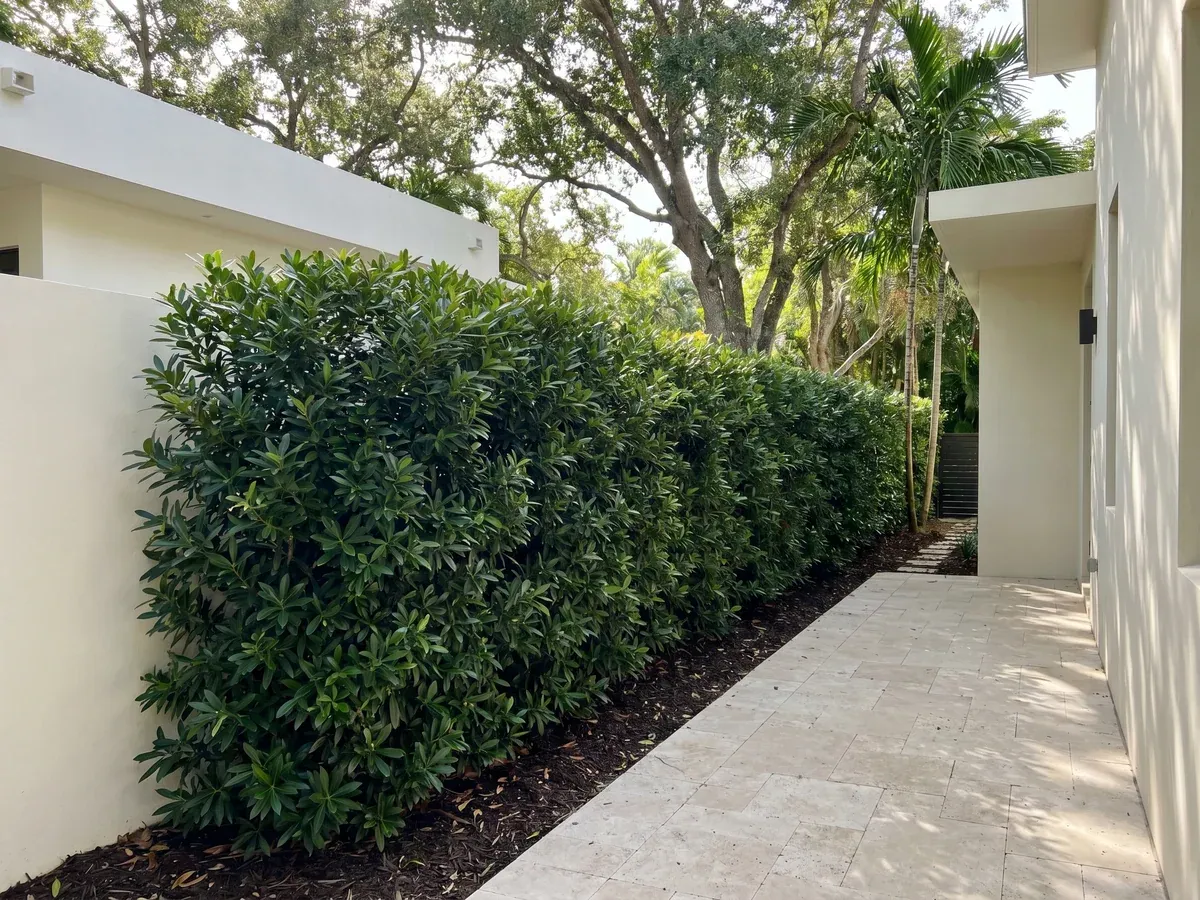
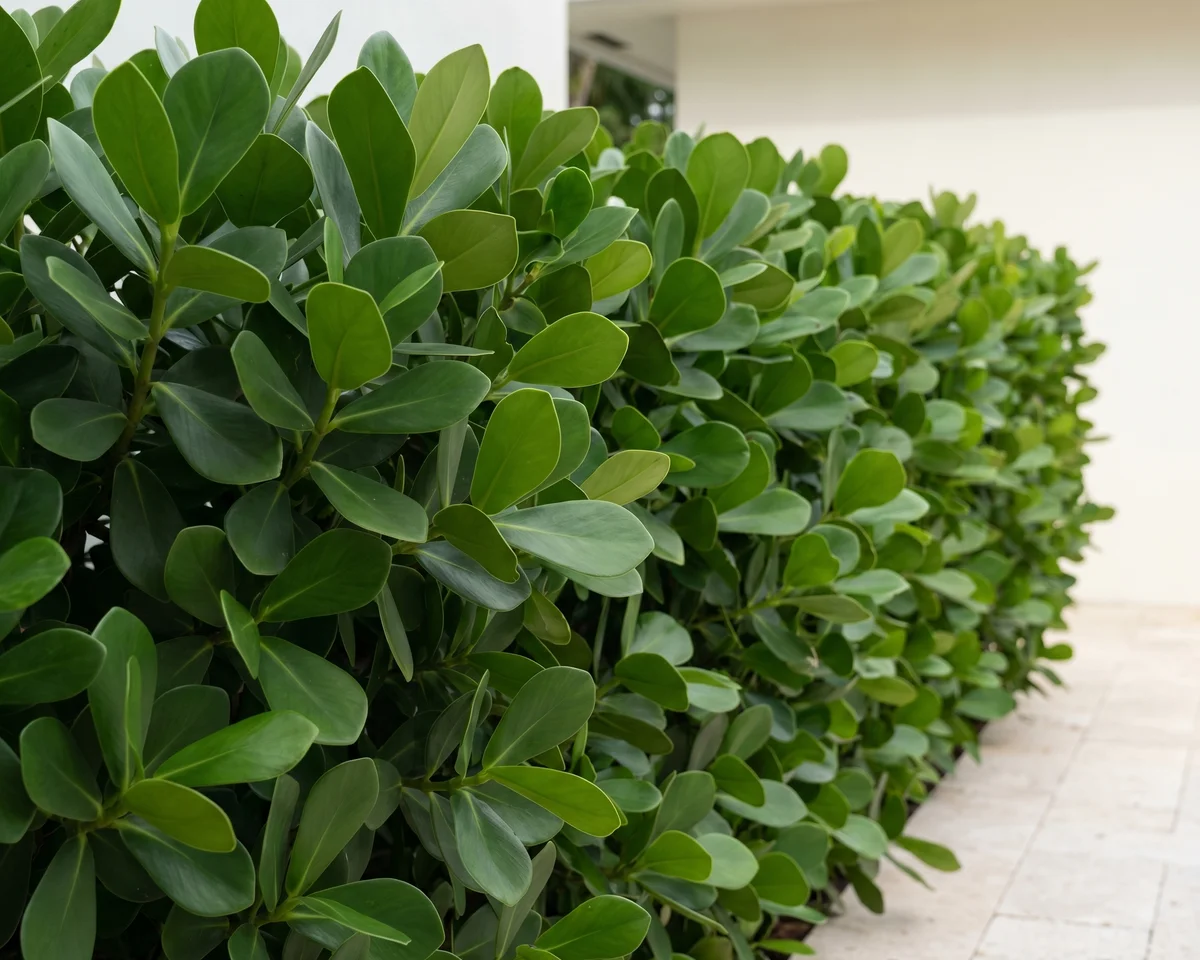
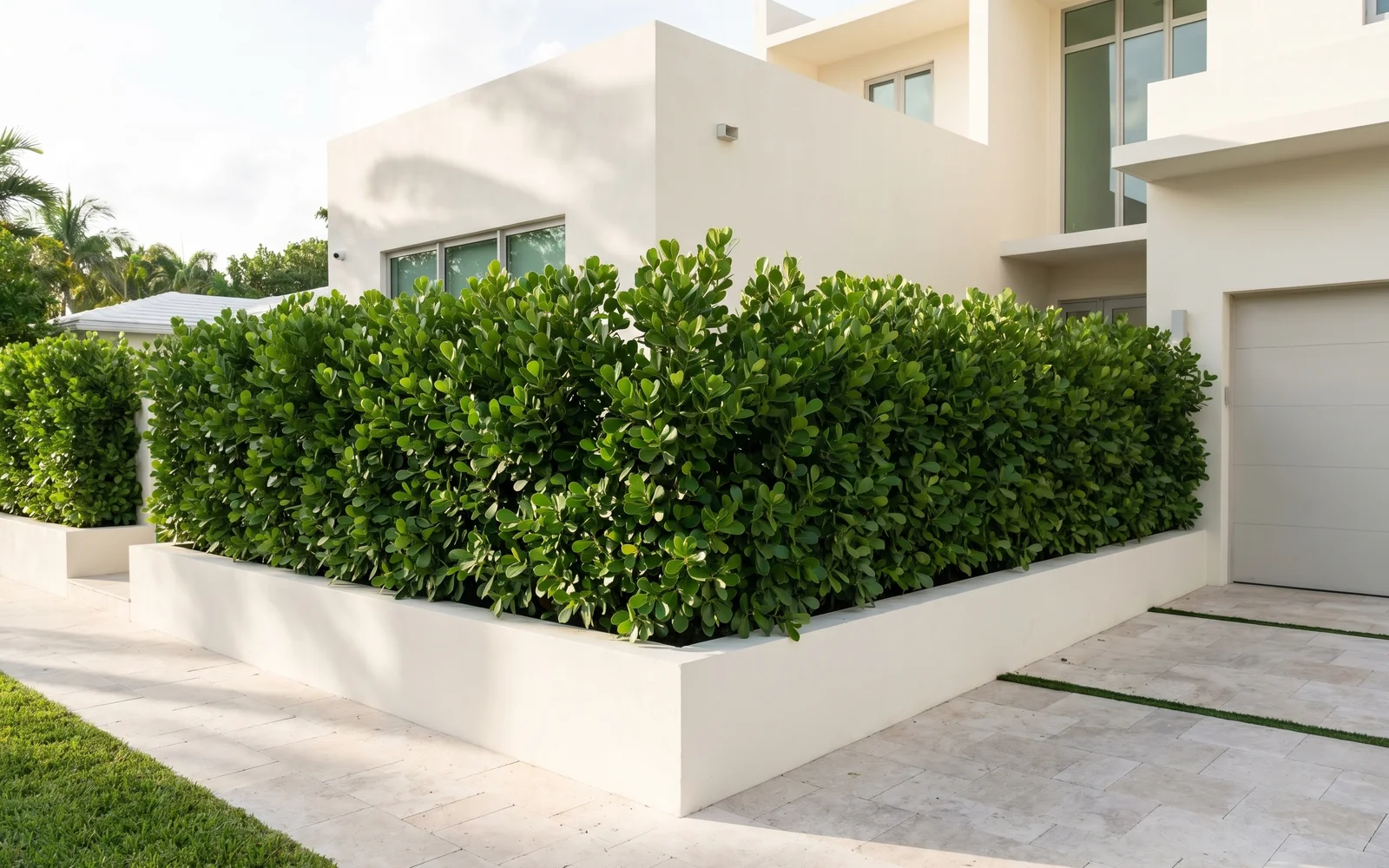
Ready for a privacy hedge that looks finished from day one?
Get a free estimate from a South Florida specialist who handles delivery, installation, and the result you actually want.