Plant Care
How to Make Podocarpus Grow Thicker and Fuller
Why Podocarpus hedges look thin, and how to thicken them. An installer's guide to tip pruning for density, spacing, light, feeding, and realistic timelines in South Florida.
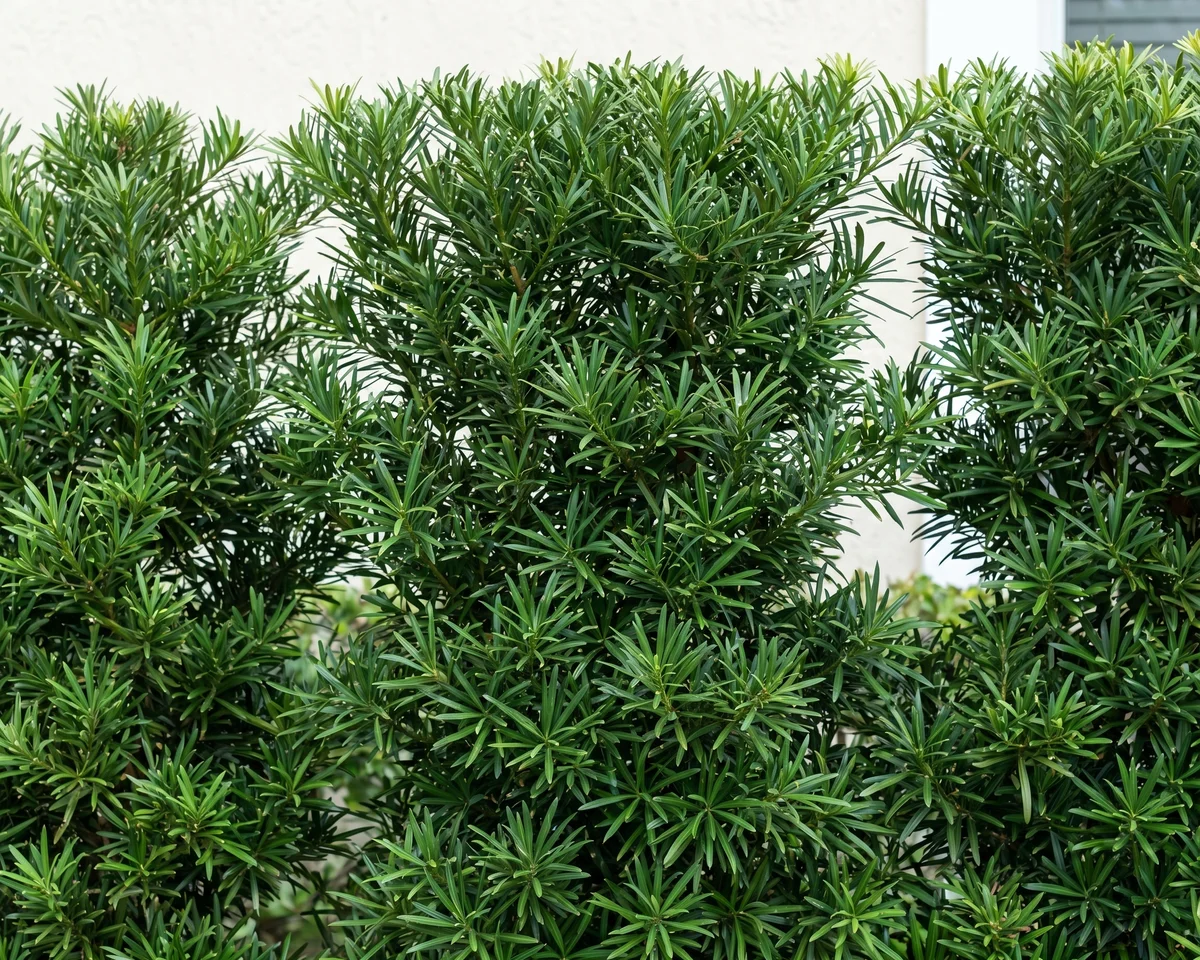
The fastest way to make a Podocarpus hedge grow thicker is regular tip pruning. Every time you trim the tips, the plant responds by pushing new shoots from below the cut, and more shoots means a denser hedge. Combine light frequent tip pruning with correct spacing, enough light, steady water, and a couple of feedings a year, and a thin Podocarpus fills into a solid wall. This guide covers why Podocarpus looks thin in the first place and exactly how to thicken it.
Why Podocarpus hedges look thin
Podocarpus is naturally upright and narrow, and it fills in laterally more slowly than a broadleaf hedge like Clusia. A young or neglected Podocarpus often looks like a row of separate columns with visible gaps. There are usually one or more of these reasons behind it:
- The plants were spaced too far apart. Podocarpus does not spread wide to meet a distant neighbor, and it fills slowly, so wide spacing leaves gaps that stay open for years.
- It has never been tip pruned. An untrimmed Podocarpus grows up and out in a loose, open way. Without pruning to force branching, it stays thin.
- Not enough light. Podocarpus tolerates partial shade, but heavy shade produces sparse, stretched growth.
- It is simply young. Podocarpus is a slow grower in its first two seasons. Some thinness is just time.
The main tool: tip pruning for density
Here is the principle that thickens any hedge, and Podocarpus especially. When you cut the growing tip of a branch, you remove the bud that was pulling growth upward. The plant responds by activating buds lower down, which push out as new shoots. One cut tip becomes two or three new shoots. Do that across the whole hedge, again and again, and the plant builds a dense network of branches.
For Podocarpus, that means light, frequent tip trims during the growing season. You are not trying to take off a lot of length. You are nipping the tips to trigger branching. Every round of tip pruning makes the next flush of growth denser than the last. This is the single most effective thing you can do to thicken a Podocarpus hedge.
Trim the sides with a slight taper, keeping the base a little wider than the top so light reaches the whole face. A shaded base thins out, which works against everything else you are doing.
Spacing: the fix that has to happen at install
If a Podocarpus hedge was planted too far apart, no amount of pruning fully closes the gaps quickly, because the plants have to grow into each other and Podocarpus does that slowly. Spacing is the one factor that is hard to fix after the fact.
For reference, Podocarpus should be set on tighter centers than Clusia: roughly 1 to 1.5 feet for 7-gallon plants, 1.5 to 2 feet for 15-gallon, and 2 to 2.5 feet for 25-gallon. If your hedge was planted much wider than that, the honest answer is that it will take longer to close, and interplanting a few additional plants into the gaps may be the faster route to a solid wall. Our Podocarpus spacing guide covers the full detail.
Light, water, and feeding
Pruning drives density, but the plant needs the resources to respond.
- Light. Give Podocarpus as much sun as the site allows. Full sun produces the densest growth. In partial shade it still works but fills in more slowly, so lean on tighter spacing and more frequent tip pruning.
- Water. Steady, consistent moisture during establishment and the growing season keeps new growth coming. Deep, regular watering beats light daily sprinkles. Do not let a young Podocarpus dry out and stall.
- Feeding. Two or three feedings a year with a slow-release shrub-and-palm fertilizer that includes micronutrients supports steady growth. Do not overfeed. Soft, forced growth is weaker and no denser.
A realistic timeline
Thickening a Podocarpus hedge is a season-by-season project, not a weekend one. With regular tip pruning, good light, and steady water, you will see the plant branch out and fill noticeably over one to two growing seasons. A hedge that was planted at the wrong spacing takes longer. Podocarpus rewards patience and consistent maintenance more than it rewards any single dramatic fix.
The other honest option, when a hedge needs to look full fast, is starter size. Larger starter Podocarpus at tight centers reads as a solid wall on or near install day, which is why most homeowners who want a finished formal hedge start with bigger plants rather than trying to thicken small ones over years.
Common mistakes
- Waiting for it to thicken on its own. Untrimmed Podocarpus stays thin. Tip pruning is what forces density.
- Cutting hard once a year instead of light and often. Frequent light tip trims build density. One hard annual cut does not.
- Letting the top get wider than the base. A top-heavy hedge shades and thins its own base.
- Ignoring spacing. If the plants are too far apart, pruning alone is slow. Interplanting may be the real fix.
- Overwatering or overfeeding to force it. Neither thickens the plant. Both can cause other problems.
Frequently asked questions
How do I make a Podocarpus hedge fuller? Tip prune it lightly and often during the growing season. Cutting the tips forces the plant to branch lower down, and more branches means a denser hedge. Pair that with full sun, steady water, a couple of feedings a year, and correct tight spacing.
Does trimming Podocarpus make it thicker? Yes. Trimming the growing tips triggers new shoots from below the cut, which is exactly what builds density. Light frequent tip pruning is the most effective way to thicken Podocarpus.
Why is my Podocarpus so thin and see-through? Usually wide spacing, no tip pruning, too much shade, or young age, or a mix. Podocarpus fills laterally slowly, so it needs tight spacing and regular pruning to read as a solid wall.
How long does it take to thicken a Podocarpus hedge? With consistent tip pruning, good light, and steady water, expect noticeable filling over one to two growing seasons. Hedges planted too far apart take longer and may need a few interplanted plants.
Can I fix a Podocarpus hedge that was planted too far apart? Pruning helps, but slowly, because Podocarpus fills laterally at a slow rate. The faster fix is often to interplant additional plants into the gaps and then tip prune the whole run to blend it into one wall.
Tagged
- how to make podocarpus grow thicker
- podocarpus hedge care
- thicken podocarpus
- podocarpus pruning
- South Florida hedges
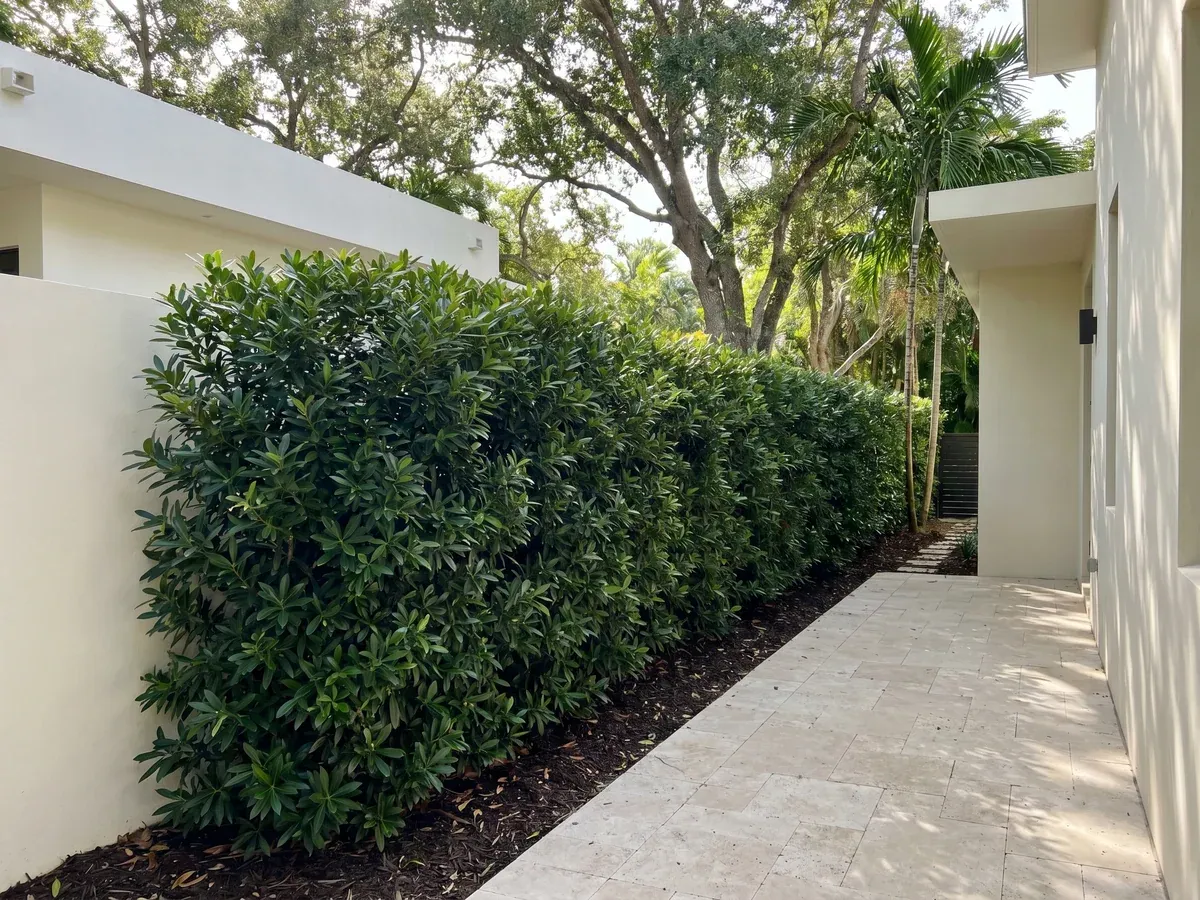
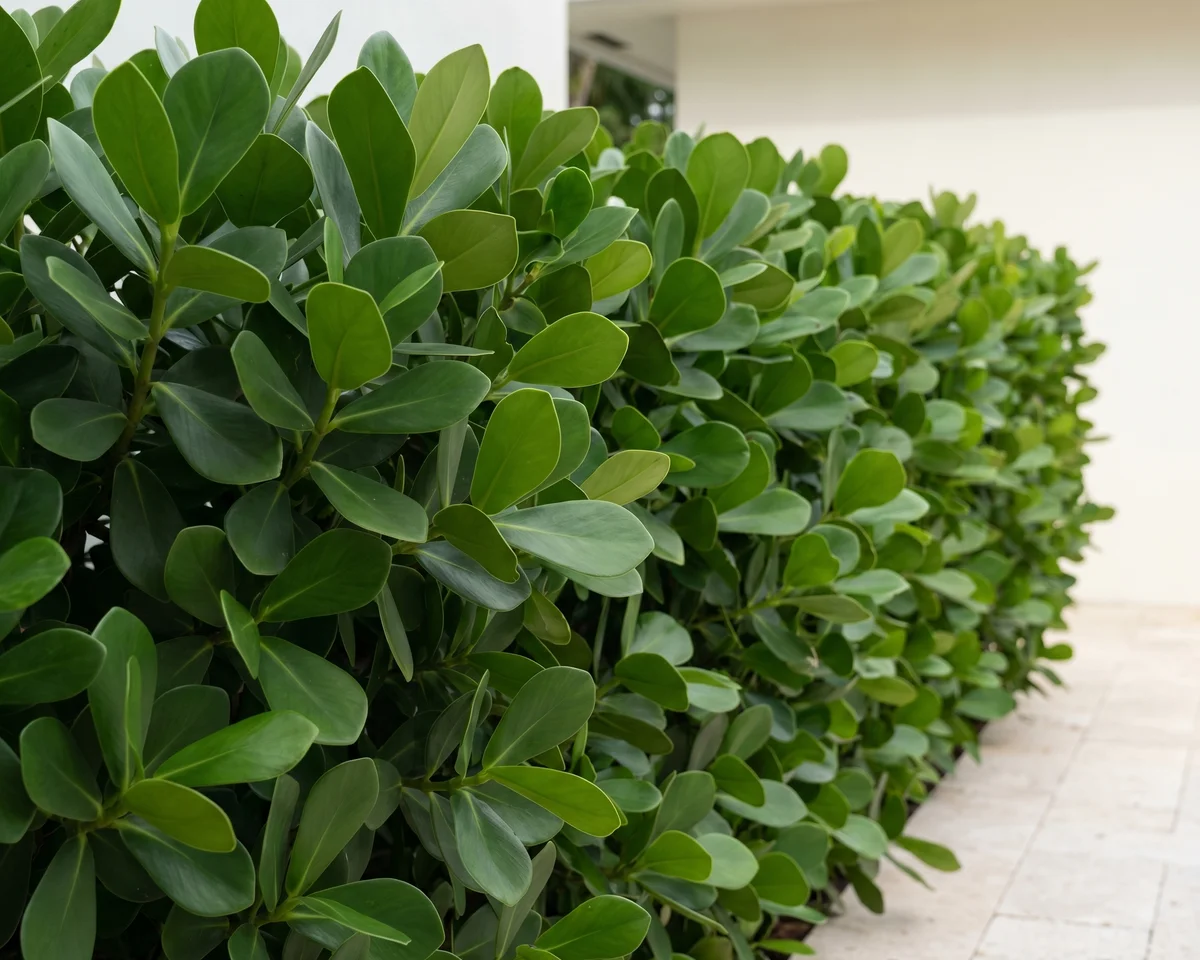
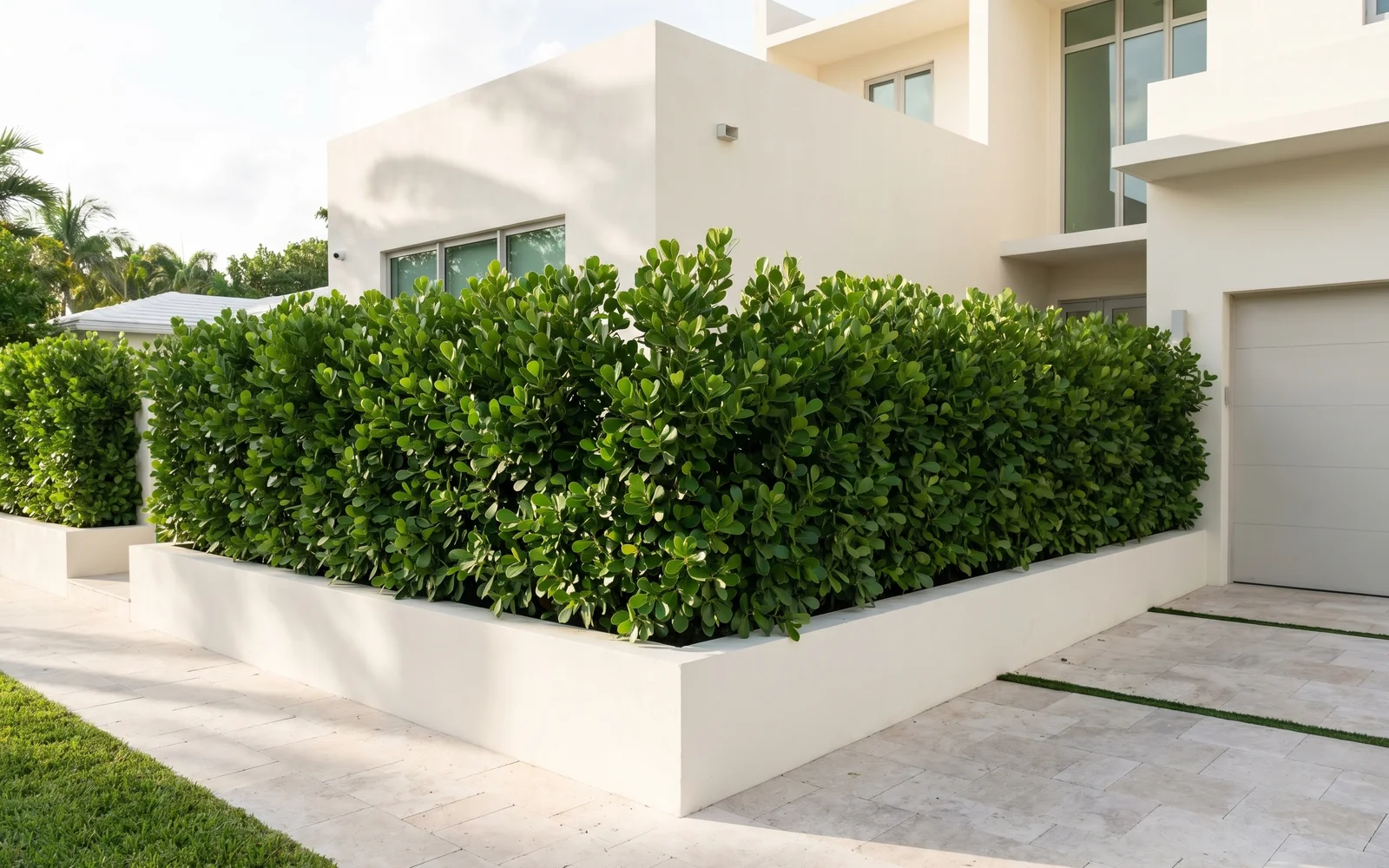
Ready for a privacy hedge that looks finished from day one?
Get a free estimate from a South Florida specialist who handles delivery, installation, and the result you actually want.